Lead Pipe Risks in Pre-1960 LA Homes: What’s Really in Your Water Lines
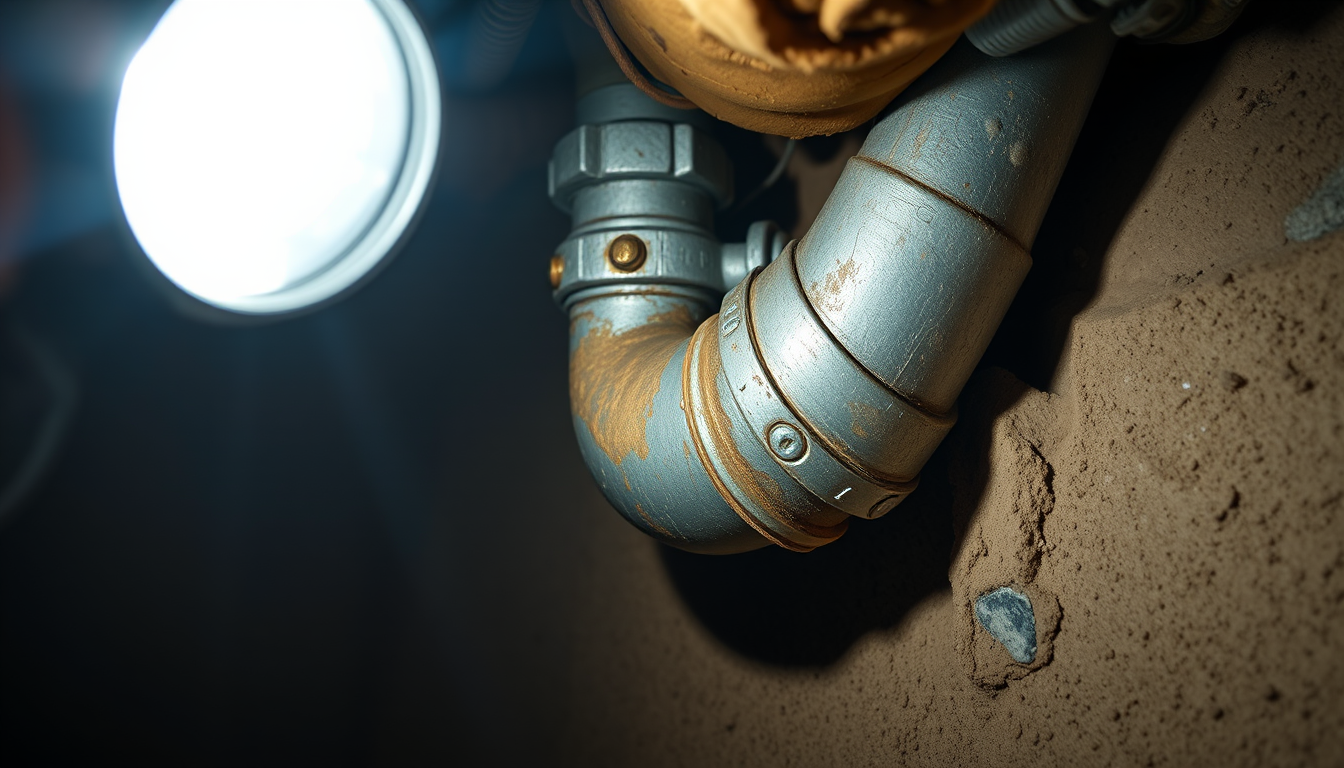
If your home was built before 1960, lead pipe risks are worth checking before you renovate, sell, or just refill a water glass without thinking about it. The good news: Los Angeles’s public water mains aren’t the problem. LADWP completed a full inventory of its service lines in 2019 and found no lead. The real risk sits on the private side of the meter, inside the house itself. Think old solder joints, old fittings, and old galvanized pipe that most homeowners have never looked at.
The short answer: LA’s city water system tested clean for lead. If your house was built or last replumbed before June 1986, the pipes inside your walls could still contain lead solder. Pre-1960 homes often carry galvanized steel supply lines too, and those trap lead scale and corrode from the inside. A scratch test, a magnet, and a lab water test will tell you where you stand in about a week.
Does Los Angeles Actually Have Lead Water Pipes?
Not in the public system, based on what LADWP found. LADWP completed an inventory of all of its service lines in 2019 and no lead was found. The utility earned the state’s “Optimized for Lead and Corrosion Control” designation in 2022 as a result. That’s a real trust signal for LA homeowners worried about the water main running under the street.
But that inventory only covers the line from the street to your water meter. Everything past the meter, meaning the pipe running under your slab, up your walls, and into your fixtures, is your property and your responsibility. That’s where pre-1960 homes get interesting.
Where Do Lead Pipe Risks Really Hide in Pre-1960 LA Homes?
Before June 1986, the Safe Drinking Water Act allowed plumbers to use lead solder, lead pipe, and lead fittings in home plumbing. Solder used to join copper pipe before that date was routinely close to half lead by weight. Every sweated joint in a pre-1986 copper system is a potential lead source.
Here’s the part most homeowners don’t know: even after the 1986 ban, the legal definition of “lead-free” pipe and fittings still allowed up to 8.0 percent lead by weight. That looser standard stayed on the books until a 2011 federal amendment tightened it to 0.25 percent, effective around January 2014. So a “lead-free” fitting installed anytime between 1986 and 2014 could legally still contain measurable lead.
On job sites across Highland Park, Eagle Rock, Silver Lake, and the older tracts of the San Fernando Valley, we still find original 1920s-1950s copper runs with lead-soldered joints. They usually turn up at fixture stub-outs and water heater connections that a remodel never touched.
Are Old Galvanized Pipes a Lead Risk Too?
Old galvanized pipes are the other half of the pre-1960 LA story. Galvanized steel pipe is coated in zinc to resist rust. The zinc coating used before 2014 commonly carried lead as an impurity, in the range of 0.5 to 2 percent. As that coating corrodes from the inside out, whatever lead it holds can leach into the water passing through.
There’s a second, sneakier issue. Galvanized pipe that sits downstream of a lead fitting or lead connector can trap lead-laced scale inside its rough, corroded interior. Federal regulators now classify this as “galvanized requiring replacement,” because that trapped scale keeps shedding lead long after the original lead source is gone. It doesn’t matter whether the upstream lead was removed years ago. The galvanized section can still be releasing it today.
We see this most often at water heater connections in older LA homes, where a short galvanized nipple was never swapped out during a water heater installation. LA’s hard water doesn’t help. It speeds up scale buildup inside galvanized pipe, which narrows the pipe and gives lead-bearing corrosion more surface area to cling to.
How Do You Check Your Own Service Line and Interior Pipes?
You can rule a lot of this in or out yourself, no tools beyond a screwdriver and a magnet. Find an exposed section of pipe, usually where it enters the house near the water heater or under a crawlspace access, then run the scratch test and the magnet test:
| Pipe material | Scratch test result | Magnet test result |
|---|---|---|
| Lead | Shiny silver, flakes off soft | Not magnetic |
| Galvanized steel | Dull gray | Magnetic |
| Copper | Reddish, penny-like color | Not magnetic |
Combine both tests and you can usually identify the pipe material in under five minutes.
Neither test tells you how much lead is actually in your water, though. For that, order a certified lab water test, or start with a filter certified to NSF/ANSI Standard 53 for lead reduction. Those filters are tested against water spiked to 150 parts per billion of lead, ten times the EPA’s maximum allowable level, and have to bring it down reliably. A filter buys you time. It doesn’t fix a galvanized line that’s still corroding behind your wall.
Should You DIY This or Call a Pro?
Do it yourself: the scratch test, the magnet test, and running the cold tap for a few seconds before drinking or cooking. This matters most first thing in the morning, when water has sat in the pipe overnight. Skip the hot tap for cooking or mixing formula. Hot water pulls lead out of old pipe faster than cold.
Call a plumber when any of these show up:
- The scratch test turns up shiny silver lead on any exposed pipe.
- You find galvanized pipe near a known or suspected lead fitting.
- A lab water test comes back with a number you’re not comfortable with.
At that point, patching one joint isn’t the fix. Repiping the affected run with copper or PEX removes the source instead of managing around it.
Renovating or Selling a Pre-1960 LA Home? What to Expect
If you’re renovating, expect to open a wall or two once plumbing is involved anyway. That makes it the cheapest time to trace and replace any lead-soldered or galvanized sections you find, rather than working around them later.
If you’re buying, selling, or managing a pre-1960 property in the San Fernando Valley, Tri-Cities, Westside, or Conejo corridor, ask for a plumbing inspection that specifically checks pipe material. Not just leaks and pressure. Request it before escrow closes. Property managers dealing with older multi-unit buildings should treat any unreplaced galvanized main as a standing question mark, not just a maintenance line item.
If any of this sounds like your house, whether that’s a scratch test that came back shiny silver or a galvanized line you’ve been meaning to look at, give us a call. We’re at 888-488-4808. We’ve been running trucks on pre-1960 LA plumbing for 25 years, and we can tell you plainly whether you’re looking at a spot repair or a full repipe. You can see the rest of what we handle on our plumbing services page, or read more about our crew on our about page.
Frequently Asked Questions
Does the Los Angeles city water system have lead pipes?
Based on LADWP’s 2019 service line inventory, no. The utility found no lead in its distribution system and earned the state’s “Optimized for Lead and Corrosion Control” designation in 2022. Lead pipe risk in LA is almost always on the private side, meaning the plumbing inside your own home.
How can I tell if my pre-1960 home has lead or old galvanized pipes?
Use the scratch test and the magnet test on an exposed section of pipe. Lead scratches shiny silver and won’t attract a magnet. Galvanized steel stays dull gray and is magnetic. Copper shows reddish underneath and isn’t magnetic. For a definitive answer on actual lead content in your water, order a certified lab water test.
Are old galvanized pipes as dangerous as lead pipes?
They can carry similar risk. Zinc coating used on galvanized pipe before 2014 often contained 0.5 to 2 percent lead as an impurity. Worse, galvanized pipe positioned downstream of any lead fitting can trap lead-laced corrosion scale that keeps shedding into your water for years, even after the original lead source is gone.
Can a water filter fix a lead pipe problem?
A filter certified to NSF/ANSI Standard 53 for lead reduction can meaningfully lower the lead reaching your glass, and it’s a reasonable interim step. It does not stop a lead-soldered joint or a corroding galvanized pipe from continuing to leach lead into your plumbing system. The pipe still needs to be addressed.
Is repiping necessary if I have old galvanized pipes?
Not always immediately, but it’s usually the honest long-term answer once galvanized pipe is corroding, restricting flow, or classified as “galvanized requiring replacement” because it sat downstream of a lead source. A plumber can confirm the pipe’s condition and tell you whether a targeted repair or a full repipe makes more sense for your situation.