Backflow Preventer Testing in LA: What That Yearly Inspection Actually Protects
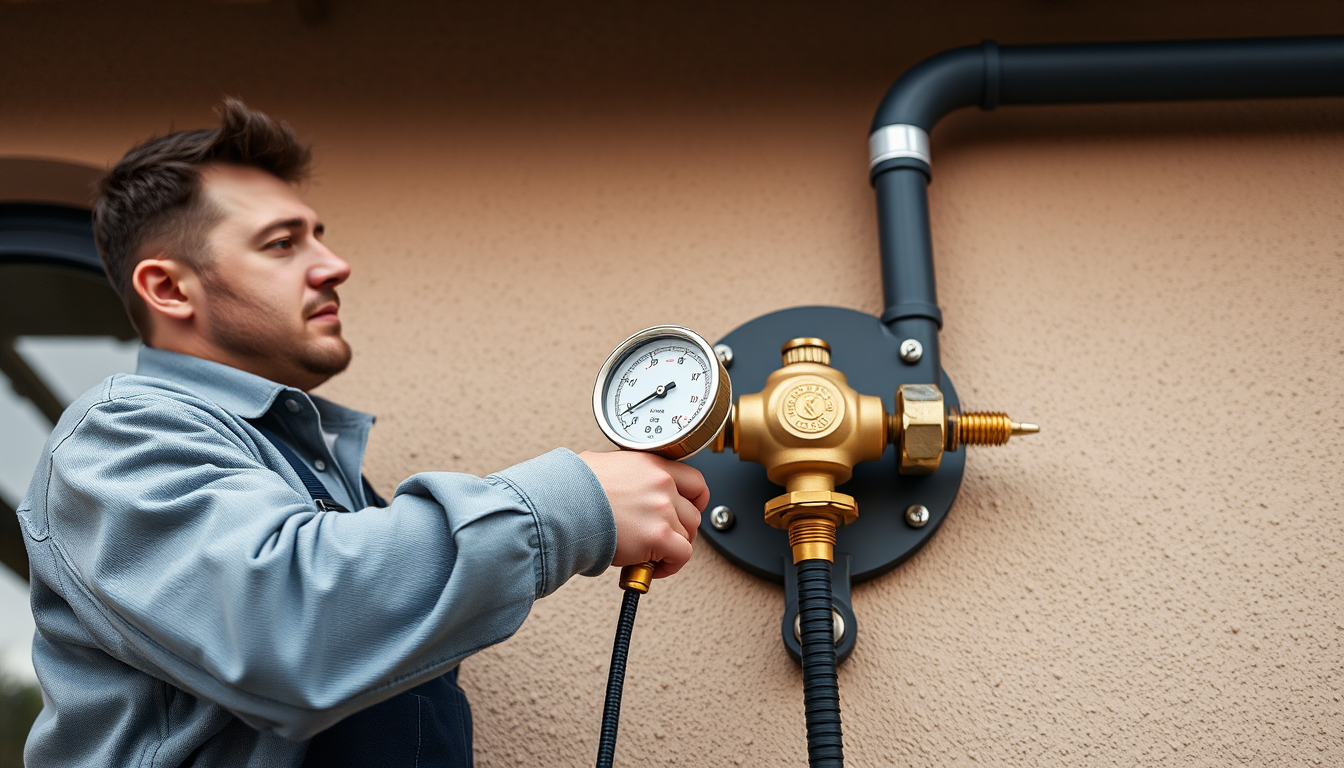
Backflow preventer testing is the annual check that confirms the valve on your irrigation line, fire sprinkler system, or commercial water service is still doing its one job: keeping dirty water from siphoning backward into the clean water supply. If you got a notice from your water district or a property manager just told you the test failed, you’re probably wondering what that little valve actually stops and why the district treats a missed test like a big deal.
It’s not bureaucratic busywork. When that valve fails, water can flow the wrong direction under the right pressure conditions, and whatever is on the other side of the connection (irrigation chemicals, boiler additives, grease trap runoff) can end up in the drinking water line. That’s why the test isn’t optional and why a failed one gets your water shut off if you ignore it long enough.
The short answer: Backflow preventer testing is a state-required annual check, done by a certified tester, that confirms your backflow assembly still stops contaminated water from reversing into the potable supply. Commercial properties, irrigation systems, and fire lines almost always need one. Skip it and your water district can eventually shut off service until it’s done.
What Does a Backflow Preventer Actually Stop?
A cross-connection is any point where your plumbing links up to something that isn’t clean drinking water, like an irrigation system, a boiler, a fire sprinkler riser, or a commercial dishwasher’s chemical line. Backflow is what happens when water reverses through that connection instead of flowing the way it’s supposed to.
Per the EPA, a cross-connection is any actual or potential link between a drinking water system and a source of contamination, and backflow happens when a change in pressure reverses the normal direction of flow. That’s the exact failure mode a backflow preventer is built to block, and it’s why annual testing exists: to catch a worn valve before pressure conditions line up to push contamination the wrong way.
There are two ways it happens. Backsiphonage occurs when pressure in the main drops (a water main break, heavy firefighting draw, or a big shutdown nearby) and creates a vacuum that pulls water backward. Backpressure occurs when something downstream, like a boiler or a pump, pushes water back into the supply line harder than the incoming pressure can resist.
A backflow preventer sits at that connection point and only lets water flow one direction. When it’s working, you’d never notice it. When the internal check valves wear out or get gummed up with debris or hard water scale, which we see constantly on older Valley and Tri-Cities properties, it can fail quietly. That’s the entire reason for the yearly test: nobody wants to find out a preventer failed by tracing a contamination complaint back to their building.
In our 25 years running calls across the San Fernando Valley, Tri-Cities, Westside, and Conejo corridor, the properties that fail most often are the ones with original galvanized or older copper supply lines feeding the assembly. Corrosion inside those lines sheds scale straight into the check valve seats. If your building’s supply piping is original to a pre-1970s structure, that’s worth a look alongside the backflow test itself. You can read more about when repiping makes sense if corrosion keeps showing up on inspection reports.
The Three Devices You’ll Actually Run Into Around LA
Not every property has the same type of backflow preventer. Which one you have depends on the hazard level of what’s on the other side of the connection.
Reduced Pressure Zone Assembly (RPZ)
This is the workhorse for high-hazard connections: fire sprinkler systems, boilers, commercial kitchens, and anything where backflow could actually make someone sick. An RPZ uses two spring-loaded check valves plus a relief valve in between. If both checks fail, the relief valve dumps water outside rather than let contamination back into the line. You’ll usually see these mounted above ground, often outside, because they need to drain.
Double Check Valve Assembly (DCVA)
A DCVA is two check valves in a row with no relief valve. It’s used for lower-hazard connections, things like a standard irrigation system without added chemicals, or a fire line with no chemical additives. It protects against both backsiphonage and backpressure, just without the extra margin an RPZ gives you.
Pressure Vacuum Breaker (PVB)
This is the one most homeowners actually have, usually sticking up out of the ground near a sprinkler valve box. A PVB only protects against backsiphonage, not backpressure, which is fine for a residential irrigation system since there’s nothing downstream pushing water back. It’s simpler and cheaper than an RPZ or DCVA, which is why it’s the residential default.
If you’re not sure which one is on your property, look at the tag riveted to the assembly. It’ll list the make, model, and serial number, which is exactly what your tester needs before showing up.
Who Requires Backflow Preventer Testing, and How Often?
State law requires backflow prevention assemblies to be tested at least once a year by a certified tester (LA County Public Works, Waterworks Districts Backflow Prevention Program). That applies whether your water comes from a Los Angeles County Waterworks District, a smaller mutual water company out in the Conejo corridor, or a city-run utility. The exact renewal date is usually tied to the anniversary of your last passed test.
Only a tester certified by the county health department is allowed to sign off on the test. Your provider will typically mail a written notice ahead of the deadline, and the assemblies themselves have to be models approved by the USC Foundation for Cross-Connection Control and Hydraulic Research, which is the industry’s standard approval list for backflow devices.
This is where the secondary piece comes in: commercial backflow inspection is treated the same way as residential, annual, certified, and reported back to the water provider, but commercial properties usually have more assemblies to track (irrigation, fire line, boiler, maybe a separate one for a commercial kitchen), so the paperwork adds up fast for a property manager running several buildings.
What Happens During a Backflow Test?
A backflow test is quick. Per LA County Public Works, most tests are completed in under 30 minutes per assembly. The certified tester connects a calibrated gauge to the test cocks on the assembly, closes and opens the shutoff valves in sequence, and watches how the check valves and relief valve (if there is one) respond to pressure changes.
They’re checking for a few specific failure points:
- A check valve that won’t hold pressure and lets water creep backward
- A worn spring that doesn’t seat the valve fully
- Debris caught in the seat from sediment or hard water buildup
- A relief valve on an RPZ that won’t open when it should
Any one of those is a fail.
If everything holds, the tester fills out a report and submits it to your water provider, and you’re done for another year. If it fails, the assembly usually needs repair or replacement before it’ll pass, which sometimes means new internal parts and sometimes means the whole device is past its service life.
Commercial Backflow Inspection: Who’s on the Hook, Owner or Tenant?
This trips up a lot of property managers. On a triple net lease, the tenant is usually responsible for testing and paying for it, since it falls under building operating expenses. On a gross lease, it’s typically the owner’s responsibility, since the owner covers building systems. Modified gross leases split the difference, so it genuinely depends on what the lease says.
Either way, the water provider doesn’t care who’s contractually responsible. The notice goes to the property, and if the test doesn’t happen, the property is the one that loses water service. If you manage multiple commercial properties, it’s worth confirming in writing who’s handling each building’s backflow testing rather than assuming it’s covered.
What Happens If You Skip Backflow Preventer Testing?
Ignoring the notice doesn’t make it go away. Per LA County Public Works, failure to test by the deadline triggers a water shutoff notice, and if the property stays non-compliant, the district can terminate water service entirely until the assembly is tested and the paperwork is submitted. For a commercial building, that’s not a minor inconvenience. That’s every tenant without water until it’s resolved.
Beyond the compliance risk, there’s the actual reason the rule exists. A cross-connection is any point where contaminated water could reach the drinking supply, and an untested, failing backflow preventer is exactly the kind of gap that lets it happen (EPA, Distribution Resources for Small Drinking Water Systems). Boiler chemicals, irrigation fertilizer, grease trap water, none of that belongs anywhere near a kitchen faucet.
Testing itself isn’t a DIY job. It requires a calibrated gauge and county certification to submit a valid report, so this is one of those situations where calling a licensed tester is the only real option. But if your test failed because the assembly itself needs work, worn internals, a valve that won’t seat, corrosion from years of hard LA water, that’s a repair job. If you’re dealing with a failed backflow assembly on a commercial property or an older building where the device itself looks original to the structure, give Rooter Experts a call at 888-488-4808 and we’ll walk you through whether it needs a repair or a full replacement. We’ve been a family-owned crew working LA plumbing for 25 years, so we’ve seen just about every generation of backflow assembly this county has installed.
Frequently Asked Questions
How often does backflow preventer testing need to happen?
At least once a year, per state law, and it has to be done by a certified tester (LA County Public Works). Some providers may require more frequent testing for higher-hazard connections, so check the notice your water district sends before assuming annual is the ceiling.
Do homeowners need backflow testing, or is it just commercial properties?
If you have an irrigation system with a backflow preventer, yes, homeowners are usually required to test annually too. It’s just a smaller, simpler device (typically a PVB) compared to the RPZ assemblies commercial properties often need for fire lines and boilers.
What happens if my backflow preventer fails the test?
The tester reports the failure, and the assembly needs repair or replacement before it can pass. Common culprits are worn check valve springs, debris in the valve seat, or a relief valve that won’t open on an RPZ. You’ll need a retest once the repair is done.
How much does backflow preventer testing cost?
Costs vary by tester and device type. LA County Public Works notes that typical testing costs run in the $75 to $150 per device range, though your actual cost depends on your tester, your device count, and where you’re located.
Can I test my own backflow preventer?
No. Testing requires a calibrated gauge and certification from the county health department, and the report has to come from a certified tester to count toward compliance. What you can do yourself is a basic visual check between tests, looking for leaks, corrosion, or a relief valve that’s discharging water when it shouldn’t be.
Low Water Pressure in the Whole House? What’s Really Going On in LA Homes
Low Water Pressure in the Whole House? What’s Really Going On in LA Homes
The short answer
- If pressure is weak at every fixture, the problem is upstream: usually a failing pressure regulator (PRV), a partly closed main shutoff, corroded old pipes, or low pressure coming from the street.
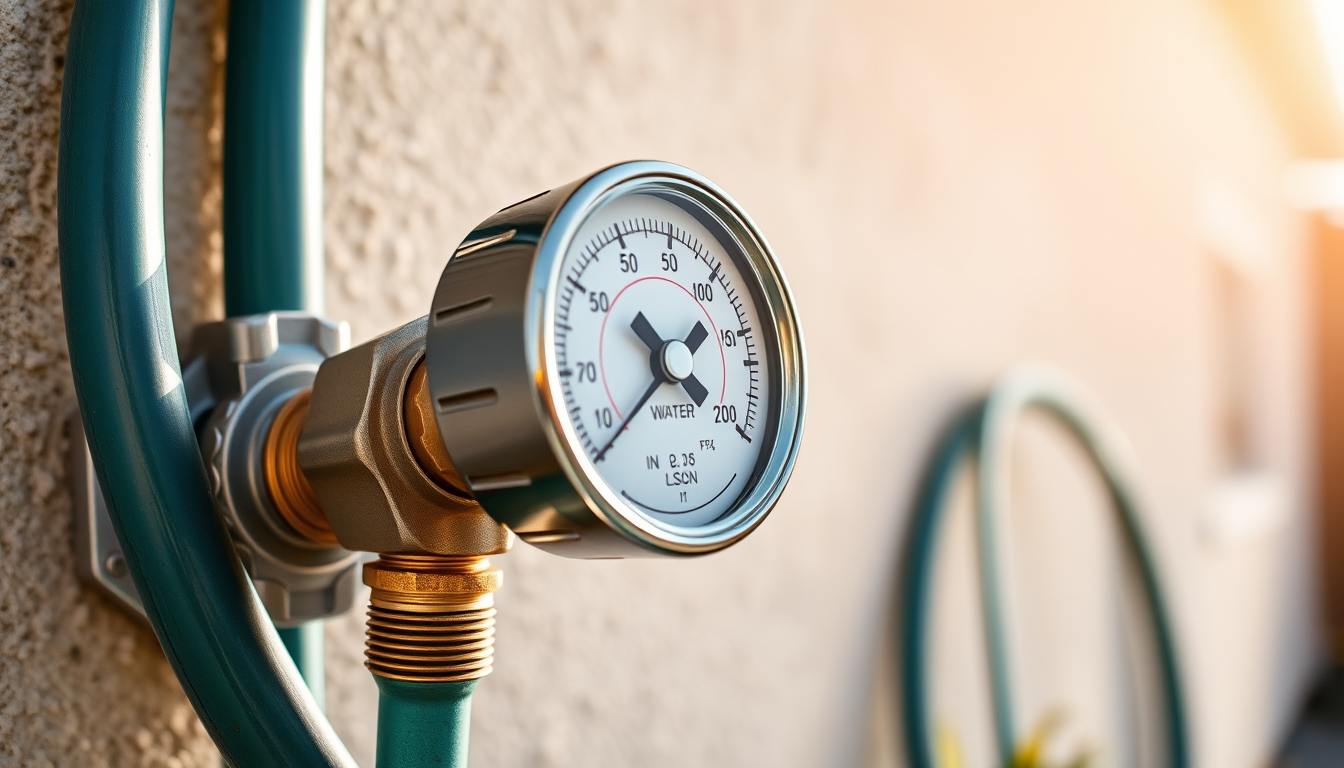
- The first thing to check is a pressure gauge reading at an outside hose bib. WaterSense recommends incoming service pressure between 45 and 60 psi (EPA WaterSense, 2023). Read well below that and you’ve confirmed it’s pressure, not a clogged faucet.
- In older LA homes, hard-water scale and corroded galvanized pipe are the most common hidden causes, and those usually mean a repair or repipe, not a quick fix.
Weak showers, a kitchen faucet that trickles, a washing machine that takes forever to fill. When low water pressure hits the whole house at once, it’s frustrating and it’s almost never the fixture’s fault. After 25 years on LA plumbing calls, we can tell you the cause is usually one of a handful of things, and a few of them you can check yourself in ten minutes.
Here’s how to figure out what’s happening, what you can test on your own, and when it’s worth a call.
Is it the whole house, or just one fixture?
Before anything else, figure out the scope. This one question points you at the right cause and saves you money.
Run cold water at several fixtures around the house: kitchen, both bathrooms, the laundry line. If only one spot is weak, the problem is local. Think clogged aerator, a gummed-up cartridge, or a half-closed angle stop under the sink. If everything is weak at the same time, the cause is upstream of the whole system.
| What you notice | Likely location of the problem |
|---|---|
| One faucet or shower weak, rest are fine | That fixture (aerator, cartridge, supply valve) |
| Only hot water is weak everywhere | Water heater or its shutoff valve |
| Cold and hot weak at every fixture | Main line, PRV, meter valve, or street pressure |
| Pressure dropped suddenly overnight | Failed PRV, a main leak, or a city supply change |
If you landed in the bottom two rows, keep reading. That’s the whole-house category, and it’s what the rest of this guide covers.
What causes low water pressure in the whole house?
Whole-house low pressure almost always traces back to one of five things. Most LA homes we visit fall into the first three. Supply pressure can vary a lot before it ever reaches your fixtures, since service mains can run 100 psi or more at the street and get stepped down at the house (EPA WaterSense, 2023).
1. A failing pressure regulator (PRV)
Most LA homes have a pressure regulator, a bell-shaped brass valve where the main line enters the house. Its job is to knock down high street pressure to a safe level. Plumbing code caps static pressure at 80 psi, and anything above that is supposed to run through a regulator (Uniform Plumbing Code 608.2, IAPMO). California’s plumbing code follows the same rule.
When a PRV wears out, it can drift the wrong way and choke your pressure down to a trickle. These valves don’t last forever, and a slow decline across the whole house is the classic symptom of one going bad. The good news: a PRV is a repairable part, not a whole-system job.
2. Corroded galvanized pipes
If your home was built before the 1960s and still has its original steel water lines, this is the usual suspect. Galvanized pipe rusts from the inside out. Over decades the rust narrows the opening until barely any water can get through, and no amount of valve-adjusting fixes a pipe that’s closed up.
You’ll often see it as pressure that got worse slowly over years, sometimes with rusty-colored water on the first draw. At that point the fix is usually a repipe, swapping the old galvanized for copper or PEX.
3. Hard-water scale buildup
LA has hard water. Hard water is most common across the Southwest United States (EPA WaterSense, 2026), and the calcium and magnesium in it leave mineral scale inside pipes and fixtures. The USGS puts it plainly: long-term movement of hard water through a pipe builds up scale that gradually closes the pipe, reducing water movement and lowering water pressure (USGS, Hardness of Water).
Scale loves heat, so it hits the water heater and hot-water lines first. If your hot side is weaker than your cold, mineral buildup is a strong candidate.
4. A partly closed main shutoff or meter valve
This is the one we love to find, because it’s free to fix. If a valve at the meter or the main shutoff got bumped or was never reopened all the way after a repair, you get low pressure everywhere. Always worth a look before you assume the worst.
5. Low pressure from the city
Sometimes it isn’t your house at all. A water main break nearby, hydrant testing, or a pressure change on the city’s side can drop your supply. If a neighbor reports the same thing, or pressure returns on its own, the cause was upstream of your property line.
How do I diagnose low water pressure myself?
You can narrow this down with a $12 gauge and fifteen minutes. WaterSense recommends incoming service pressure sit between 45 and 60 psi (EPA WaterSense, 2023), so that range is your benchmark.
- Test the pressure. Screw a water-pressure gauge onto an outside hose bib, turn it on full, and read it. Well below 45 psi confirms the problem is pressure, not a clogged faucet.
- Check the main shutoff and meter valve. Make sure both are open all the way. A half-turn closed is enough to weaken the whole house.
- Compare hot vs cold. Cold fine but hot weak points at the water heater or scale. Both weak points upstream to the PRV or main line.
- Look at the PRV. If you have a regulator and pressure is far below the WaterSense range, the valve is the prime suspect. Some have an adjustment screw, but a failing one needs replacing, not just turning.
- Ask a neighbor. If they’re low too, the issue is the city’s, and there’s nothing to fix on your end.
Did the pressure problem show up the same week as a slab or main leak? Sudden whole-house drops can mean water is escaping before it reaches your fixtures, which is worth ruling out fast.
When should I call a plumber?
Call when the easy checks come up empty. If your shutoffs are open, your neighbors are fine, and the gauge still reads low, the cause is inside your system and needs hands-on diagnosis. A pro can test pressure at multiple points, confirm whether the PRV is the culprit, and scope the lines to see if scale or corrosion has closed them up.
It’s also a call-now situation when pressure drops suddenly and you can’t find a reason, when you see rusty water, or when only your home on the block is affected. Those point to a failing regulator, corroded pipe, or a hidden leak, none of which get better on their own.
When buildup is the problem, the right fix depends on where it is. Mineral and debris blockages in drain and supply lines sometimes call for hydrojetting, while corroded supply pipe usually means a repipe. A plumber sizes the fix to the actual cause instead of guessing.
Why do older LA homes get this more often?
Two reasons stack up here, and a lot of LA housing stock hits both. First, the age. Neighborhoods full of pre-1960 homes still have original galvanized lines that have spent decades rusting shut. Second, the water. Southwest hard water keeps depositing scale year after year, and the USGS notes that buildup gradually narrows pipes and lowers pressure over time (USGS, Hardness of Water).
Put an old metal pipe and hard water together and you get a slow, steady decline that’s easy to write off as normal, right up until the shower won’t rinse the shampoo out of your hair. That’s the point where most of our customers finally call. See all of our plumbing services if you want to know what a fix involves.
Frequently asked questions
What is a normal water pressure for a house?
EPA WaterSense recommends incoming service pressure between 45 and 60 psi for efficient, reliable performance (EPA WaterSense, 2023). Plumbing code caps static pressure at 80 psi and requires a regulator above that (Uniform Plumbing Code 608.2). If your gauge reads well under 45 psi, that’s genuinely low.
Why is my water pressure low all of a sudden?
A sudden whole-house drop usually means a failed pressure regulator, a valve that got closed, a nearby city main issue, or a hidden leak draining pressure before it reaches your fixtures. Check your main shutoff first, then test pressure at a hose bib to confirm.
Can hard water cause low water pressure?
Yes. The USGS explains that hard water deposits scale inside pipes over time, gradually narrowing them and lowering water pressure (USGS, Hardness of Water). In LA’s hard-water environment this is common, and it hits hot-water lines and the water heater first.
How do I test my home’s water pressure?
Screw a water-pressure gauge onto an outdoor hose bib, open the valve fully, and read the dial. Compare it to the 45 to 60 psi WaterSense range. It’s a quick, inexpensive test that tells you whether you have a true pressure problem or just a clogged fixture.
Is low water pressure expensive to fix?
It depends entirely on the cause. An open valve or a worn pressure regulator is a small repair. Corroded galvanized pipe usually means a repipe, which is a larger job. That’s why diagnosing the real cause first, rather than guessing, saves you money.
Sources
- U.S. Environmental Protection Agency, WaterSense, Service Water Pressure Technical Sheet, retrieved 2026-05-28, https://www.epa.gov/system/files/documents/2023-08/ws-homes-TRM-12-ServiceWaterPressureTechSheet.pdf
- IAPMO, Uniform Plumbing Code Section 608.2 Excessive Water Pressure, retrieved 2026-05-28, https://forms.iapmo.org/email_marketing/codespotlight/2018/Jan4.htm
- U.S. Geological Survey, Water Science School, Hardness of Water, retrieved 2026-05-28, https://www.usgs.gov/water-science-school/science/hardness-water
- U.S. Environmental Protection Agency, WaterSense, Guide to Selecting and Maintaining a Water-Efficient Water Softener, retrieved 2026-05-28, https://www.epa.gov/system/files/documents/2026-05/ws-products-water-softener-guide.pdf