Sewer Smell in the House? How an LA Plumber Tracks Down Where the Odor Is Coming From
A sewer smell in house air is almost always coming from one of a handful of spots, and most of them are cheap to fix once you find the right one. After 25 years under LA houses, we can tell you the odor is rarely the city sewer itself. Nine times out of ten it’s a drain trap that dried out or a toilet that’s lost its seal. Here’s how we track down where that sewer gas smell is really coming from, room by room, and which ones you can handle yourself.
The short answer: That rotten-egg sewer gas smell is hydrogen sulfide leaking in from your drain system. The usual culprit is a dried-out P-trap under a sink, tub, or floor drain you rarely use, or a failed wax ring under a toilet. Less often it’s a blocked plumbing vent, tree roots, or a cracked drain line. Find the room where it’s strongest, run water in every drain there, and you’ll clear most cases without ever calling a plumber.
What Is That Sewer Gas Smell, Exactly?
That rotten-egg odor has a name. The gas backing up out of your drains is mostly hydrogen sulfide, which the federal ATSDR describes as “a flammable, colorless gas that smells like rotten eggs” and which “can also result from bacterial breakdown of organic matter” (ATSDR). It’s the same stuff people call sewer gas or stink damp. Your drains are full of organic gunk, and that’s what feeds it.
The good news is your nose is a sensitive instrument. ATSDR notes that “people usually can smell hydrogen sulfide at low concentrations in air ranging from 0.0005 to 0.3 parts per million” (ATSDR). In plain terms, you smell it long before it reaches a level that hurts you in a normal house.
That said, don’t just live with it. A strong, steady sewer gas smell that brings on headaches or nausea means you should open windows, get air moving, and find the source. Persistent gas is telling you a seal somewhere has failed, and ignoring it lets it get worse.
The Most Common Cause Is a Dried-Out Drain Trap
Under every sink, tub, shower, and floor drain is a U-shaped bend called a P-trap. It holds a small pool of water, and that water is the only thing standing between you and the sewer. InterNACHI defines a trap as “a fitting or device that provides a liquid seal to prevent the emission of sewer gases” (InterNACHI). Plumbing code backs that up: IPC Section 1002.4 requires every fixture trap to hold “a liquid seal of not less than 2 inches and not more than 4 inches” (IPC via UpCodes).
Here’s the catch. If a drain doesn’t get used, that water slowly evaporates. Once the trap runs dry, the seal is gone and sewer gas walks right into the room.
This is the number one cause we find, and it loves LA. Our dry air and long warm season evaporate a trap faster than a humid climate would. The usual suspects are a guest bathroom nobody uses, a second tub, a laundry sink, or a garage or basement floor drain that hasn’t seen water in months. Vacation homes and rental units sitting empty are classic cases.
The two-minute test
Walk the house and find the room where the smell is strongest. Then put water back in every trap there:
- Run every sink, tub, and shower for 30 seconds.
- Flush every toilet.
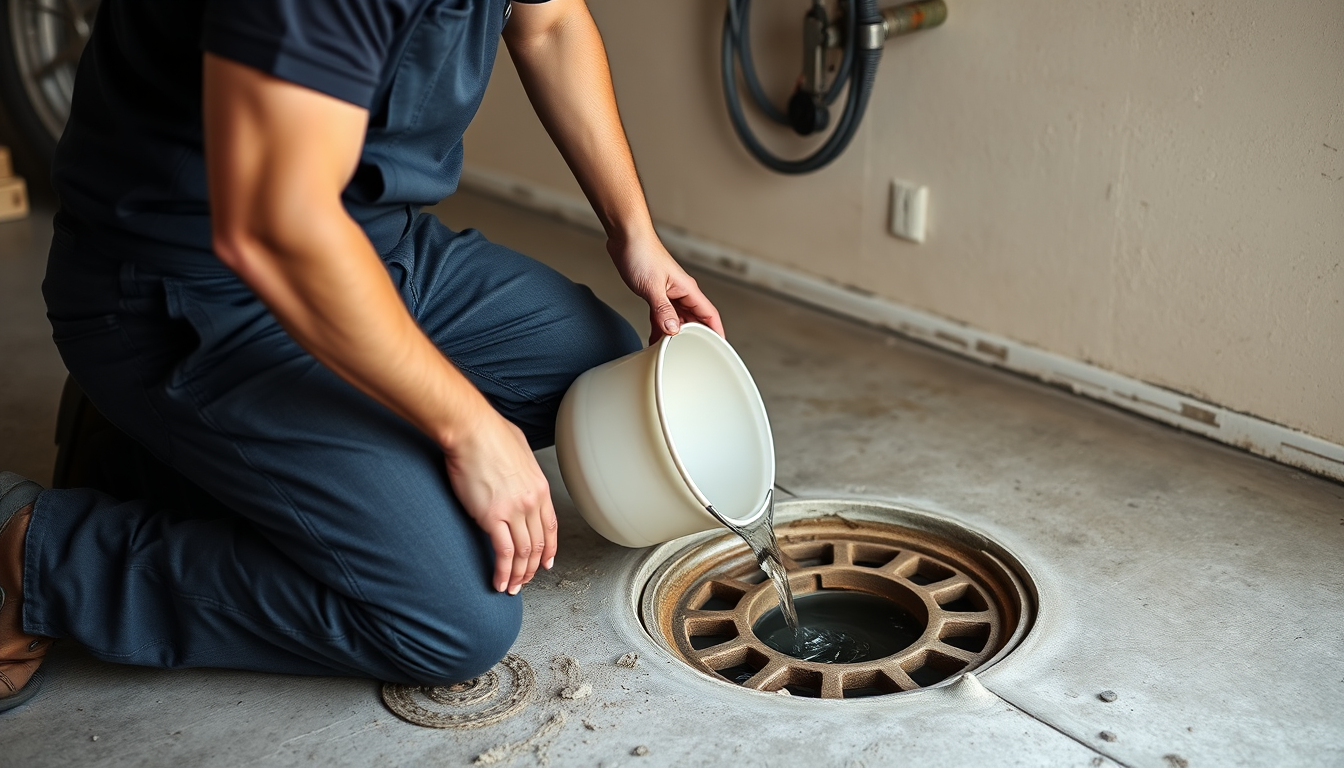
- Pour a couple of quarts of water down any floor drain.
- For a drain you almost never use, add a splash of cooking oil after the water. It floats on top and slows the next evaporation.
Give it a day. If the smell fades, a dry trap was your problem, and it costs nothing to fix.
A Failing Toilet Wax Ring Is the Next Suspect
A failing wax ring is the second most common source of indoor sewer odor we find in LA homes. Your toilet seals to the drain through a wax ring pressed against the closet flange, the fitting that ties into the pipe. When that wax dries, cracks, or the toilet rocks even slightly, it passes gas before it ever passes visible water.
So if the smell is strongest at a toilet and spikes after a flush, the ring is the prime suspect, even with no water on the floor. The sneaky part is the wax can leak gas while still holding back liquid, at least for a while.
Tells to watch for: a toilet that wobbles when you sit, a faint stain or softness in the floor at the base, or that odor that spikes every time the bowl empties.
A handy homeowner can pull a toilet and set a fresh wax ring in an afternoon. But if the toilet rocks after you reset it, or the floor feels spongy, the flange itself is likely cracked or sitting too low, and no new ring will seal it. That’s the point to bring in a pro before a slow leak rots the subfloor.
When It’s the Vent, the Line, or Tree Roots
If you’ve refilled every trap and reseated the toilet and the smell keeps coming back, the problem is deeper in the system. A few things we check next.
What happens when the plumbing vent is blocked?
Your drains connect to vent pipes that run up through the roof. They let air in so water flows smoothly and traps don’t get siphoned dry. InterNACHI notes that proper venting works to “prevent trap seal loss” (InterNACHI). When a vent gets capped by leaves, a bird nest, or a dead critter, flushing one fixture can suck the water out of another fixture’s trap. So your traps keep going dry no matter how often you refill them. That’s a roof job, not a DIY for most folks.
Can tree roots cause a sewer smell in an older LA home?
Yes, and it’s common here. A lot of pre-1960 LA homes still run on clay sewer laterals. Clay cracks at the joints, and thirsty roots find the moisture and grow right in. That gives you a partial blockage where waste hangs up, rots, and pushes gas back up the line. If the smell rides along with slow drains or a gurgle, roots are a strong bet. This is where a drain cleaning with a camera earns its keep, and a bad root mass usually calls for hydrojetting to scour the line clean.
What if the smell comes from under the slab?
Many LA houses are slab-on-grade, with drain pipe cast right into the concrete. A broken pipe down there can let gas seep up through the slab, and you’ll often smell it without ever seeing water. Finding that takes a camera and sometimes a smoke test. It’s a pro call, full stop.
How an LA Plumber Tracks Down the Source
When Rooter Experts gets a sewer smell call, we don’t guess. We work it in order, cheapest cause first. Here’s the same logic you can follow at home before you decide whether to call.
| What you notice | Likely cause | DIY or pro |
|---|---|---|
| Smell near a rarely used drain | Dried-out P-trap | DIY: run water in the trap |
| Smell at a toilet, worse after flushing | Failed wax ring | DIY if confident, pro if it rocks |
| Traps keep drying out everywhere | Blocked roof vent | Pro |
| Smell with slow drains or gurgling | Tree roots or line clog | Pro: camera and clearing |
| Smell with no visible water, on a slab | Cracked drain line | Pro: camera or smoke test |
On a stubborn case, a plumber runs a smoke test. We push a harmless smoke into the drain system and watch where it puffs out: around a toilet base, out of a wall, up from a slab crack. Smoke goes exactly where gas goes, so it points straight at the leak. From there a drain camera confirms whether the line itself is cracked or rooted.
What you can do yourself: refill every trap, reseat a simple toilet, and clear a hair clog. What’s worth a pro: a vent up on the roof, a line you can smell but can’t see, and anything under the slab. A bad reseal or a missed crack just brings the smell right back.
If you’ve run the water test and the sewer gas smell is still hanging around, or it came with slow drains and gurgles, that’s the moment to get eyes on the line. We’re a family-owned crew that’s been working under LA houses for 25 years (more about us here), and we’ll track the odor to its real source instead of throwing parts at it. If that sounds like your situation, call Rooter Experts at 888-488-4808. No pressure, just a straight answer.
Frequently Asked Questions
Is a sewer smell in the house dangerous?
In a normal home, the smell shows up well before the gas reaches a harmful level. ATSDR notes people can detect hydrogen sulfide at concentrations as low as 0.0005 parts per million (ATSDR). So a faint odor is a nuisance, not an emergency. But a strong, steady smell with headaches or nausea means you should ventilate and find the source fast.
Why does my bathroom smell like sewer gas only sometimes?
It usually points to a drain trap that’s slowly drying out. A guest bath or floor drain that goes unused lets its water seal evaporate, and code requires that seal to be at least 2 inches deep to block gas (IPC via UpCodes). Run water in every fixture and the smell often disappears within a day.
Can a dried-out P-trap really cause the whole house to smell?
Yes. The trap is “a fitting or device that provides a liquid seal to prevent the emission of sewer gases,” per InterNACHI (InterNACHI). Once that water evaporates, there’s nothing stopping the gas. A single dry trap in a back room can scent a surprising amount of the house, especially with the doors closed.
How do I find which drain the sewer smell is coming from?
Go room to room and find where it’s strongest. Run water in every sink, tub, and floor drain there, and flush the toilets, to refill the traps. If the smell stays at one toilet and worsens after a flush, suspect the wax ring. If it keeps returning everywhere, the vent or the main line is the likely cause and needs a pro.
When should I call a plumber for a sewer smell?
Call once you’ve refilled the traps and reseated any obvious toilet and the odor still won’t quit. Smells paired with slow drains, gurgling, or no visible water on a slab usually trace to a blocked vent, tree roots, or a cracked line. Those need a camera or a smoke test to pin down, which is a pro job.
Sources
- ATSDR (CDC), ToxFAQs: Hydrogen Sulfide, retrieved 2026-06-22
- International Plumbing Code, Section 1002.4 Trap Seals (via UpCodes), retrieved 2026-06-22
- InterNACHI, Plumbing Terms (Traps and Vents), retrieved 2026-06-22
{“@context”:”https://schema.org”,”@type”:”FAQPage”,”mainEntity”:[{“@type”:”Question”,”name”:”Is a sewer smell in the house dangerous?”,”acceptedAnswer”:{“@type”:”Answer”,”text”:”In a normal home, the smell shows up well before the gas reaches a harmful level. ATSDR notes people can detect hydrogen sulfide at concentrations as low as 0.0005 parts per million ( ATSDR ). So a faint odor is a nuisance, not an emergency. But a strong, steady smell with headaches or nausea means you should ventilate and find the source fast.”}},{“@type”:”Question”,”name”:”Why does my bathroom smell like sewer gas only sometimes?”,”acceptedAnswer”:{“@type”:”Answer”,”text”:”It usually points to a drain trap that’s slowly drying out. A guest bath or floor drain that goes unused lets its water seal evaporate, and code requires that seal to be at least 2 inches deep to block gas ( IPC via UpCodes ). Run water in every fixture and the smell often disappears within a day.”}},{“@type”:”Question”,”name”:”Can a dried-out P-trap really cause the whole house to smell?”,”acceptedAnswer”:{“@type”:”Answer”,”text”:”Yes. The trap is “a fitting or device that provides a liquid seal to prevent the emission of sewer gases,” per InterNACHI ( InterNACHI ). Once that water evaporates, there’s nothing stopping the gas. A single dry trap in a back room can scent a surprising amount of the house, especially with the doors closed.”}},{“@type”:”Question”,”name”:”How do I find which drain the sewer smell is coming from?”,”acceptedAnswer”:{“@type”:”Answer”,”text”:”Go room to room and find where it’s strongest. Run water in every sink, tub, and floor drain there, and flush the toilets, to refill the traps. If the smell stays at one toilet and worsens after a flush, suspect the wax ring. If it keeps returning everywhere, the vent or the main line is the likely cause and needs a pro.”}},{“@type”:”Question”,”name”:”When should I call a plumber for a sewer smell?”,”acceptedAnswer”:{“@type”:”Answer”,”text”:”Call once you’ve refilled the traps and reseated any obvious toilet and the odor still won’t quit. Smells paired with slow drains, gurgling, or no visible water on a slab usually trace to a blocked vent, tree roots, or a cracked line. Those need a camera or a smoke test to pin down, which is a pro job.”}}]}