-
Best Drain Cleaner for Old Pipes: What Is Safe for 3 Pipe Types in an LA Home

Cast iron and galvanized lines react very differently to acid and lye based cleaners. The short answer: The best drain cleaner for old pipes is the gentlest thing that works. Start with a plunger or a hand snake. Use an enzyme cleaner to keep a slow drain from getting worse. Skip repeated doses of lye or acid cleaners in cast iron and galvanized steel, and never pour anything into a drain that isn’t moving at all.
If your LA house went up before 1960, the lines under it may be cast iron, galvanized steel, or clay. A For Dummies plumbing guide says cast iron was commonly used before 1960 for the vertical drain, vent stacks, and sometimes the horizontal drain lines, and that galvanized steel pipe is common in older homes. Each one wears out in its own way. Here’s what each can take, and when the right answer is no cleaner at all.
What is the best drain unclogger for old pipes?
The best drain unclogger for an old pipe is a mechanical one: a plunger first, then a hand-crank snake (a drain auger). Neither puts chemistry against a pipe wall that’s already worn. Enzyme cleaners come second, and lye or acid products come last. Here’s the order I’d work through in an older home.
- Plunger, then hand snake. Nothing to react with old metal, and you can see what comes out.
- Enzyme cleaner for slow drains. In an April 2026 post, a plumbing franchise says enzymes won’t clear a clog, but used regularly they prevent the buildup that turns into one. Think maintenance, not rescue.
- Lye or acid cleaner as a last resort. And only in the pipes that can take it, which the next sections cover.
Is drain cleaner safe for old cast iron pipes?
Not as a habit. Cast iron rusts from the inside, and the same franchise says chemical cleaners speed up corrosion inside older metal pipes. Its wording is that cleaners don’t cause the rust, but they make it worse if you keep using them.
That matches what a rough cast iron wall looks like on camera. The inside is scaled and pitted, so hair and grease grab on and build up fast. A cleaner might open a hole through one clog. It can’t smooth the wall, so the clog comes back. If a cast iron drain keeps slowing down, stop pouring and get a camera in there. The picture tells you whether the wall is scale you can scour off or metal too thin to touch.
Can you use drain cleaner on galvanized pipe?
Treat it like cast iron. Galvanized pipe is steel with a zinc coating meant to slow rust. Once that coating wears thin, the steel under it behaves a lot like old iron, so the same rule applies: hand tools first, no repeated chemical doses.
Galvanized lines also narrow as scale and rust build up inside, and LADWP says minerals in the water can deposit on the inside of your pipes. A slow drain in an old galvanized line is often a pipe that has shrunk, not a clog, and no cleaner makes a pipe wider. If the line is narrowed along its whole length, the real fix is replacement. That’s a repiping conversation, not a bottle conversation.
Does LA hard water make old pipes worse?
Yes, it feeds the scale. The U.S. Geological Survey says that when hard water is heated, solid deposits of calcium carbonate can form, and that this scale can clog pipes. It classes 121 to 180 mg/L as hard and anything over 180 mg/L as very hard.
LADWP’s 2022 averages put San Fernando Valley and Western LA water at 147 mg/L and Eastern LA and the Harbor at 279 mg/L. The first is hard. The second is very hard. In an old line, scale gives hair and grease more to catch on. Water from another utility will differ, so check your own area’s report.
What about clay sewer pipe?
Clay is the tough one, and that surprises people. Vitrified clay pipe (the glazed, fired kind used in older LA sewer laterals) is, according to a September 2000 U.S. EPA fact sheet, resistant to chemical corrosion, internal abrasion, and external chemical attack. A household cleaner isn’t what wears out a clay line.
The weak point is the joints, not the clay. The same EPA fact sheet says clay pipe has an increased risk of failure when mortar is used in the joints, because mortar is more susceptible to chemical attack than the clay. A 2007 City of Burbank staff report adds that tree roots ordinarily can’t penetrate a properly built, well-maintained lateral, and that openings are most likely to occur at pipe joints. Roots go where they find moisture.
A cleaner won’t touch them. Clorox says its Liquid-Plumr products cannot clear a foreign object or tree root and tells you to call a plumber. In a pre-1960 neighborhood with mature trees, a root-fed clay lateral can be the reason a drain cleaner “didn’t work.”
Quick reference by pipe material
Pipe Main weakness What to do first Cast iron Internal rust and scale Hand snake, then a camera Galvanized steel Worn zinc coating, narrowing Hand snake, then ask about replacement Clay Joints that let roots in Camera, then root removal What rules apply if you use a chemical cleaner anyway?
Clorox’s Liquid-Plumr FAQ says lab tests confirm its products are safe for all household plumbing, except rubber pipes. That’s a maker’s claim about a tested product on a sound pipe. It can’t see inside yours. If you use one anyway, keep the risk small.
- Never mix cleaners. A New Jersey Department of Health hazard alert says mixing bleach with drain openers or products containing acids can release toxic gases. In one case it describes, a plumber noticed a bleach odor at a clogged drain and still poured in a sulfuric acid drain solvent. The chlorine gas put the plumber in the emergency department.
- Use one product, once. If nothing changes, stop. A second brand on top of the first is how the mixing happens.
- Protect your eyes and hands. Wear gloves and eye protection, ventilate the room, and read the label’s first-aid line before you open the bottle.
- Tell your plumber what’s in the drain. They’ll open it. They need to know what might splash.
One caution on standing water. Some labels say the product is built to pour through a full stoppage. For old metal pipe, I’d still hold off. A drain that won’t move at all is often blocked deeper than a cleaner reaches, and the product then just sits against the pipe wall.
When is no drain cleaner the right answer?
The City of Los Angeles Bureau of Sanitation says over 50% of sewer backups are caused by tree roots and poured fats, oils, and grease. A clog that shows up in several fixtures is a line problem, and nothing poured down one sink reaches it. A clog that stays in one sink is a fixture problem. Watch for these signs.
- The tub, a second sink, and a toilet are all slow or gurgling.
- Water backs up in a low drain when you run the washer.
- You smell sewage near a floor drain or in the yard.
- The drain clears, then slows again within weeks.
Those point to the branch or main line. The same Bureau of Sanitation page says property owners are responsible for maintaining and repairing their entire private sewer lateral, and that roots in a private line must be cleared by a licensed plumber.
What does a camera visit change?
The next step is a camera, not another bottle. A sewer camera shows scale, roots, a sag, or a cracked joint, so the fix matches the problem instead of the guess. If it’s buildup on a wall that can take it, hydrojetting scours the pipe clean where a snake only pokes a hole. If it’s roots in a clay lateral, they need to be cut out.
Here’s what a visit looks like. The tech runs the camera head down through a cleanout (the capped access pipe) and watches the screen. They mark where the scale, the roots, or the sag starts, clear that section, and run the camera through again to confirm the pipe is open before anyone calls it done.
If that sounds like your house, call Rooter Experts at 888-488-4808. We’re a family-owned plumbing company in Sun Valley with 25 years on LA trucks, and a real person answers. You can also read about our drain cleaning or browse all of our plumbing services. If you manage a building and several units report slow drains on the same stack, treat it as a line problem, not a unit problem.
Last updated and sources checked on 2026-10-12: City of Los Angeles Bureau of Sanitation, “Managing and Protecting LA’s Underground Sewer System”; City of Burbank staff report, “Tree Roots and Sewer Laterals” (2007); U.S. Geological Survey, “Hardness of Water”; LADWP, “Water Quality FAQs” (2022 hardness values); New Jersey Department of Health, hazard alert on mixing bleach with other cleaning products; Clorox Liquid-Plumr FAQs; Benjamin Franklin Plumbing (Triad), “Are Chemical Drain Cleaners Safe to Use on My Pipes” (April 2026); U.S. EPA, “Wastewater Technology Fact Sheet: Pipe Construction and Materials” (EPA 832-F-00-068, September 2000); For Dummies, “How to Recognize Different Types of Pipes” (last updated March 2016).
Frequently Asked Questions
What is the best drain cleaner for old pipes?
The gentlest option that works. Start with a plunger or hand snake. Use an enzyme cleaner for slow drains and prevention. Treat lye and acid cleaners as a last resort, and avoid repeated use in cast iron and galvanized pipe, where one plumbing franchise says they can speed up corrosion.
Are enzyme drain cleaners safe for old cast iron and galvanized pipes?
They’re the gentler choice. One plumbing franchise describes them as free of heat and fumes and safe for all pipe types. They’re slow, though. The same source says they won’t clear an active clog and work best as regular maintenance.
Will drain cleaner clear tree roots in an old clay sewer line?
No. The maker of Liquid-Plumr says its products cannot clear a tree root and directs you to a plumber. Roots tend to get into clay lines at the joints, and a plumber has to cut them out, usually after a camera shows where they are.
Is it safe to mix two drain cleaners?
No. The New Jersey Department of Health warns that mixing bleach with drain openers or acid-containing products can release toxic gases. Liquid-Plumr’s maker also says not to combine its products with ammonia, toilet bowl cleaners, or other brands’ clog removers.
-
Why Is My Shower Drain Clogged Again? Hair, Soap Scum, and What LA Hard Water Does to a Slab Drain

Hard water minerals bind hair and soap scum into a mat that a hook tool can lift out whole. The short answer: Why is my shower drain clogged again? Hair is the frame, soap scum is the glue, and hard water minerals make both worse. Pull the cover, lift out the hair, and flush with hot water. If it’s back within weeks, or other drains are slow, the clog is deeper than the cover.
You cleared it last month. Now the water pools around your ankles again. That isn’t bad luck. It’s a pattern, and in LA it has a few local causes worth knowing.
Why is my shower drain clogged? What the clog is actually made of
Hair is rarely the whole clog. The U.S. Geological Survey explains that soap reacts with calcium in hard water to form soap scum, and that scum is what binds loose hair into a mat under the cover and in the trap (USGS Water Science School). That’s why a shower clog is a hair-and-scum problem, not a hair problem.
A strand catches on the crossbar or the pipe wall, then soap scum, body oil, and conditioner stick to it. Each shower adds another layer. Within weeks you’ve got a mat that feels like wet felt.
Most of that mat sits in two places: just under the cover, and in the trap. The trap is the U-shaped bend that holds a little water to block sewer gas. Both spots are within reach, which is why most people can clear a shower drain themselves the first time. Now and then it isn’t hair at all. A razor cap or a bottle lid can drop in and lodge in the trap, and the hair piles up behind it.
A trap is also warm and damp. With plenty of soap and skin oil for bacteria to feed on, it grows a layer of slime on top of the mat. That’s why a drain can smell bad even while the water still moves.
The second time is where it gets interesting.
What does LA hard water do to a shower drain?
Hard water makes soap scum worse and gives it a rough surface to cling to. The U.S. Geological Survey adds that when hard water is heated, as it is in a home water heater, solid calcium carbonate deposits can form, and that scale can clog pipes (USGS Water Science School).
The USGS scale runs from soft (0 to 60 mg/L as calcium carbonate) to very hard (over 180 mg/L). Here’s where LA lands. The LADWP water quality FAQ lists these hardness averages from 2022 (LADWP Water Quality FAQs):
LADWP area Average hardness (2022) USGS class San Fernando Valley and Western LA 8.6 grains per gallon (147 mg/L) Hard Silver Lake, Downtown, and South LA 9.8 grains per gallon (168 mg/L) Hard Eastern LA and the Harbor 16.3 grains per gallon (279 mg/L) Very hard LADWP’s 2022 figures put average hardness at 147 mg/L in the San Fernando Valley and Western LA and 279 mg/L in Eastern LA and the Harbor. On the USGS scale, anything over 180 mg/L is very hard. If your water comes from another utility, check that utility’s own report for your area.
Here’s what that means for your drain. Scale roughens the inside of the pipe, so even after you clean out the hair, the next strand snags faster. That’s a big reason a clog you cleared can come back sooner than the first one did.
If you’re in Eastern LA or near the Harbor, your water sits well above the very hard line. Expect scale to build faster than it does for a Valley or Westside neighbor, and don’t wait for the third clog before you have the line looked at.
How do you get the cover off and unclog a shower drain?
To unclog shower drain buildup, take off the cover and lift out the hair mat with a barbed plastic strip. Wipe the crossbar, then flush with very hot tap water. Skip chemical cleaners. The New Jersey Department of Health warns that different brands of drain cleaner can react dangerously when combined (NJ Department of Health).
You need gloves, a flashlight, a flathead screwdriver, and either a plastic drain strip with barbs or a small hand-crank snake (a drain auger). Most hair clogs clear in a few minutes once you can see them.
Take the cover off
Covers come in a few styles, and which one you have decides how you get it off. Some are held by one or two screws in the center, some have a tiny set screw on the side, and some just lift out. The snap-in kind usually pops up if you slide a flathead under the edge and pry gently.
Don’t force it. If a screw is stuck in scale, a drop of white vinegar on the screw head and ten minutes of patience beats a stripped screw.
Pull out the hair and scum
Shine the light down. You’ll usually see hair wrapped around the crossbar and a gray film on the walls. Lift the hair out with the strip, or with needle-nose pliers if it’s tangled. Wipe the crossbar and the visible wall with a rag.
Put the hair in the trash, not the toilet. Don’t push it down to “see if it goes.”
Flush and test
Run very hot tap water for a minute or two. Skip the boiling kettle. Hot tap water does the job without stressing older PVC joints or the shower pan.
If the water swirls down clean and stays down, you’re done. Here’s a quick test that tells you more than watching a trickle. With the cover off, pour a full bucket of water into the drain all at once. If it keeps pace and doesn’t rise, the line past the trap is carrying fine and the hair was your problem. If it backs up toward the rim within seconds, the restriction is deeper.
If it still pools, feed the hand-crank snake in gently. If you hit the same wall after an arm’s length, stop. That clog is past what DIY should chase.
What not to pour
The same state hazard alert says drain cleaner mixed with bleach can create toxic chlorine gas, and that different brands should never be mixed.
If you already poured a cleaner and it didn’t work, don’t add a second one. Tell your plumber what’s in there before they open the drain.
Why is a slab drain harder to clear?
On a slab-on-grade home, the shower trap and drain line run through and beneath the concrete, so nothing past the cover can be reached from below. Clearing it means working from above, and a video camera shows whether the cause is hair and scale, a sagging section, or a damaged joint.
Older homes can make it worse. A house built before 1960 may still have its original drain lines. Decades of scale on a rough pipe wall give hair more to grab than a smooth new line ever would.
When the hand tools stop working, the next step isn’t guessing. It’s the camera. If it shows buildup, hydrojetting is usually the right tool. High-pressure water scours the pipe wall, so you remove the film a snake only punches a hole through. You can read more about hydrojetting before deciding.
Here’s what a visit looks like. The tech pulls the cover, runs the camera head down through the trap and into the branch line, and marks where the scale or the sag starts. If it’s buildup, they jet that run, then put the camera back in to confirm the wall is clean before anyone calls it done.
Not every shower needs a jet. The camera tells you which one you’ve got.
When is it not just a shower clog?
A shower clog stays in the shower. A blockage in the branch line or main line shows up in more than one place, and no work at the shower floor will clear it. Watch the rest of the house for these signs.
- The tub, sink, or a second shower drains slowly too.
- Water gurgles or bubbles in the shower when you flush a toilet or run the washer.
- You smell sewage near the drain.
- The clog returns within weeks, even after you cleared it properly.
Any one of those points to a partial blockage in the branch line or main line (the big pipe that carries all of the house’s wastewater to the sewer). In an older neighborhood, tree roots working into a clay sewer lateral can do the same thing, and no amount of work at the shower will fix that. If you manage a building and several units report slow showers on the same stack, treat it as a line problem, not a unit problem.
If that sounds like your house, call Rooter Experts at 888-488-4808. Rooter Experts is a family-owned plumbing company in Sun Valley with 25 years on LA trucks. A real person answers, and we’ll tell you honestly whether it needs a pro. You can also see our full drain cleaning service or all of our plumbing services.
How do you keep it from coming back?
Prevention takes thirty seconds a week. Because the USGS says soap reacts with calcium in hard water to form scum, the goal is to keep hair from reaching the pipe wall. A catcher, a quick brush, and a weekly hot flush give the scum nothing to hold.
Empty the catcher after every shower, since a full one just moves the clog into the pipe. In our experience, switching from bar soap to liquid body wash cuts down on scum. And if your water is on the hard end, a water softener reduces the minerals that feed the scale.
Sources checked on 2026-10-09: USGS Water Science School, “Hardness of Water”; LADWP, “Water Quality FAQs” (2022 figures); NJ Department of Health, hazard alert on mixing bleach with other cleaning products.
Frequently Asked Questions
Why does my shower drain keep clogging after I clear it?
Usually because the clog was only partly removed, or because scale on the pipe wall gives new hair something to grab. If it returns within weeks, have the line scoped with a camera instead of clearing it a third time.
Is it safe to use chemical drain cleaner in a shower drain?
It can be hazardous. The NJ Department of Health says never to mix drain cleaners and warns that drain cleaner combined with bleach can release toxic chlorine gas. A hand tool is safer.
Does hard water really cause shower drain clogs?
It contributes. The USGS notes that soap reacts with calcium in hard water to form scum and that heated hard water can leave scale that clogs pipes. Hair is still the main material, but hard water helps it stick.
When should I call a plumber for a clogged shower drain?
Call when other fixtures are slow, the shower gurgles when something else runs, you smell sewage, or the clog keeps coming back after a proper cleaning. Those signs point to the line, not the shower.
-
Why Does My Toilet Keep Clogging? An LA Plumber Walks Through the Six Causes Worth Checking

A toilet that clogs monthly is usually telling you about flush volume or the vent, not the paper. The short answer: A toilet that keeps clogging has a cause the plunger isn’t fixing. It’s usually a weak flush, hard-water scale, wipes, something lodged in the trap, a blocked plumbing vent, or a problem in the main line. If only one toilet acts up, look at the toilet, but if the shower or sink acts up too, look at the drain system.
So, why does my toilet keep clogging? After 25 years on the trucks across the Valley, the Westside, and the Conejo corridor, we at Rooter Experts check the simple causes first and work down to the pipe. Here’s that order.
Is it just this toilet, or the whole house?
One toilet that clogs while every other fixture drains fine points to that toilet. A toilet that clogs alongside a slow shower, a gurgling sink, or water rising in a tub when you flush points to the main line or the vent. This quick test splits the problem in two.
- Once the bowl has cleared, flush once and watch the nearest tub or shower drain. Gurgling or rising water there means the main line or the vent is involved. If the water rises, stop and don’t flush again.
- Run the kitchen sink and the washing machine drain while someone flushes. Do other fixtures slow down or burp?
A toilet is often the first fixture to complain about a drain problem because it handles the most solid waste. A clogged toilet doesn’t always mean a toilet problem. That’s why a toilet clogs repeatedly in some homes no matter how often the bowl gets cleared.
Here’s how the common symptoms line up:
What you see Likely cause Check it yourself or call Only one toilet clogs, the rest drain fine Weak flush, scale, wipes, or an object in the trap Check yourself first Gurgling or slow drains along with the clog Blocked vent or main line Call a plumber Water rises in a tub or shower when you flush Main line Call a plumber Sewer smell indoors Blocked vent or main line Call a plumber Why does my toilet keep clogging? The six causes to check
Work through them in this order: flush, scale, wipes, trap, vent, then main line. The first two are quick checks you can do at home, and the third is a habit check.
1. A weak flush
Check the flush itself first, since it costs nothing. EPA says WaterSense labeled toilets use 1.28 gallons per flush or less, against a 1.6 gallon federal standard and as much as 6 gallons for older toilets (EPA WaterSense on residential toilets). Flush performance varies by model, which is why the WaterSense label includes a waste-extraction test.
Take the lid off the tank and look for the fill line marked inside. If your tank has no marked line, the toilet maker’s instructions give the right level. If the water sits below it, the flush has less water to work with. Adjusting the float or fill valve, the parts that set that level, can fix it.
Then check the flapper, the rubber seal at the bottom of the tank. A worn flapper or a slack chain can cut the flush short. If the level and parts are right and the toilet still struggles, you may simply have a poor performer, and replacing it is the fix (see the FAQ below).
2. Hard-water scale in the rim jets
LADWP reports an average of 8.6 grains per gallon across the San Fernando Valley and Western Los Angeles area it serves, in its 2022 data, and it classes anything above 7 as hard (LADWP water quality FAQs). If another utility serves your address, check its hardness report. LADWP customers should check the current report too, since these figures are from 2022. LADWP also says even its hardest water doesn’t need softening to be safe or usable.
Softening isn’t needed for safety, but scale still builds up. Over the years it can narrow the small holes under the rim and the jet at the bottom of the bowl, and the flush loses its punch.
When an old toilet flushes slowly and the rim holes look crusty, scale is a likely suspect. Light scale can sometimes be cleaned out of the jets by following the toilet maker’s cleaning instructions. Heavy scale on an old toilet may mean it’s time to replace it.
3. Wipes and other things that aren’t toilet paper
“Flushable” on the package doesn’t mean much. The California State Water Board warned in 2020, as CBS Los Angeles reported, that even products labeled flushable will clog sewers and cause backups (CBS Los Angeles on the flushable wipes warning).
Paper towels, cotton swabs, and feminine products belong in the trash, not the toilet. A big wad of toilet paper can clog a toilet too. Only waste and toilet paper go down the toilet.
4. Something lodged in the toilet’s own trap
Every toilet has an S-shaped bend built into it, called the trap. It holds water to block sewer gas, and it’s also where objects like a toy or a razor cap lodge. If a toilet drains slowly after plunging, or clogs again soon after, something may still be sitting in that bend.
A closet auger (a short toilet snake made for bowls) can reach it without scratching the porcelain. We don’t recommend chemical drain openers in a toilet. They often don’t work on a bowl clog, and they leave harsh water behind for the next person holding a plunger.
5. A blocked plumbing vent
Your drain pipes need air to move water. A vent pipe runs from the drain system up through the roof to supply it. When leaves, debris, or a nest block the top, the water can’t pull air in, so drains can slow and the flush can turn sluggish.
Signs include gurgling, slow drains, and a sewer smell indoors. A blocked vent can look like a main line problem, so it’s worth ruling out. Don’t climb on the roof to check it.
6. A problem in the main line
The main line carries everything from your house to the city sewer. Plumbers also call it the lateral, the private pipe from your house to the public sewer main.
Who maintains the public sewer depends on your address. Where Los Angeles County Public Works runs it, the agency says the property owner is responsible for the house lateral, including the pipe that connects from the public sewer main to the house (LA County Public Works sewer FAQ). Inside a city, that city’s sanitation department can tell you where the public portion starts.
Tree roots are a common cause of trouble there. Roots find small gaps in joints and grow into the pipe, which then catches paper and waste. Older LA homes often have clay sewer pipe, and clay has plenty of joints for roots to find.
A camera inspection is how you know. A small waterproof camera on a flexible cable goes down the pipe and shows roots, a sag where water pools, or a collapsed section, so nobody has to guess.
If the camera finds a blockage, professional drain cleaning clears it, though a broken or collapsed section needs repair instead. Whatever the crew does, they should show you what the camera found first.
What can I fix myself, and when should I call a plumber?
If the bowl is rising, stop flushing and close the shutoff valve behind the toilet. Keep kids and pets away from the water.
A plunger, a tank-level check, and a closet auger are fair DIY. Several fixtures acting up at once is a call.
Reasonable to try yourself:
- Stop flushing wipes and paper towels.
- Check the tank water level against the fill line.
- Use a flange plunger (the kind with a rubber flap that seals the toilet drain), then a closet auger if the plunger fails.
- Look at the rim holes for scale.
Time to call a plumber:
- More than one fixture is slow or gurgling.
- Water backs up in a tub or shower when you flush.
- The clog comes back soon after you clear it.
- You smell sewage indoors.
- The bowl is rising or overflowing and the shutoff valve doesn’t stop it.
- You suspect the vent, since checking it means going on the roof.
A toilet that clears and stays clear for months is probably fixed. One that keeps coming back still has a cause waiting.
Why does a clog keep coming back after snaking?
A basic snake often pokes a hole through a main line blockage but leaves buildup on the pipe wall. When the line clogs again after snaking, buildup or roots are probably still there. The closet auger is the toilet tool, and it doesn’t reach the main line.
Hydrojetting cleans the pipe with high-pressure water, and it can be the better call once a camera shows buildup or roots.
On a repeat-clog problem, the right first step is a camera down the line, so the fix matches what’s actually in the pipe.
Repeat toilet clogs in multi-unit buildings
In a multi-unit building, one unit with a repeat toilet problem usually has a toilet or vent problem. Ground-floor units on the same line backing up together point to the shared main line.
Tell tenants plainly about wipes. Before you call, note which units and fixtures are affected, and whether the tubs or floor drains are slow too. It saves time on site.
When to call Rooter Experts
If your toilet keeps clogging and the checks above point to a vent or the main line, call us at 888-488-4808. If only one toilet is the problem and the tank level or a wipe habit explains it, you may not need us at all.
Either way, you’ll hear plainly what the crew finds. Learn more about our family crew, or see all our plumbing services.
Frequently Asked Questions
Are flushable wipes safe to flush?
No. A 2020 warning from the California State Water Board, reported by CBS Los Angeles, says even products labeled flushable will clog sewers and cause backups (CBS Los Angeles on the flushable wipes warning). Only waste and toilet paper belong in the toilet.
Can a blocked vent make a toilet clog?
It can. A blocked vent limits the air the drain needs, so the flush can turn sluggish and drains can slow. Gurgling and sewer smells often come with it. Because the vent exits through the roof, we recommend having a professional check it.
Should I replace a toilet that keeps clogging?
Only after ruling out the other causes. When the other fixtures drain fine and the tank level is right, replacement can make sense. If you do replace it, a WaterSense labeled model is tested for its ability to clear soybean paste test media and toilet paper, according to EPA (EPA WaterSense on residential toilets).
How do I know if it’s the main line?
Several slow drains, or water backing up in the lowest tub or shower when you flush, point to the main line. Gurgling alone can also be a blocked vent, and a camera inspection tells the two apart.
Who is responsible for the sewer line, me or the county?
It depends on your address. Los Angeles County Public Works says it handles the public sewer main and the owner handles the house lateral (LA County Public Works sewer FAQ). If your home is inside a city, confirm with that city’s sanitation department.
-
Hydro Jetting Old Pipes in an LA Home: When It Clears the Line and When It Finds the Hole

On older lines the camera pass comes first, and it sometimes ends the job before it starts. Hydro jetting old pipes works well when the pipe wall is still sound. It scours off decades of grease, scale, and roots and leaves the line close to clean. But on a pipe that’s already cracked or paper-thin, the same water can open up a weak spot that was there all along. That’s why a camera has to go in before the jetter does.
The short answer: Jetting is usually fine on sound cast iron and intact clay. It’s a bad idea on pipe that’s collapsed, badly cracked, or coming apart at the joints. A sewer camera tells you which one you have before any pressure goes in the line.
Written by the Rooter Experts crew, a family-run plumbing company with 25 years on LA jobs. Sources checked October 2026.
What Does Hydro Jetting Actually Do to an Old Pipe?
Hydro jetting cleans a sewer line by scrubbing the whole pipe wall with high-pressure water, not by poking one hole through the clog. One plumbing company puts main-line pressure at up to 4,000 PSI. On sound pipe, that removes buildup. The same company warns that high pressure could damage old pipes or cause leaks.
PSI is pounds per square inch, the same unit on a tire gauge. A snake (see our drain cleaning page) is the gentler tool, and one sewer contractor says it’s the right call for a single fixture clog or a fast emergency clear. Jetting, the same contractor says, “resets the clock rather than buying a few months.”
Here’s the part people miss. Jetting doesn’t know the difference between buildup and pipe. If the wall is healthy, the water only removes what shouldn’t be there. If the wall is cracked, the water goes where the crack goes. You can read more on our hydrojetting service page.
Which Old Pipes Handle Hydro Jetting and Which Don’t?
Whether an old pipe can be jetted depends on its material and condition, not its age. Sound cast iron can take it. Clay and fiber pipe are more fragile. In older LA neighborhoods, you’ll usually run into one of three.
Hydrojetting a Cast Iron Sewer Line
Cast iron is the sturdy one. Benjamin Franklin Plumbing’s League City, Texas, guide notes it can handle hydro jetting when it’s in good condition. B. Carlson, an Albuquerque sewer contractor, puts it as safe for sound pipe of any material.
The key words are “good condition” and “sound.” Cast iron rusts from the inside, and over decades the wall can thin out. Hydrojetting a cast iron sewer line that has corroded thin is a gamble. The Albuquerque contractor lists it as a poor fit, along with clay that has separated joints and cracks, because there jetting can worsen existing damage.
Clay Sewer Laterals
Clay was the standard material for sewer laterals (the pipe from your house to the city sewer) for a long time, and plenty of pre-1960 LA homes still have it. Clay pipe comes in short sections joined end to end. Those joints are where trouble starts. The plumbing company calls clay fragile and more prone to damage.
Intact clay with tight joints can take a careful jetting. Clay with offset or cracked joints is a different story, and you want to know that before the water goes in.
Orangeburg (Fiber) Pipe
Orangeburg is tar-soaked fiber pipe. The City of Ann Arbor says the early 1950s to the early 1970s is a reasonable assumption for when it went into the ground. As it weakens, the city notes, it flattens under the earth pressure around it and loses its round shape.
A flattened pipe is not a good candidate for a pressure jetter. If the camera shows Orangeburg, the conversation is usually about replacement or lining, not cleaning.
Here’s how the three compare before any water goes in:
Pipe Where it fails What the camera checks Jetting verdict Cast iron Rusts from the inside and thins Wall condition, scale, flaking Fine when sound, a gamble when corroded thin Clay At the joints between short sections Offset, separated, or cracked joints Careful jetting if intact, not if the joints are gone Orangeburg Flattens as the fiber softens Round shape, collapse Usually replacement or lining instead Why Does the Camera Go In First?
A sewer camera inspection is the step that decides whether hydro jetting is safe. The camera shows pipe material, wall condition, joints, roots, and collapse before pressure goes in. Mr. Rooter’s Pittsburgh page says it reveals bellies, cracks, or collapsed sections, so the plumber can pick the right method. A belly is a sag in the pipe where water and waste pool.
A camera-first visit goes in order:
- The tech finds the cleanout, the capped access pipe on your sewer line.
- The camera runs down the line while you watch the monitor.
- The tech reads what’s on screen and shows you the footage.
- Only then do you choose a method: cabling, jetting at a set pressure, or a repair.
On the monitor, the tech is checking a short list:
- Pipe material. Cast iron, clay, Orangeburg, and plastic each get a different approach.
- Wall condition. Smooth, rough with scale, flaking, or visibly thin.
- Joints. Tight, offset, or separated.
- Roots. A few hairs at one joint, or a mat filling the pipe.
- Collapse or belly. Anything that’s already failed.
The footage also sets the pressure. The plumbing company advises that for weaker pipes a moderate pressure setting is often the safest choice. You can’t pick that setting blind. If a plumber wants to jet an old line without looking at it first, ask why, and ask to see the footage.
The Albuquerque contractor is blunt about the alternative. Cleaning an older pipe without knowing its condition, the page warns, is how contractors turn a blockage into a break. We agree. Every quote for work on an old line should include a camera pass, and the footage is yours to see.
What Happens When the Jet Finds the Hole?
When hydro jetting exposes a hole, the pipe was already failing. The fix depends on the damage: a spot repair for a local defect, lining or pipe bursting for longer runs, replacement for a collapse. A 2012 EPA retrospective by Allouche and colleagues found cured-in-place liners in municipal sewers in excellent condition after 25, 23, 21, and 5 years in use, with no reason to expect they won’t reach their intended 50-year lifetime. That was city mains, not home laterals, but it shows lining holds up.
Sometimes a jetting pass uncovers a crack or a joint that’s fallen apart once the buildup is gone. It’s better to learn that on a monitor than from a sinkhole in the yard or a backup in the hall bath.
- A local defect. A spot repair of the bad section may be enough.
- Long runs of damage with the pipe still in place. Lining puts a resin-coated liner inside the old pipe. Pipe bursting replaces it with less digging than a full replacement, as one plumbing company describes.
- A collapsed line. Replacement, usually.
Repeated root problems point the same way. Mr. Rooter’s Pittsburgh page notes that repeat root intrusion may eventually call for lining rather than another round of jetting. If you’re clearing the same line every year, the line is telling you something.
What Is Different About Hydro Jetting Old Pipes in LA?
Three local facts shape every old-line decision in LA: hard water, roots, and who owns the pipe. Each one affects whether jetting makes sense for your house.
Hard water. LADWP calls anything above 7 grains per gallon hard. Its 2022 data lists an average for the San Fernando Valley and Western Los Angeles of 8.6 grains per gallon, within a range of 5.4 to 16.1. Mineral scale builds on pipe walls over the years, which is one of the things jetting is good at removing.
Roots. The EPA says tree roots entering through defects or openings in a sewer line may cause blockages. Ann Arbor’s guidance on fiber pipe says roots usually invade at the joints. Older LA streets are lined with big trees, so this one’s common.
You own the whole lateral. Los Angeles County Public Works states that the property owner is responsible for the entire length of the lateral, including the section under the street. The county code requires owners to keep it in a safe and sanitary condition. That’s true for the clog and for the repair. It’s one more reason to know what’s actually in the ground before you pay for anything.
The same page recommends a cleanout on your lateral, the access point a camera goes through. It also notes laterals typically run four to six inches in diameter. That’s the county’s rule, so if you live in a city with its own sewer office, confirm which rules apply to your address.
Can You Do Any of This Yourself?
Hydro jetting old pipes is not a rental-counter job. A plunger or hand auger is a reasonable DIY step for one slow sink or tub. Anything involving a pressure jetter, more than one backed-up fixture, or a clog that returns after snaking is a call for a pro with a camera. Pressure in a pipe you can’t see is how a clog becomes a repair bill.
Skip the caustic drain cleaners on an old line, too. The Albuquerque contractor says they damage older pipe and rarely clear a real blockage, and they leave hazardous liquid sitting in the line for whoever works on it next.
Call a pro if there’s a sewer smell or a wet spot in the yard, or if your house predates the 1960s and you’ve never had the line scoped. Our drain cleaning service covers the lighter-duty fixes, and you can see everything we do on our services page.
So, Should You Jet That Old Line?
If the camera shows sound cast iron or tight clay with a buildup problem, jetting is often the right call. If it shows a crack, a flattened section, or a pipe that’s coming apart, you want to know that first, and cleaning isn’t the answer.
If you’ve got a recurring clog in an older LA house and no one’s ever put a camera down the line, that’s the situation to call about. Rooter Experts is a family-run crew with 25 years on the trucks, and we’ll tell you honestly whether jetting makes sense. Call us at 888-488-4808. If your problem doesn’t sound like this, a plunger or a snake may be all you need.
Frequently Asked Questions
Is hydro jetting safe for old pipes?
It depends on the pipe’s condition, not just its age. Sound cast iron and intact clay can usually handle it at the right pressure. Cracked, collapsed, or badly corroded pipe can’t, which is why a camera inspection comes first.
Can hydro jetting damage a cast iron sewer line?
Cast iron in good condition tolerates jetting well. Cast iron that has rusted thin may not, and the pressure can open a weak spot. The camera shows the wall condition before you decide.
Should I get a camera inspection before hydro jetting?
Yes. It shows the pipe material, cracks, joint gaps, roots, and any collapse, and it sets the right pressure. Ask to see the footage.
What if hydro jetting shows my pipe is damaged?
The damage was already there. Depending on what the camera shows, the fix may be a spot repair, lining, pipe bursting, or replacement. A trenchless option may avoid tearing up your yard, but only the camera can say whether your line qualifies.
-
Kitchen Sink Clogged Tried Everything? Here Is What Actually Breaks Up a Grease Plug

When water backs into the second basin, the blockage is past the tee and out in the branch line. Kitchen sink clogged, tried everything, and it’s still sitting full of gray water? You’re not doing anything wrong. You’re just fighting the clog with the wrong tool. Baking soda and vinegar make a fun fizzy reaction. That reaction cannot cut through solidified grease. It never could.
The short answer: a grease clog is a mechanical problem, not a chemical one. It needs heat, soap, and physical agitation, or a hand auger to break it up and pull it out. Below is what a plumber actually reaches for, and how to tell when the clog is past the point where any of that will work.
Why Won’t Baking Soda and Vinegar Touch a Grease Clog?
Baking soda and vinegar react and foam. That foaming feels like it should be doing something. It isn’t. The reaction produces carbon dioxide gas and a little water. Neither one dissolves solidified fat.
Vinegar is a mild acid. It can help with mineral scale or light soap residue. Grease is not scale. It’s oil that cooled below its melting point and turned solid inside the pipe.
Grease behaves the same way in your drain as it does in a cold frying pan. Pour it warm and it looks like liquid. Let it sit, and it sets up firm and waxy, and it grabs onto the pipe wall. Once that happens, a fizzy surface reaction does nothing to the plug underneath. You need to either melt it back into a liquid and flush it, or physically break it apart and drag it out.
Why Is My Kitchen Sink Not Draining? The Real Culprits
Grease is the most common reason a kitchen sink stops draining. It’s rarely working alone. LADWP classifies most LA-area tap water as moderately hard to hard. Depending on your neighborhood, it runs roughly 5 to 17 grains per gallon (Source). That mineral content bonds with grease and soap film. Together they build a tougher plug than grease alone would leave behind.
The other usual suspects: food scraps and coffee grounds that slip past the strainer, soap scum hardening on the pipe walls. A garbage disposal that’s jammed rather than clogged is another common culprit. In older homes, the P-trap (the curved pipe under the sink that holds a water seal) narrows with years of buildup. In pre-1960s LA homes with original galvanized drain lines, that narrowing happens faster, since the rougher interior pipe wall gives grease more to grab onto.
Signs It’s a Grease Plug vs Something Else
A grease clog usually drains slow before it stops draining entirely. You’ll often notice a faint sour or oily smell at the drain. Running hot water may seem to help for a few minutes, then the sink backs up again.
If both sides of a double sink back up together, the clog is likely past the P-trap. Same story if water backs up into the sink when the dishwasher runs. If every fixture in the house is slow, toilets included, that’s not a kitchen sink problem. That points to the main line, and dish soap down the kitchen drain won’t fix it.
What Actually Breaks Up a Grease Plug?
Once baking soda and vinegar are off the table, you have two real options. Melt the grease with heat and soap and flush it through. Or break it apart mechanically with a hand auger. Both work. Which one you need depends on how old and how solid the plug already is.
The Hot Water and Dish Soap Flush, Done Right
Dish soap is built to break the bond between grease and whatever it’s stuck to. Paired with heat, that’s what actually moves a fresh grease plug:
- Boil a full kettle or large pot of water.
- Add a generous squeeze of dish soap directly into the drain.
- Pour the boiling water down slowly, in two or three stages.
- Give it a minute or two between pours so the heat and soap can work on the plug.
This works well on a fresh clog, within a day or two, before the grease fully hardens. It works less well on a plug that’s been sitting for weeks. By then the grease has usually mixed with scale and food debris into something closer to concrete than butter.
The Hand Auger, What a Plumber Reaches For Next
When hot water and soap don’t clear it, a hand auger, also called a drain snake, is next. You feed a flexible metal cable down through the drain opening, or after removing the P-trap, and crank it through the clog. The auger head doesn’t dissolve anything. It physically breaks the plug apart and pulls chunks of it back out.
A basic hand auger from a hardware store can reach the P-trap and the first several feet of branch line. That covers most kitchen sink grease clogs. If you can access the P-trap, removing it, cleaning it by hand, and running the auger from there usually beats working from the drain opening. If you’d rather not deal with pipes under the sink, that’s exactly the kind of job our drain cleaning crews handle on most calls.
What Not to Do
Skip the chemical drain cleaners, the bottles with names like a superhero. They’re caustic and they generate heat inside the pipe. On older galvanized or cast iron drain lines common in pre-1960s LA homes, that heat and chemical reaction can accelerate corrosion. They also don’t work well on grease, for the same reason baking soda and vinegar don’t. Grease resists chemical breakdown. It needs heat or force.
Don’t run the garbage disposal against a clog either. If water isn’t draining, the disposal won’t fix that. Running it dry or against standing water risks burning out the motor for no benefit.
When Grease Clogs Keep Coming Back
If the sink clears and clogs again within a few weeks, every time, that’s a sign the grease has built up further down the line than a hand auger can reach. A cable auger clears a path through the clog. It doesn’t strip the grease coating off the pipe walls the way it needs to be stripped.
That’s where hydrojetting comes in. It uses a high-pressure water stream to scour the full diameter of the pipe, not just punch a hole through the middle of the clog. For a kitchen line with years of grease buildup, that’s usually the difference between a clog that stays gone and one that returns every month. It matters even more in an older home where hard water scale is layered into the mix.
When Is It Time to Call a Plumber?
Call a plumber if you’ve tried the hot water and soap flush and a basic hand auger, and the sink is still slow or stopped. Call sooner if more than one fixture is affected. Gurgling from other drains when you run the kitchen faucet, or a sewage smell instead of a grease smell, both point to something beyond the kitchen sink.
It’s also worth calling if your home was built before 1960 and the drain line has never been scoped. Older galvanized and cast iron lines narrow with age in ways a video camera inspection shows clearly. Rooter Experts has been on LA-area drain calls for 25 years. If any of this matches what’s happening at your sink right now, we’re on call in the San Fernando Valley, Tri-Cities, Westside, and Conejo corridor at 888-488-4808.
How Do You Keep Grease From Clogging the Kitchen Sink Again?
The fix that actually prevents this is simple. LA County’s guidance is to let cooking grease cool, then pour it into a sealed container and put that container in the trash, not the sink or disposal (Source). A few other habits go a long way:
- Never pour cooking grease down the drain while it’s still warm.
- Wipe greasy pans with a paper towel before washing them.
- Run hot water a few extra seconds after each dish load to carry residual soap and fat through.
- Use a basin strainer to catch food scraps before they add to the problem.
For the full range of what our crews handle beyond drains, from water heaters to repiping, see our plumbing services page.
Frequently Asked Questions
Why does my kitchen sink clog even after I use baking soda and vinegar?
Baking soda and vinegar create a foaming chemical reaction, but that reaction doesn’t dissolve solidified grease. Grease clogs need heat and soap to melt, or physical force from a hand auger to break apart. The fizzing can loosen light soap scum, but it won’t touch a real grease plug.
Will boiling water alone clear a grease clog?
Sometimes, if the clog is fresh and small. Boiling water works much better paired with dish soap, since the soap breaks the bond between the grease and the pipe wall. On an older, harder plug, boiling water alone usually isn’t enough.
Is it safe to use a chemical drain cleaner on a kitchen sink clog?
We don’t recommend it, especially in older homes with galvanized or cast iron drain lines. Chemical cleaners generate heat inside the pipe and can accelerate corrosion over time. They’re also not very effective against solidified grease in the first place.
Why does my kitchen sink clog more than other drains in my house?
The kitchen sink is the only drain that regularly sees cooking grease, oils, and food debris. Combined with hard water minerals common across the LA area, that mix builds up fast. Compare that to a bathroom drain, which mostly just deals with soap and hair.
How do I know if the clog is in the P-trap or further down the line?
If only the kitchen sink is affected, and hot water briefly helps before it backs up again, the clog is likely in or near the P-trap. If both sides of a double sink back up together, the dishwasher backs up into the sink, or other fixtures gurgle, the clog is probably further down the branch line. That usually calls for a professional auger or camera inspection.
-
Commercial Water Heater Repair or Replacement in LA: How to Decide Before Your Business Loses Hot Water
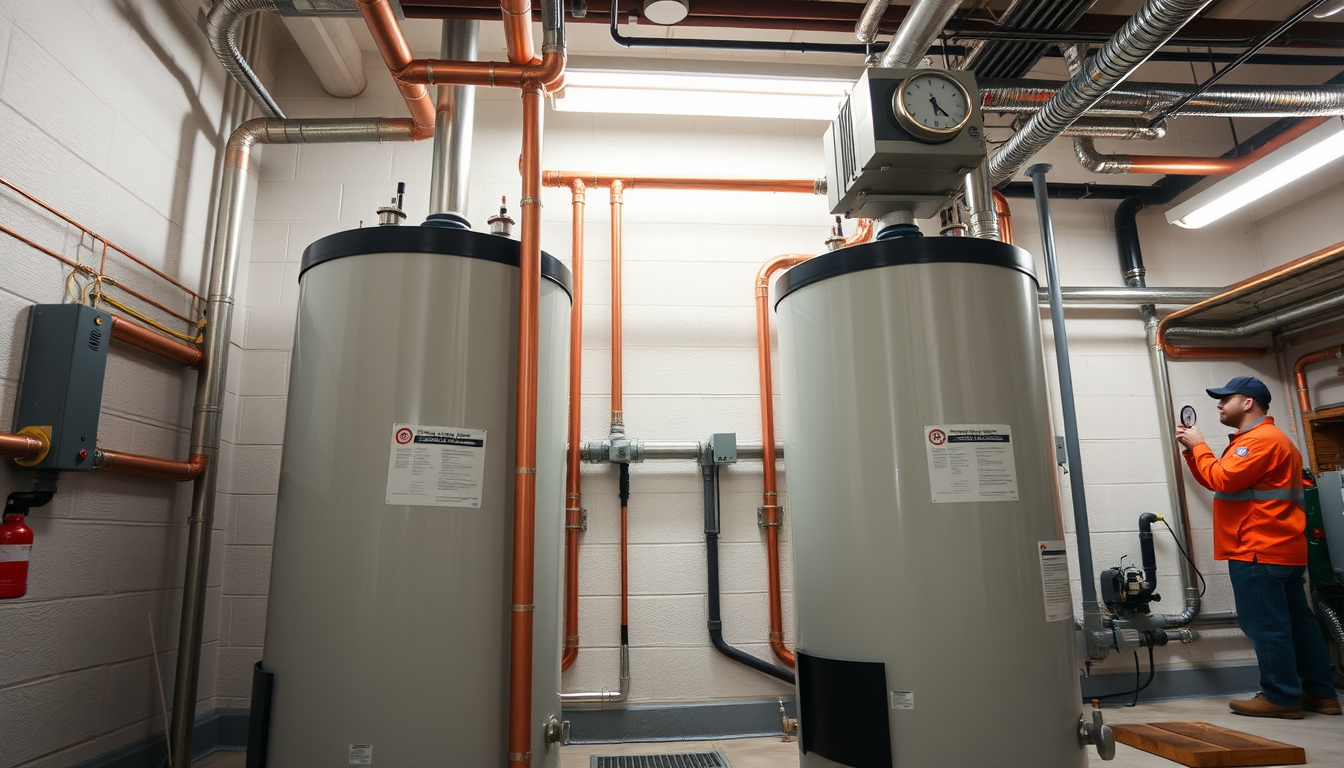
Commercial units are judged on recovery rate and venting condition, not just age. The short answer:
- Repair a failed part on a sound tank. Replace a leaking tank, a unit that keeps failing, or one that can’t keep up.
- Most water heaters last 10 to 15 years (Smarter House, ACEEE), and hard LA water can shorten that.
- Check recovery rate, venting, and LA air rules before approving any swap.
Commercial water heater repair is usually the right first call. A dead igniter or a tripped high-limit switch shouldn’t cost you a whole tank. But repair isn’t always the smart call, and the hard part is telling which situation you’re in before the hot water stops. After 25 years working on Valley, Westside, and Conejo buildings, here’s how we read it.
When is commercial water heater repair the right call?
Repair makes sense when the problem is one failed part and the tank is intact. The parts we see fail most are thermostats, heating elements, gas valves, igniters, and temperature and pressure relief valves. Any of those can be swapped in a single visit.
A repair is also the right call when the unit has been reliable. Hot water should still meet demand, and the heater shouldn’t be deep into its service life. If a part fails once on a healthy heater, fix the part.
Replace instead when one of these shows up:
- The tank is leaking. A leak from a fitting or valve can be repaired. Water weeping from the tank body means the steel has failed.
- Repairs are stacking up. Ask for the service history. Repeat service calls in one year are the unit telling you something.
- Hot water runs out. If staff or tenants run dry at peak hours, you may have a sizing problem, not a broken part.
- Parts are hard to find. An older unit can turn a one-day fix into a week of waiting.
What you’re seeing Usually points to Repair or replace? No hot water, tank is dry and intact Failed igniter, element, thermostat, or tripped limit switch Repair Water at the base of the tank body Corroded tank shell Replace Water at a fitting or valve Loose connection or failed valve Repair Hot at open, lukewarm by mid-morning Undersized recovery rate or heavy scale Diagnose first Several service calls in one year Unit near end of life Lean replace Before we recommend anything, we check the data plate, the flue, the relief valve, and the bottom of the tank. Often the repair is the honest answer. When it isn’t, we say so and show you why.
How much does age matter?
Age is a warning light, not a verdict. Smarter House, published by the American Council for an Energy-Efficient Economy, says most water heaters last 10 to 15 years. It advises having your plumber assess how much life an older unit has left (Smarter House). Find the serial number on the data plate to date the unit.
LA water is a real factor here. LADWP reports that water in the San Fernando Valley and Western Los Angeles averages 8.6 grains per gallon. That’s 147 mg/L as calcium carbonate, with a range of 5.4 to 16.1 grains. LADWP calls anything over 7 hard (LADWP).
LADWP recommends flushing a water heater at least once a year to prevent mineral buildup. It says flushing also extends the life of the heater and makes it operate more efficiently (LADWP). If nobody has flushed your tank, don’t assume the age on the label tells the whole story.
Is recovery rate the real problem?
Often, yes. If you have hot water at 7 a.m. and lukewarm by 9, a new part won’t fix it. Recovery rate is how much hot water a heater can keep making, in gallons per hour, for a set temperature rise (Consulting-Specifying Engineer). Storage size is just the volume of the tank.
Manufacturers publish a first hour rating, the hot water a full heater can deliver in its first hour of use. That figure is typically 90 to 95 percent of tank size plus recovery rate (Consulting-Specifying Engineer).
Here’s why it matters to a repair decision. Buildings change. A restaurant adds a dish machine. A landlord fills a vacant unit. An office turns into a salon. If demand grew past what the heater was sized for, repairing it just restores an undersized unit. Compare your peak-hour demand to the first-hour rating before you spend money on a fix.
Does venting change your replacement options?
Yes, and it’s the item people forget to ask about. Commercial water heater replacement isn’t always a bolt-in swap. Condensing equipment needs completely different vent materials than non-condensing equipment. Category IV appliances can’t stay on a common vent, and a shared vent left oversized for the remaining appliance can draft poorly (International Code Council).
Condensate matters too. It’s low-pH and acidic, and it needs to be neutralized before it goes into your drain lines (International Code Council).
In older LA buildings, that can mean a new vent route through a roof or wall, and a drain nearby for the condensate. Ask any plumber quoting a replacement how they plan to vent it. If the answer is vague, get another quote. Our water heater installation team walks the vent path before we write anything up.
What do LA’s air-quality rules mean for commercial water heater replacement?
They can decide what you’re allowed to install. On June 7, 2024, the South Coast Air Quality Management District approved updates to Rule 1146.2. Natural gas water heaters, including small commercial ones, must meet a zero-emission nitrogen oxides standard when replaced (South Coast AQMD). The district covers large areas of Los Angeles and Orange counties.
The rule applies to natural gas units rated up to 2 million Btu/hr. For existing buildings, compliance comes in three phases, on January 1, 2029, January 1, 2031, and January 1, 2033 (Rule 1146.2 text). Which date applies depends on the equipment type.
The rule also sets a unit age by equipment category, 15 years for some units and 25 for others. Once a compliance date passes, an owner can’t keep operating a unit that has reached that age and exceeds the zero-emission limits (Rule 1146.2 text).
There’s an alternative for emergency replacements. Say a unit fails suddenly after its compliance date and an electrical upgrade is needed to run a compliant one. A non-residential owner can then run a temporary unit for up to six months. The owner must report the failure, the temporary install, and the final install through the district’s Compliance Portal, each within 72 hours (Rule 1146.2 text). Don’t rely on that from memory. Confirm which phase your unit falls into before you price a like-for-like swap, because “same as the old one” may stop being an option.
Does a repair affect hot water safety?
It can. For Legionella control, the CDC says to store hot water above 140°F (60°C). Hot water in circulation shouldn’t fall below 120°F (49°C). The CDC also puts the favorable range for Legionella at 77 to 113°F, and says it may grow as low as 68°F (CDC).
So a thermostat “fix” that leaves the tank running cool isn’t a fix for a hotel, clinic, or apartment building. When we service a unit, we confirm the setpoint. We also check what’s coming out at the far end of the loop, not just whether the burner lights.
If storage runs hot, a tempering system at the outlet is how the delivered water stays safe for people. That’s a separate job from the repair, and worth asking about.
What should you ask before approving a replacement quote?
A quote for commercial water heater repair or replacement should answer more than what the new tank is. Ask these before you sign anything:
- How did you size it? The answer should point to your peak-hour demand and the unit’s first-hour rating, not “same size as the old one.”
- How will it vent, and where does the condensate go? A vague answer means the plumber hasn’t walked the building.
- Does it meet Rule 1146.2 for my building and my date? If they aren’t sure, ask them to check the phase before ordering.
- Who is installing it? Rule 1146.2 defines an installer as someone required to hold a license from the California Contractors State License Board.
- What did you check before calling it dead? The answer should name the tank bottom, the service history, and the failed part.
A plumber who can answer all five has looked at your building, not just your invoice history. That’s the difference between a quote and a sales pitch.
What can you check yourself, and when should you call?
You can check a few things safely. Look at the breaker for an electric unit. Look for water on the floor and note where it’s coming from. Find the data plate and write down the model and serial number. Watch whether hot water runs out at the same time each day. When you call, have the model, serial number, fuel type, and those symptoms ready. It shortens the diagnosis.
Stop there. Gas piping, venting, and relief valves are not DIY on a commercial unit. If you smell gas, leave the building and call the gas company from outside. Call a plumber for a tank that’s leaking, a relief valve that keeps discharging, or a unit that’s making hot water inconsistently.
Frequently Asked Questions
How long does a commercial water heater last?
Most water heaters last 10 to 15 years, according to Smarter House (ACEEE). Hard water, skipped flushing, and heavy use can shorten that. LADWP recommends flushing at least once a year.
Can a leaking commercial water heater be repaired?
It depends on where it leaks. Commercial water heater repair is often possible for a leak at a fitting, drain valve, or relief valve. Water coming out of the tank body means the tank has failed, and that unit needs replacing.
Can I replace my water heater with the same model?
Not always in LA. Natural gas units rated up to 2 million Btu/hr fall under South Coast AQMD Rule 1146.2, which is moving replacements to zero-emission equipment on a phased schedule (Rule 1146.2 text). Confirm your unit’s phase before ordering. Our water heater installation team can check that with you.
What temperature should a commercial water heater store hot water at?
The CDC’s Legionella guidance is to store hot water above 140°F (60°C) (CDC). Stored that hot, water can scald, so ask about a tempering system at the outlet.
When to call us
If your heater is leaking from the tank, failing repeatedly, or can’t keep up at peak hours, we’d rather look at it before the hot water stops. Call Rooter Experts at 888-488-4808 about commercial water heater repair or replacement. We’ll tell you if it’s a repair, and we’ll say so if it isn’t. If your problem doesn’t match what’s described here, a simple repair may be all you need. You can also see everything we service or learn about our family crew.
Written by the Rooter Experts service crew, a family-owned LA plumbing company based in Sun Valley. Last updated September 2026. Sources were re-checked on September 21, 2026. Figures come from the sources linked above, and we don’t quote prices in articles.
-
Bathroom Sink Clog That Keeps Coming Back? Start at the Pop-Up Stopper

Most bathroom sink clogs are hair and soap scum caught on the pop-up stopper, not deep in the line. Got a bathroom sink clog that won’t quit? Nine times out of ten, it’s not the pipes. It’s the little pop-up stopper sitting right at the drain opening, wrapped in a wad of hair and soap scum. Before you reach for a bottle of drain cleaner or call anyone, pull that stopper and take a look. That single step fixes most bathroom sink clogs in about ten minutes, no tools required.
The short answer: A slow or clogged bathroom sink is almost always hair caught on the pop-up stopper, not a blockage deep in your line. Pull the stopper, clean it off, and check the P-trap underneath if that doesn’t fix it. Save the drain snake and the chemical cleaner for last, and know when a clog is telling you something bigger is going on.
- The pop-up stopper catches hair and soap scum first. Check it before anything else.
- If the stopper’s clean and the sink is still slow, the clog is likely in the P-trap right below.
- LA’s hard water speeds up soap scum buildup on both the stopper and the trap walls.
- Chemical drain cleaners can be rough on older pipe. Use them carefully, if at all.
- A clog that keeps coming back within days, or gurgling in other fixtures, points to a bigger problem than the sink itself.
From the field: We’ve run service calls across the San Fernando Valley, Tri-Cities, Westside, and Conejo corridor for 25 years. This is the fix that solves the job before we ever pull out a snake.
What’s Actually Causing Your Bathroom Sink Clog?
Most bathroom sink clogs come from one of three places: the stopper, the P-trap, or further down the line. Knowing which one you’re dealing with saves you from tearing apart pipe you didn’t need to touch.
Where the clog usually is What you’ll notice What to do Pop-up stopper Sink drains slow, hair visible right at the opening Pull the stopper and clean it off P-trap Stopper’s clean but the sink still drains slow Open and clean the P-trap underneath Branch or main line Gurgling in other fixtures, or the clog returns within days Call a plumber for a camera inspection or hydrojetting Hair on the pop-up stopper
Bathroom sinks see a lot more hair than kitchen sinks. Shaving, brushing, washing your face. All of it heads for the drain, and the pop-up stopper’s metal post is shaped to catch exactly that kind of debris. Give it a few weeks and you’ve got a solid wad blocking most of the opening. Home-improvement guides back up what we see on service calls: hair and soap scum ball up at the base of the stopper before a clog ever reaches the rest of the line (This Old House). If you’re constantly pulling hair off the same stopper, a mesh screen or a hair-catching stopper insert on top of it will save you the monthly cleanout.
Soap scum and hard water buildup
Los Angeles water runs hard. Culligan LA, citing LADWP figures, puts local hardness at 10 to 15 grains per gallon, which lands in the hard water category (Culligan LA). Hard water leaves mineral deposits that mix with soap residue and toothpaste. That combination sticks to the stopper post and the inside of the drainpipe like glue.
When it’s the P-trap instead
If the stopper’s clean and the sink still drains slow, the clog has probably settled in the P-trap, the U-shaped pipe under the sink. That bend is built to hold a little standing water and block sewer gas. It also happens to be a perfect spot for hair and gunk to collect.
How to Unclog a Bathroom Sink: Pull the Stopper First
This is the step almost everyone skips, and it’s the one that solves most bathroom sink clogs without a wrench or a single drop of chemical cleaner. Here’s how to unclog a bathroom sink the way we’d do it on a service call, starting with the stopper.
Removing the pop-up stopper
Most pop-up stoppers come out in four steps, no tools beyond your hands:
- Look under the sink for the pivot rod, a thin horizontal rod that connects to the vertical stopper post.
- Squeeze or unscrew the retaining nut where the rod enters the drainpipe.
- Pull the rod straight out.
- Lift the stopper up and out of the drain from above.
No rod under your sink? Some newer stoppers just twist and pull free by hand.
What you’ll find, and what it tells you
Pull that stopper and you’ll usually find a dense clump of hair wrapped around the post, sometimes with a gray coating of soap scum. That’s your clog, sitting in your hand. If the stopper comes out clean and the drain’s still slow, that’s your sign to move on to the P-trap next.
Cleaning and reinstalling
Pull the hair off by hand or with an old toothbrush, then rinse the stopper and wipe down the pivot rod. While it’s out, drop a bent wire hanger or a plastic drain-cleaning strip a few inches into the opening to grab anything left behind. Reinsert the stopper, slide the pivot rod back through, and tighten the retaining nut. Run the water and see how it drains.
Still Slow? Clean the P-Trap Next
If the stopper wasn’t the problem, the P-trap is next. It’s a bit messier than the stopper, but it’s still a job most homeowners can handle in fifteen minutes.
- Set a bucket under the trap first, because it’ll hold some standing water.
- Loosen the slip nuts on both ends of the U-shaped pipe by hand or with slip-joint pliers, turning counterclockwise.
- Once they’re loose, lift the trap section out and dump it into the bucket.
- Clear out whatever’s packed inside with a stiff brush or a straightened coat hanger, then rinse it.
- Reconnect both slip nuts and run water to check for leaks and drainage.
One thing we see a lot in older LA houses, especially slab-on-grade homes without a basement or crawlspace. The trap and the tailpiece underneath are often original to the house, made of thin chrome-plated brass, and that material corrodes from the inside over decades. If the slip nuts won’t budge, or the pipe itself feels soft or flakes when you touch it, stop and call a plumber instead of forcing it. A cracked trap under a slab-on-grade sink is a bigger repair than a stuck nut.
Should You Use a Plunger, Snake, or Chemical Drain Cleaner?
If the stopper and the trap are both clean and the sink is still sluggish, you’ve got a few more tools to try. They’re not all equal.
A sink plunger, with the overflow hole covered, is safe and often effective. A hand-crank drain snake fed a few feet down the pipe works well for anything past the trap. Chemical drain cleaners are where we’d tell you to slow down. The heat they generate while working through a clog can warp PVC and speed up corrosion in older galvanized and cast-iron drain lines (Nick’s Plumbing). That’s exactly what’s under the floor in a lot of pre-1960 LA homes. If your house has original plumbing, skip the chemicals and go mechanical instead, or bring in a professional drain cleaning visit for anything that keeps resisting.
When Does a Bathroom Sink Clog Mean a Bigger Problem?
Most bathroom sink clogs stop at the stopper or the trap. But a few warning signs mean the issue reaches further than your bathroom.
Watch for gurgling in the toilet or tub when you run the sink. Same goes for multiple slow drains at the same time, or a clog that returns within a few days of cleaning it out. Any of those point toward a partial blockage in the branch line or main sewer line, not just the fixture in front of you. That’s a different job. It usually calls for a camera inspection or a hydrojetting visit to clear the line properly, rather than just pushing the clog further down.
If that sounds like what’s happening at your place, give us a call at 888-488-4808. We’ve been running trucks around the San Fernando Valley, the Tri-Cities, the Westside, and the Conejo corridor for 25 years. We can tell you over the phone whether it’s worth a visit, before you spend a weekend chasing the wrong pipe. You can read more about our crew on our about page, or see the rest of what we handle on our plumbing services page.
Frequently Asked Questions
What’s the fastest way to unclog a bathroom sink?
Pull the pop-up stopper first. It takes about ten minutes and solves most bathroom sink clogs on its own. Hair collects there before it ever reaches the P-trap or the drainpipe.
Why does my bathroom sink keep clogging?
If it clears and clogs again within a week or two, hair and soap scum are probably rebuilding faster than expected. LA’s hard water speeds that up. A clog that returns fast despite regular cleaning can also mean a partial blockage further down the line.
Is it safe to use a chemical drain cleaner on an older bathroom sink?
Be careful with it. Chemical cleaners generate heat inside the pipe, and that’s harder on older galvanized or cast-iron lines, common in homes built before 1960 across LA. A plunger or drain snake is gentler on aging plumbing.
How do I know if it’s the P-trap or something deeper in the line?
Clean the stopper and the P-trap first. If the sink still drains slow, or other fixtures gurgle when you run the water, the clog is likely in the branch line or main sewer line. That needs a proper inspection.
Do I need a plumber to clean a bathroom sink stopper or P-trap?
No. Both are homeowner-friendly jobs that take basic hand tools and about fifteen to twenty minutes combined. Call a plumber when the clog returns fast, spreads to other fixtures, or doesn’t respond to the stopper and trap cleaning above.
-
PEX vs Copper Repipe: Which Pipe Actually Holds Up in an LA Home
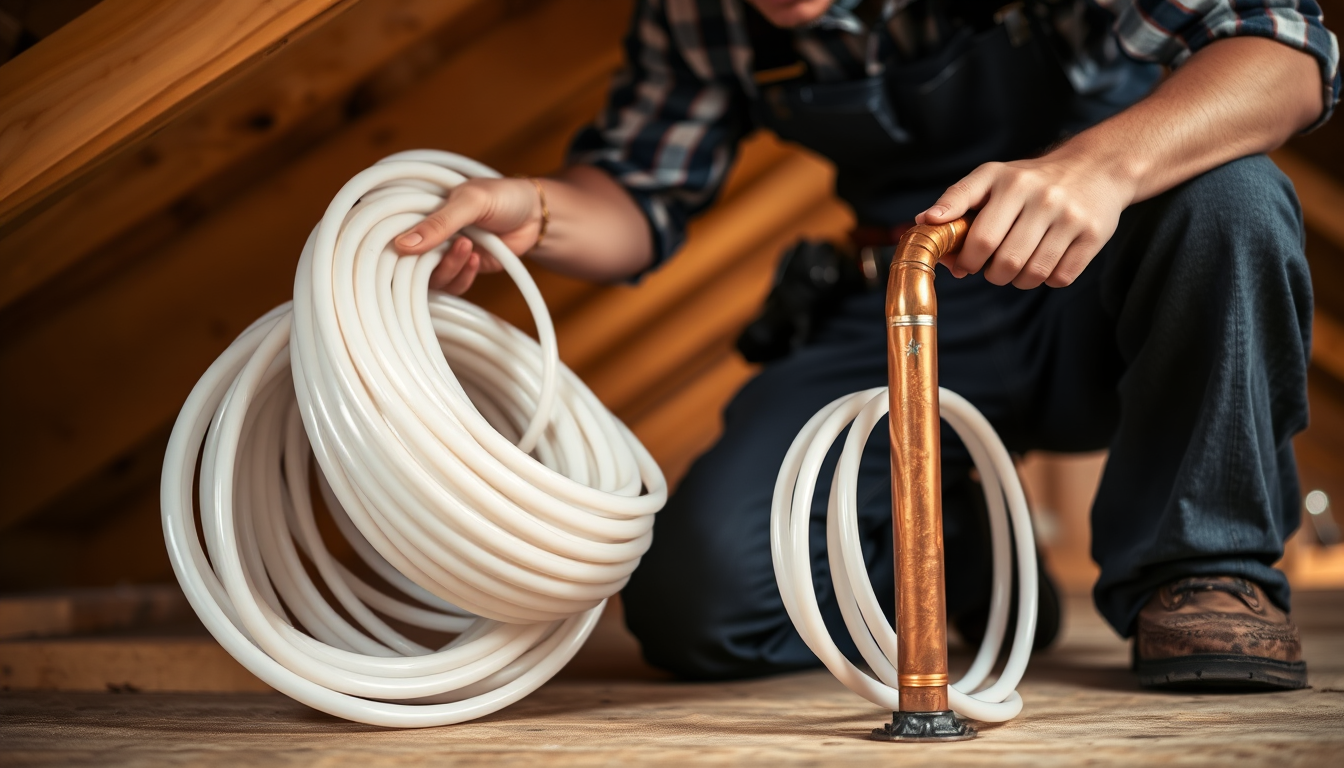
A Rooter Experts plumber lays out PEX tubing next to copper pipe before starting an LA whole-house repipe. The short answer: For most LA homes, PEX holds up better against our hard water and costs less to install for a whole house repipe. Copper still has a place for water heater stub-outs, exposed runs, and homes where a buyer’s inspector expects to see it. The right call in a pex vs copper repipe decision depends on your home’s age and your slab. It also depends on what you plan to do with the property, not just which pipe sounds more premium.
- PEX resists the pinhole leaks that hard water causes in copper over time.
- Copper has a longer track record and resists rodent damage that PEX doesn’t.
- Pre-1960 homes with galvanized pipe need a full repipe either way. The question is just the material.
- A hybrid approach, PEX for the runs and copper at the water heater, is common and code-legal in California.
We’ve repiped homes across the San Fernando Valley, the Tri-Cities, the Westside, and the Conejo corridor for 25 years, on both the residential and commercial side, and this is what we’ve actually seen hold up under LA conditions, not what a sales flyer says.
What Are PEX and Copper Pipe, Actually?
Copper is rigid metal tubing, soldered together at every joint. It’s been the standard supply line material in American homes for decades, and most plumbers your age or older learned on it first.
PEX, cross-linked polyethylene, is a flexible plastic tubing that snakes through walls and joists in long runs with far fewer joints. California didn’t always allow it. The state’s Building Standards Commission certified the environmental review and formally added PEX to the California Plumbing Code effective August 1, 2009. That’s after years of the material already being used in other states. Source
Factor PEX Copper Corrosion from hard water Resistant Vulnerable over decades, pinhole leaks Typical service life Manufacturer warranties vary by brand 50 years or more with good water chemistry Installation joints Fewer, no soldering More, each one soldered Rodent resistance Vulnerable, rats and mice can chew through it Resistant UV exposure Degrades in direct sunlight Unaffected Best use in a repipe Long runs through walls and attics Water heater stub-outs, exposed exterior runs How Does Each Pipe Hold Up to LA’s Hard Water?
This is the part that actually matters for a repipe decision, not the sales pitch.
Los Angeles water runs hard to very hard depending on your neighborhood and which source feeds it, generally in the range LADWP itself reports for the system. Source Hard water carries more dissolved minerals. Over the years, those minerals contribute to the pinhole leaks we see in copper supply lines, especially in homes with the original 1960s-1980s copper that’s now decades old.
PEX doesn’t corrode from mineral content the way copper does. It’s plastic, so hard water scale builds up differently and doesn’t eat through the pipe wall from the inside. That’s the main reason we’ve shifted toward recommending PEX for whole house repipe work. It’s especially true in homes on well water or on the harder end of the LA supply.
Copper isn’t defenseless. Under normal city pressure and with decent water chemistry, copper still gives you 50 years of service life, often longer. Source The failures we get called out for are almost always tied to water chemistry or stray electrical current. Sometimes it’s just a bad original installation, not copper failing on its own by design.
Slab Homes and Pre-1960 Houses: Where the Pipe Choice Matters Most
A huge share of the homes we work on in the Valley, the Tri-Cities, and the older Westside neighborhoods are slab-on-grade. Supply lines run through or under the concrete. That changes the calculus.
If your original lines are galvanized steel, common in homes built before 1960, you’re on borrowed time no matter which replacement material you pick. Galvanized pipe corrodes from the inside as its zinc coating wears away. It typically holds up somewhere in the 40 to 70 year range before problems set in, and most of those homes are well past that now. Source
For a slab repipe, PEX has a real practical edge. Its flexibility lets a crew reroute supply lines through the attic and down interior walls instead of tunneling through the slab again. That usually means less concrete cut open and a faster job. Copper can be rerouted the same way, but the rigid tubing needs more fittings and more solder joints to make the same turns. That adds labor time and more potential failure points down the line.
What Does a Whole House Repipe Actually Involve?
Whether you land on PEX or copper, a whole house repipe is not a quick visit. A crew has to shut off water to the house, cut access points in drywall or the attic, and run new lines to every fixture. Then they pressure test the new system and patch what they opened. You’ll be without full water service for stretches of the work. Plan on some drywall and paint touch-up afterward regardless of which pipe you choose.
The permit and inspection process is the same either way in most LA-area jurisdictions. A licensed plumber pulls the permit, the work gets inspected before walls close back up, and the job isn’t final until it passes. If a contractor is skipping permits to save you money, that’s a red flag, not a discount.
Where Does Copper Still Have the Edge?
We’re not going to pretend PEX wins everything.
- Rodents. Rats and mice will chew through PEX tubing the same way they gnaw through plastic-coated wiring, and mainstream home publications have documented it. Source Rigid copper doesn’t give them anything to gnaw through. If you’ve had a rodent problem in the attic or crawlspace, that’s a real factor to weigh.
- UV exposure. PEX degrades if it’s left exposed to direct sunlight for extended periods. Copper doesn’t care. Any exposed exterior runs are usually better off in copper regardless of what’s used inside the walls.
- Buyer perception. Some buyers and inspectors in this market still see copper as the “real” repipe and treat PEX as the cheaper option, fair or not. If you’re repiping specifically to help a sale, that perception is worth knowing about before you pick a material.
Where Does PEX Win for Most LA Homes?
- Speed. Fewer joints and flexible runs mean less time with your water shut off and less drywall opened up.
- Corrosion resistance. No pinhole leaks from hard water mineral content over the decades ahead.
- Noise. PEX doesn’t transmit the water hammer and pipe knock you sometimes get with rigid copper runs.
- Cost. Less material cost and less labor time generally add up to real savings on a whole house repipe. Your actual number still depends on your home’s layout and how much access the crew has.
Can You Mix PEX and Copper in One Repipe?
Yes, and we do it often. A common approach is PEX for the long horizontal and vertical runs through the attic and walls, with copper stub-outs at the water heater and any exposed exterior connections. This gives you PEX’s corrosion resistance and installation speed where it matters most, while keeping copper’s heat tolerance and durability right at the water heater, where temperatures run highest.
If you’re also due for a water heater swap, a repipe is a smart time to handle both at once. That’s especially true if you’re considering a tankless water heater installation, since it requires different connection sizing than your old tank.
Is Repiping a DIY Job?
No. We’ll say this plainly: don’t attempt a whole house repipe yourself. This isn’t like swapping a faucet washer. You’re dealing with a pressurized system feeding every fixture in your home. There are permit requirements, and there’s the very real risk of a bad joint flooding a wall you already closed up.
What you can do yourself is the early diagnosis. Watch for recurring pinhole leaks, rusty water from multiple fixtures, or a pressure drop across the whole house rather than one fixture. Any of those is a signal to get a licensed plumber out and find out whether you’re looking at a repair or a full repiping job.
Frequently Asked Questions
Does PEX cost less than copper for a whole house repipe?
Generally yes. PEX typically costs less in both material and labor because it requires fewer fittings and installs faster than soldered copper. Your actual cost depends on your home’s size, how accessible the walls and attic are, and how many fixtures you’re running to. Get a written quote based on a walkthrough rather than a phone estimate.
Will PEX hold up in an older LA home with hard water?
Yes. PEX doesn’t corrode from dissolved minerals the way copper can over decades. That’s one of the main reasons it’s become a common choice for a pex vs copper repipe in homes on the harder end of the LA water supply.
Can rats or rodents chew through PEX pipe?
Yes, rodents can chew through PEX, and they can’t chew through copper. If your home has had an active rodent problem in the attic or crawlspace, that’s a legitimate reason to lean toward copper for those exposed runs. You can also use rodent-resistant PEX sleeving where lines are exposed.
Is a hybrid PEX and copper repipe a real option?
Yes, and it’s common practice. Many repipes use PEX for the long runs through walls and attics and copper for the water heater stub-outs and any exposed exterior connections. That combines PEX’s corrosion resistance with copper’s heat tolerance right where it matters most.
How long does a whole house repipe take?
It depends on your home’s size and how the crew has to access the walls. As a rule, PEX installs faster than copper because it needs fewer joints and solder connections. Ask your plumber for a timeline specific to your home’s layout rather than relying on a general estimate.
The Bottom Line
For most LA homes dealing with hard water and an aging copper or galvanized system, PEX is the more practical choice for a pex vs copper repipe. Copper still earns its keep at the spots where heat tolerance and rodent resistance matter most.
If you’re seeing pinhole leaks, rusty water, or pressure problems that point to failing supply lines, that’s worth a real evaluation, not a guess. Call Rooter Experts at 888-488-4808 and we’ll take a look at what’s actually going on in your walls before you commit to either material. We’ve been doing this on LA trucks for 25 years, and we’ll tell you straight what your home needs.
-
That Rotten Egg Water Heater Smell in Your LA Home? It’s the Anode Rod, Not a Gas Leak
Rooter Experts pulls a corroded anode rod, the usual cause of a lingering rotten egg water heater smell. You turn on the hot tap and get hit with a water heater smell that reminds you of rotten eggs. Your first thought is probably gas leak. In 25 years of service calls across the Valley, Tri-Cities, and Westside, that smell has almost never been gas. It’s bacteria in your water heater tank reacting with the anode rod.
The short answer: If the rotten egg smell only shows up when you run hot water, it’s not a gas leak. It’s hydrogen sulfide gas. Bacteria in your tank react with the anode rod and produce it. Replacing that rod, usually with a zinc-aluminum or powered anode, clears the smell in a day or two. If you smell gas in the air near your appliances, not just at the tap, that’s a different problem. Get out and call the gas company.
Is That Smell a Gas Leak or Your Water Heater?
Natural gas has no smell on its own. Utilities add a chemical called mercaptan so a leak is easy to notice. It smells like rotten eggs too, which is why the two get confused.
The difference is where you smell it. A gas leak shows up in the air, near your water heater, furnace, or gas line. It doesn’t matter whether anyone’s touched a faucet. A water heater smell tied to the anode rod is different. It only shows up in your hot water, right at the tap or showerhead.
If you smell gas in the air, in the garage, a closet, or anywhere near an appliance, don’t wait to figure out which one it is. Get everyone out of the house. Don’t flip light switches or use your phone inside. Call SoCalGas from a safe location at 1-800-427-2200, per SoCalGas’s own leak safety guidance. Source
What Causes the Rotten Egg Smell?
Every standard tank water heater has a sacrificial anode rod bolted into the top. It’s a rod of magnesium or aluminum. Its whole job is to corrode instead of your steel tank. That’s what keeps the tank from rusting through early.
The problem starts when sulfate-reducing bacteria get into the tank. They feed on the anode rod’s metal and produce hydrogen sulfide gas as a byproduct. That gas is the water heater smell you’re picking up at the hot tap. It’s the classic rotten egg odor.
Magnesium rods react more than aluminum or zinc-blend rods. Magnesium is also the factory-standard on most tanks, so homes with a stock rod see this problem more often.
In short: the rotten egg smell in your hot water is hydrogen sulfide gas, produced when sulfate-reducing bacteria react with your water heater’s sacrificial anode rod, most often a magnesium one. It’s a tank maintenance issue, not a gas leak, and anode rod replacement is the standard fix.
The Cold Water Test: How to Confirm It’s the Tank
Before you assume anode rod replacement is the fix, run this test. Turn on the cold tap only and smell it.
No smell in cold water, but rotten eggs in hot water? That points straight at the tank and the anode rod.
Smell in both hot and cold water? That’s not the anode rod. It could be sulfate-reducing bacteria in the water supply itself. It could also be sewer gas venting back through a dry drain trap somewhere in the house. Odor coming from a drain rather than a faucet is usually a drain cleaning issue, not a water heater one.
Rusty or discolored water throughout the house, not just at the hot tap, points somewhere else entirely. That pattern usually means corroding galvanized supply pipe, not the tank. It’s common in older LA homes still running original galvanized lines. The fix there is repiping, not a new anode rod.
Why Does LA Water Make This More Common?
Los Angeles water runs hard. LADWP-reported hardness averages 10 to 15 grains per gallon, or 171 to 257 parts per million, depending on your neighborhood’s source blend. Source
Hard water means more dissolved minerals settling as sediment at the bottom of your tank. That sediment gives bacteria more surface area to work with, which speeds up the smell.
Older homes across the Valley and Tri-Cities are more likely to still have the original magnesium rod, especially anything built before 1960. If your water heater came with the house and nobody’s touched the anode, that rod has probably been reacting with LA’s hard water for years.
How to Fix It: Anode Rod Replacement
Anode rod replacement is a straightforward fix. The type of rod you install matters more than most homeowners realize. Zinc-aluminum and powered rods both resist the bacterial reaction that produces hydrogen sulfide, while a standard magnesium rod, though it protects the tank well, is the most likely to bring the smell back.
Zinc-Aluminum Alloy Rod
This is the most common fix. Zinc doesn’t feed the bacteria that produce hydrogen sulfide the way magnesium does. Swapping to a zinc-aluminum rod usually clears the smell without giving up corrosion protection.
Powered (Titanium) Anode Rod
A powered anode uses a small electric current instead of a sacrificial metal. There’s nothing corroding for bacteria to react with. It costs more upfront but doesn’t need replacing every few years.
Standard Magnesium Rod
Magnesium gives strong corrosion protection. It’s also the rod most likely to cause odor problems in bacteria-prone water. We don’t recommend it as a replacement if smell is the issue that brought you here.
Anode rod types at a glance:
- Magnesium: best corrosion protection, most likely to cause rotten egg odor in bacteria-prone water
- Zinc-aluminum alloy: reduces hydrogen sulfide production, the standard fix for smell complaints
- Powered (titanium): no sacrificial metal to corrode, higher upfront cost, longest service life
Flushing and Disinfecting the Tank
Rod replacement alone won’t clear a tank that’s already got sediment and bacteria built up. A full fix usually means draining the tank and flushing out the sediment. Disinfecting the inside comes before the new rod goes in.
Skip the flush and you can install a brand new rod and still smell rotten eggs. The bacteria are living in the sediment, not just on the metal.
DIY or Call a Plumber?
Pulling an anode rod yourself is possible, but it’s rarely as simple as it looks online.
The rod is torqued in tight at the factory, often well past what a hand wrench can break loose. You’ll need to shut off power or gas to the heater and drain enough water to relieve pressure. You also need clearance above the tank to pull the rod straight up. That’s a real problem in a lot of LA garages and slab-on-grade utility closets, where there’s barely a foot of ceiling clearance above the water heater.
Get the wrong rod, cross-thread it, or skip the flush, and you can make the smell worse. You can also shorten the life of the tank. Check your warranty terms before you start. On many tanks, manufacturer guidance calls for anode inspection by a qualified servicer or plumber, and pulling the rod outside of an inspection or replacement can void the warranty. Source
Before you try it yourself, check for these:
- A rod with less than 6 inches of exposed core wire at either end (replace it, per manufacturer guidance)
- Enough ceiling clearance to pull the rod straight up out of the tank
- The correct rod type and thread size for your specific water heater model
- Power or gas shut off, and enough water drained to relieve tank pressure
If you’ve got the tools, the clearance, and a rod that matches your tank, it’s a reasonable weekend project. If any of that is in question, or the smell keeps coming back after a DIY swap, that’s when it’s worth calling in a water heater pro.
How Often Should You Replace the Anode Rod?
Most water heaters need anode rod replacement about once every 3 to 5 years. Source
Hard water and heavy use shorten that window. If your water heater is original to the house and nobody knows the last time the rod was checked, that’s reason enough to have it looked at, whether you’ve got a water heater smell yet or not.
Fighting this smell for the second or third time on the same tank? If the tank is pushing 10 years old, replacing the rod again might just be delaying the inevitable. At that point it’s worth talking through water heater installation instead of another repair.
Frequently Asked Questions
Is the rotten egg smell from my water heater dangerous to breathe?
A water heater smell of rotten eggs and a natural gas leak are not the same thing. The hydrogen sulfide from an anode rod reaction is a different gas than the mercaptan added to natural gas for leak detection. The smell alone doesn’t mean you have a gas leak. That said, any strong, persistent odor in your home is worth taking seriously. Use the cold water test above. Call a plumber or SoCalGas if you’re still unsure which one you’re dealing with.
Can I just remove the anode rod instead of replacing it?
You can, and it will usually stop the smell fast. It also removes the corrosion protection the rod exists for, so the bare tank starts corroding instead. Most manufacturers require an anode rod to be present for the warranty to stay valid. We don’t recommend removing it and leaving the tank bare.
Will flushing the tank permanently fix the smell?
A flush clears out existing sediment and bacteria, which helps. Leave the same magnesium rod in place, though, and the smell usually comes back within a few months. Pairing the flush with anode rod replacement, using a zinc-aluminum or powered rod, is what makes the fix stick.
Does this happen with tankless water heaters?
Rarely. Tankless units heat water on demand instead of storing it. There’s no standing tank of water for bacteria to work in, and most tankless models don’t rely on a sacrificial anode rod the same way. Dealing with recurring smell issues on a tank-style heater? That’s one more reason to compare it against a tankless water heater installation.
How urgent is it to call a plumber?
Not urgent from a safety standpoint once you’ve confirmed it’s the anode rod and not a gas leak. It is worth handling within a few weeks, though. The longer sediment and bacteria sit in the tank, the more they affect water quality. They also shorten the life of the heater.
Run the cold water test, confirm the smell is only in your hot water, and you’re ready to get it handled? That’s exactly the kind of call we take every day. Rooter Experts has been diagnosing and fixing water heater smell issues for 25 years, across the San Fernando Valley, Tri-Cities, Westside, and Conejo corridor. It’s the same crew whether it’s your kitchen sink or a commercial building’s hot water system. Call us at 888-488-4808, or look through our full range of plumbing services to see what else we handle. Learn more about who we are on our about page.
-
Relief Valve Dripping? Here’s How to Tell Normal Thermal Expansion From a Warning Sign
Thermal expansion or high tank pressure: a dripping relief valve line always deserves a closer look. Relief valve dripping is one of the most common calls we get on a water heater. Most of the time it’s not an emergency. Sometimes it is. The difference comes down to how often it drips, how much water shows up, and what’s been happening with your tank lately.
The short answer: a few drops during or right after the heating cycle can be normal, especially in a closed system without an expansion tank. Water that runs steadily, drips daily, or puddles under the tank is not normal and means the valve is doing its job because something upstream is off.
What Does the Water Heater Pressure Relief Valve Do?
The water heater pressure relief valve (plumbers call it the T&P valve, for temperature and pressure) is a safety device, not a fixture. It sits on top of or on the side of your tank with a discharge pipe running down toward the floor.
Its job is simple. If the pressure or temperature inside the tank climbs past a safe limit, the valve opens and dumps water to relieve the buildup before something worse happens, like a tank failure. On a standard residential water heater, that valve is built to open around 150 psi and 210 degrees Fahrenheit (Watts). That’s well above where your tank should ever operate day to day, so if yours is opening, the tank got close to a limit it shouldn’t be near.
Is Relief Valve Dripping Normal, or a Warning Sign?
Here’s the short version. Occasional dripping during a heating cycle can be normal. Continuous or daily dripping is not, and it means the valve is compensating for a pressure or temperature problem somewhere in the system.
When It’s Normal
Every time your water heater fires up, the water inside expands slightly. In a closed plumbing system, one with a check valve or pressure regulator at the meter and no expansion tank, that expanding water has nowhere to go. So a few drops discharge from the relief valve to release the extra pressure. If it happens occasionally, right after the burner or elements kick on, and stops on its own, that’s the system working as designed.
When It Isn’t
Steady dripping, a puddle that shows up every day, or water running even when the tank has been sitting cold for hours is different. That points to a real cause, not routine expansion, and it’s worth tracking down before it gets worse.
Sign Normal Warning Sign Frequency Occasional, after heating cycles Daily or continuous Timing Right after the burner or elements run Even when the tank has been cold for hours Amount A few drops Steady trickle or puddle System type Closed system, no expansion tank Any system, especially with rising temperature or pressure What Causes a Relief Valve to Drip in LA Homes?
We see a handful of causes over and over on service calls across the San Fernando Valley, the Tri-Cities, the Westside, and the Conejo corridor. Most trace back to pressure, temperature, or a valve that’s simply worn out. The pattern we run into most is a 12-plus-year-old tank in an older home, no expansion tank in sight, still running on whatever temperature setting it shipped with.
High Tank Pressure
California Plumbing Code requires a pressure reducing valve at the point where the water line enters the building whenever incoming pressure exceeds 80 psi (California Plumbing Prep). A lot of older LA homes, especially anything built before that requirement was enforced, either never had one installed or have one that’s failed. Without it regulating pressure down, your tank can sit closer to the relief valve’s threshold than it should, and any small spike pushes it over.
Thermal Expansion With No Expansion Tank
If your home has a check valve or pressure regulator at the meter, your plumbing is a closed system. Heated water expands and, without a dedicated expansion tank to absorb that extra volume, the relief valve becomes the only pressure release available. This is the single biggest cause of “normal” dripping, and it’s also the easiest one to actually fix.
Temperature Set Too High
The U.S. water heater industry generally recommends a 120 degree Fahrenheit setting as the standard for most households, balancing safety, energy use, and scald risk (A. O. Smith). Many tanks ship set higher than that. Push the temperature dial too far and you’re closer to that 210 degree valve threshold than you realize.
Sediment Buildup
LA’s hard water leaves mineral deposits at the bottom of the tank over time. That sediment layer can coat the valve seat, keep it from sealing fully after it opens, and cause a slow, steady drip long after the pressure has normalized. It’s more common in tanks that have never been flushed.
A Worn-Out or Failing Valve
Relief valves don’t last forever. Years of mineral exposure, hard water, and repeated cycling wear down the seal inside. If your tank is older and the valve is dripping even after you’ve ruled out pressure and temperature, the valve itself is probably the problem. If your plumbing is old enough that pressure issues keep recurring across the house, it may be worth having the whole system evaluated, sometimes a repipe is the real fix, not just the water heater.
How to Check It Yourself (and When Not To)
You can safely gather information before you decide whether to call someone. Here’s what’s reasonable to check on your own:
- Watch the discharge for a day. Is it a few drops after the burner runs, or a steady trickle at all hours?
- Check the temperature dial. If it’s set above 120°F, that’s worth noting.
- Look at the tank’s age on its data plate. Anything past 10 to 12 years old is more likely to need a valve or full replacement soon.
- Check whether you have a visible expansion tank near the water heater. If you don’t and your home has a pressure regulator, that’s a strong clue.
What you shouldn’t do is cap, plug, or tie down the relief valve to stop the drip. That valve is the one thing standing between a pressure buildup and a tank failure. Don’t attempt to replace it yourself either. The tank is pressurized and often still hot, and a valve swapped in wrong can leave you with a bigger problem than a drip.
DIY Fix or Call a Plumber?
Turning down the thermostat to 120°F is something most homeowners can do safely and it’s worth trying first if your tank is set higher. Beyond that, we’d rather you call.
Installing a thermal expansion tank, testing actual system pressure, and replacing a worn relief valve all involve working on a pressurized, often hot system, and getting it wrong risks a bigger leak or a scalding injury. If you’ve checked the temperature setting and the dripping is still steady, or your water heater is older and you’re not sure what’s causing it, that’s when it’s time to get a water heater looked at by someone who does this daily.
Frequently Asked Questions
Is it normal for a water heater relief valve to drip?
Occasional dripping right after the heating cycle can be normal, especially in a closed plumbing system without an expansion tank. Steady or daily dripping is not normal and usually means tank pressure, temperature, or the valve itself needs attention.
Can I just cap or tighten a dripping relief valve to stop it?
No. The valve is a safety device that releases pressure before a tank failure. Capping or plugging it removes that protection entirely and can turn a minor drip into a serious hazard.
What temperature should I set my water heater to?
120 degrees Fahrenheit is the standard recommendation for most households, balancing scald safety with energy use. Relief valves are typically rated to open around 210 degrees, so a lower thermostat setting keeps you well clear of that threshold.
Does a dripping relief valve mean I need a new water heater?
Not necessarily. Many drips trace back to a missing expansion tank, a high temperature setting, or a worn valve that can be replaced on its own. An aging tank with a dripping valve and other signs of wear is a different story and may be closer to the end of its life.
Why does my relief valve drip more in summer or after long showers?
Heavy hot water use makes the tank cycle more often, which means more heating cycles and more chances for thermal expansion to push water out through the valve. If your home lacks an expansion tank, that pattern tends to show up most after periods of high demand.
If what you’re seeing matches the warning signs above, steady dripping, an old tank, or you’re just not sure what’s causing it, give us a call at 888-488-4808. We’re a licensed, family-run plumbing crew serving Los Angeles, Ventura, and Orange counties, and we’ve been diagnosing water heaters across all three for 25 years. We’ll tell you straight whether it’s a quick fix or something bigger. If it turns out your plumbing needs a closer look beyond the water heater, you can see the full range of what we handle on our plumbing services page, or read more about who we are and how long we’ve been doing this.