Water Heater Not Heating? Here’s What’s Actually Wrong
Introduction
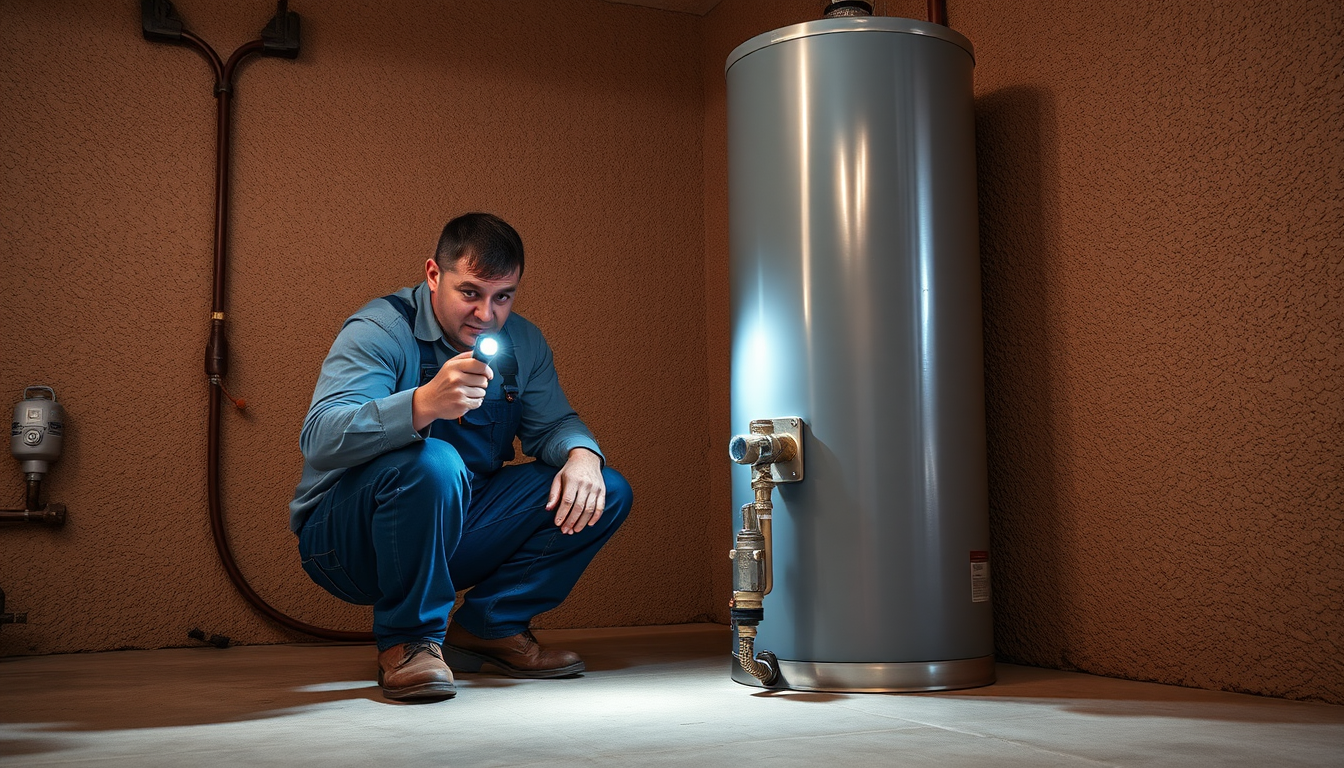
You turn the shower on, wait the usual thirty seconds, and it never comes. Just cold, then lukewarm, then cold again. A water heater not heating is one of the most common service calls we get across the San Fernando Valley, the Tri-Cities, and out along the Conejo corridor, and about half the time the homeowner assumes the whole unit is dead when the real problem is one part that costs fifteen dollars to replace. The other half, the tank really is done, and no amount of pilot-light lighting is going to fix a forty-gallon shell that’s rusted through from the inside.
Before you call anyone, including us, it helps to know which situation you’re actually in. No hot water doesn’t always mean “replace the water heater.” Sometimes it’s a tripped breaker. Sometimes it’s a thermocouple that stopped generating enough voltage to hold a gas valve open. Sometimes, especially in older LA housing stock, it’s years of hard water finally catching up with the tank. We’ve run trucks out of Sun Valley for 25 years, and the diagnosis almost always fits one of a handful of patterns below.
Quick Takeaways
• Gas units: no hot water usually traces to a pilot that won’t stay lit, a bad thermocouple, or a failed gas control valve, in that order of likelihood.
• Electric units: check the breaker first, then the high-limit reset button behind the upper access panel, then the heating elements themselves.
• Water that starts hot and turns lukewarm fast, rather than gradually, points to a cracked dip tube, not a dying tank.
• If your reset button trips more than once, stop pressing it and call a plumber. That switch is a safety device, not an inconvenience.
• LA’s hard water accelerates sediment buildup, so tanks here often show heating problems years before the manufacturer’s rated lifespan.
• A rotten-egg smell near the heater is a gas leak, not a plumbing symptom. Leave the house and call SoCalGas before you troubleshoot anything.
• Past year eight or nine, repairing an aging tank is often money spent delaying a replacement you’ll need anyway.
Gas or Electric? Confirm This First
It sounds obvious, but we still get calls where a homeowner has been troubleshooting the wrong system for an hour. Look at the bottom of the tank. A gas water heater has a burner compartment and a flue pipe running up through the center to the roof. An electric unit has no flue and usually shows two round access panels on the front, one upper and one lower, covering the heating elements and thermostats. Tankless units, gas or electric, are wall-mounted boxes with no storage tank at all. Once you know which you’re dealing with, the troubleshooting path splits completely, so don’t waste time checking a pilot light on a unit that doesn’t have one.
Gas Water Heater Not Heating: Pilot Light, Thermocouple, and Gas Valve
In a gas system, heat comes from a burner at the bottom of the tank, lit by a standing pilot and controlled by a gas valve that reads temperature through a thermostat probe. When any link in that chain fails, you lose heat even though the tank itself is fine.
Pilot Light Won’t Stay Lit
If the pilot lights and holds while you’re pressing the igniter button, then dies the second you let go, that’s a classic water heater thermocouple symptom, not a pilot problem. The thermocouple is a small copper probe that sits in the pilot flame and generates a tiny electrical current that holds the gas valve open. When it weakens with age or gets coated in soot, the valve reads “no flame” even though there is one, and it shuts the gas off as a safety measure. This is the single most common reason for a gas water heater not heating that we run into on service calls, and it’s usually a twenty-minute fix.
The Millivolt Test: Thermocouple or Gas Control Valve
Here’s the tell most articles skip. A healthy thermocouple puts out roughly 12 to 20 millivolts when it’s sitting in a lit pilot flame. Clamp a multimeter on the two thermocouple leads (unscrew it from the gas valve first) and read it while the pilot burns. Anything close to zero, and you’ve confirmed the thermocouple, not the valve, is your problem. Gas control valves fail far less often than thermocouples, but when the pilot won’t light at all, or lights but the main burner never kicks on even with good millivolt readings, the valve itself is the more likely culprit, and that’s not a DIY repair. If you smell gas at any point during this process, stop, don’t attempt to light anything, and get out of the house. Our water heater repair and installation team carries thermocouples and gas valves on the truck for exactly this reason.
Electric Water Heater Not Heating: Breakers, Elements, and the Reset Button
Electric tanks use two heating elements, upper and lower, each with its own thermostat. Start at the breaker panel. A tripped breaker with no obvious cause is worth resetting once. If it trips again immediately, stop, because that’s usually a shorted element pulling too much current, and repeated resets risk damaging the wiring.
When the High-Limit Reset Won’t Stay Reset
Pull the upper access panel and insulation, and you’ll find a red button on the upper thermostat, the high-limit switch or ECO (energy cutoff). It trips when water in the tank gets hotter than it should, which sounds like a thermostat problem but often isn’t. A shorted heating element that stays on regardless of what the thermostat tells it, a bad thermostat itself, or sediment insulating the lower element so it overheats trying to compensate, can all trip this switch. Press it once. If it won’t hold, or trips again within a day, that’s your sign to call someone rather than keep resetting a safety device that exists specifically to stop the tank from cooking itself. Worth knowing: the Consumer Product Safety Commission’s own burn data shows why the thermostat setting matters as much as the switch. Water at 150 degrees causes a third-degree burn in about two seconds; at 140 degrees it takes about six seconds; at 130 degrees, about thirty. Even 120-degree water can cause a serious burn after five minutes of exposure. If your reset keeps tripping because someone bumped the thermostat up past 140, that’s an easy, free fix before you replace anything.
No Hot Water But the Tank Seems Fine: Sediment and the Dip Tube
This is the pattern that confuses people most: water starts out properly hot, then goes lukewarm within a minute or two, every single time. That’s not a heating element or a thermocouple problem. It’s almost always a cracked dip tube, the plastic pipe that carries cold incoming water down to the bottom of the tank so it can heat before rising. When that tube splits, cold water dumps in near the top and mixes straight into what should be your hot supply. Check your faucet aerators and showerheads for white or gray plastic flecks, sometimes described as looking like shaved wax or eggshell fragments. That debris is the dip tube itself breaking apart, and it’s close to a definitive diagnosis. Dip tubes fail most often in tanks past the ten-year mark. Separately, sediment settling at the bottom of the tank (more on why LA sees this early, below) reduces effective tank capacity and can make hot water run out faster even with an intact dip tube and working elements. A full drain-and-flush sometimes buys real time; a badly scaled tank often doesn’t recover.
Tankless Water Heater Not Heating: A Different Set of Suspects
Tankless units don’t fail the same way storage tanks do. Two issues account for most “tankless water heater not heating” calls we take. First, minimum flow activation: these units need a certain flow rate through the unit, often around 0.5 gallons per minute, before the burner or elements fire at all. A partially closed shutoff valve, a clogged inlet water filter, or a low-flow fixture can keep you under that threshold, and the unit just never turns on. Second, mineral scale on the heat exchanger, which is a bigger issue here than almost anywhere else in the country given LA’s water hardness, restricts flow through the internal coil and can trigger a flow sensor or temperature sensor error code entirely separate from a “cold water sandwich,” which is normal, brief cooling when you cycle the tap off and on and not a malfunction. Manufacturers generally call for descaling every twelve months in hard water areas; many LA households are overdue. If you’re weighing a switch from tank to tankless during a replacement anyway, our tankless water heater installation page covers what that conversion involves.
Why This Hits LA Homes Harder: Hard Water and Aging Housing Stock
According to LADWP’s own water quality data, much of the city falls in the 10 to 15 grains-per-gallon range, solidly hard to very hard, and several surrounding cities test even higher. Every gallon that passes through a gas or electric tank leaves mineral deposits behind, and in a tank water heater those deposits settle at the bottom, insulating the burner or lower element from the water it’s supposed to be heating. That’s why a water heater in Panorama City or Reseda can start showing heating problems years before a comparable unit in a soft-water climate. Older neighborhoods compound this. In homes built through the 1950s and 60s across the Valley and the Tri-Cities that still run galvanized supply lines, mineral buildup narrows the pipe itself, which can show up as reduced hot water pressure that gets mistaken for a heater problem when the tank is heating just fine. If a repipe is on the table for other reasons, our repiping page walks through what that involves.
Earthquake Country Detail Most Articles Skip: Strapping and Access
California Health and Safety Code Section 19211 requires every residential water heater, new or existing, to be braced, anchored, or strapped against falling or shifting during an earthquake, typically with two straps, one in the upper third of the tank and one in the lower third. This isn’t just a code checkbox. A tank that shifts in a quake can shear its own gas line or water connections, and we’ve seen unstrapped units in older Valley garages that had clearly moved even in moderate shaking. If you’re troubleshooting a no-heat issue and notice your strapping is missing, rusted through, or was never installed, mention it when you call a plumber. It’s a cheap, fast fix to add while someone’s already got the access panel open.
Property Managers and Commercial Buildings: A Different Calculus
For multi-unit properties and commercial buildings, a single water heater not heating usually means multiple tenants without hot water at once, which changes the urgency math considerably. Commercial units also run larger recovery rates and different code requirements than a residential system, and a DIY diagnosis isn’t realistic when you’re dealing with a 100-plus gallon commercial tank or a bank of tankless units feeding a building. If your property is on a maintenance contract, ask whether it includes annual anode rod inspection and descaling, since that single step prevents most of the early failures described above. Our commercial plumbing services cover this kind of ongoing account work in addition to emergency calls.
When It’s Not the Heater at All: Gas Leaks
If you smell that rotten-egg odor near the water heater, that’s not a heating problem, it’s mercaptan, the odorant added to natural gas specifically so leaks get noticed. Don’t light a pilot, don’t flip switches, don’t use your phone inside the house. Leave the doors open behind you, get everyone and any pets out, and call SoCalGas at 1-800-427-2200 from outside, or 911 if there’s an immediate danger. Come back to your no-hot-water troubleshooting after the gas company clears the situation, not before.
Repair or Replace? The Math After Year 8
Tank water heaters are generally built for a 8 to 12 year service life, and in LA’s hard water, homes often land at the shorter end of that range without regular flushing. A thermocouple or heating element repair on a five-year-old tank is worth doing every time. The same repair on a twelve-year-old tank that’s already showing rust at the fittings or a slow leak at the drain valve is usually money spent delaying a replacement you’re going to need within a year or two anyway. If you’re on the fence, ask whoever’s diagnosing it to check the anode rod condition and look for rust in the water itself; both are honest indicators of how much life is actually left in the tank, separate from whatever specific part failed this week.
Conclusion
Most of the time, a water heater not heating comes down to one of a short list of parts: a thermocouple, a heating element, a high-limit switch, a dip tube, or sediment that’s been building for years in LA’s hard water. None of those require guessing, and most of them are diagnosable in the time it takes to pull an access panel and check a multimeter reading. The exceptions are the ones worth taking seriously: a reset button that won’t stay reset, a gas valve that won’t hold a flame even with a good thermocouple, or any hint of a gas smell, all of which call for a professional rather than a second attempt at a DIY fix.
If what you’re dealing with matches one of the patterns above, especially a tank past year eight, a reset button that keeps tripping, or a gas smell you can’t explain, give us a call at 888-488-4808. We’ve been diagnosing these exact failures across the Valley, the Tri-Cities, the Westside, and the Conejo corridor for 25 years, and we can usually tell you over the phone whether it’s a quick part swap or time to talk replacement.
Frequently Asked Questions
Can I relight my gas water heater’s pilot light myself?
Yes, most manufacturers print relighting instructions right on a label on the tank, and it’s a normal homeowner task. The line to stop is if you smell gas before or during the process, if the pilot won’t stay lit after two or three attempts, or if you’re not comfortable working around an open flame near a gas line. At that point it’s a thermocouple or valve issue, not a lighting technique issue.
Why does my reset button keep popping, and should I keep pressing it?
Press it once. If it trips again, stop. The high-limit switch is a safety device that shuts off power when tank water gets hotter than it should, and repeatedly resetting it without fixing the underlying cause, a bad thermostat, a shorted element, or sediment insulating the lower element, risks a genuinely dangerous overheat condition.
How long should a water heater actually last in an LA home?
Most tank units are rated for 8 to 12 years, but LA’s harder water accelerates sediment buildup inside the tank, which is the leading cause of early heating problems here. A tank that gets flushed annually will generally outlast one that never has.
My water heater is only a few years old. Why is it already struggling?
Check whether it’s ever been flushed. In hard water areas like much of LA and the surrounding cities, sediment can build up meaningfully within the first two or three years without maintenance. A cracked dip tube is also possible even in a newer unit if it came with a defective part, though that’s less common than sediment.
Is it worth repairing an old water heater, or should I just replace it?
If the tank is under eight years old and otherwise sound, repair almost always makes sense. Past that, especially with visible rust at the fittings, a slow drain valve leak, or a second major part failure in two years, you’re usually better off putting that repair money toward a replacement instead.
References
U.S. Department of Energy, Energy Saver: Water Heating
U.S. Consumer Product Safety Commission, Publication 5098: Tap Water Scalds
California Health and Safety Code, Section 19211 (Water Heater Strapping)
SoCalGas, Natural Gas Leak Safety
Los Angeles Department of Water and Power, Water Quality FAQs
Water Heater Leaking From the Bottom: What It Means and When to Replace It in LA
The short answer
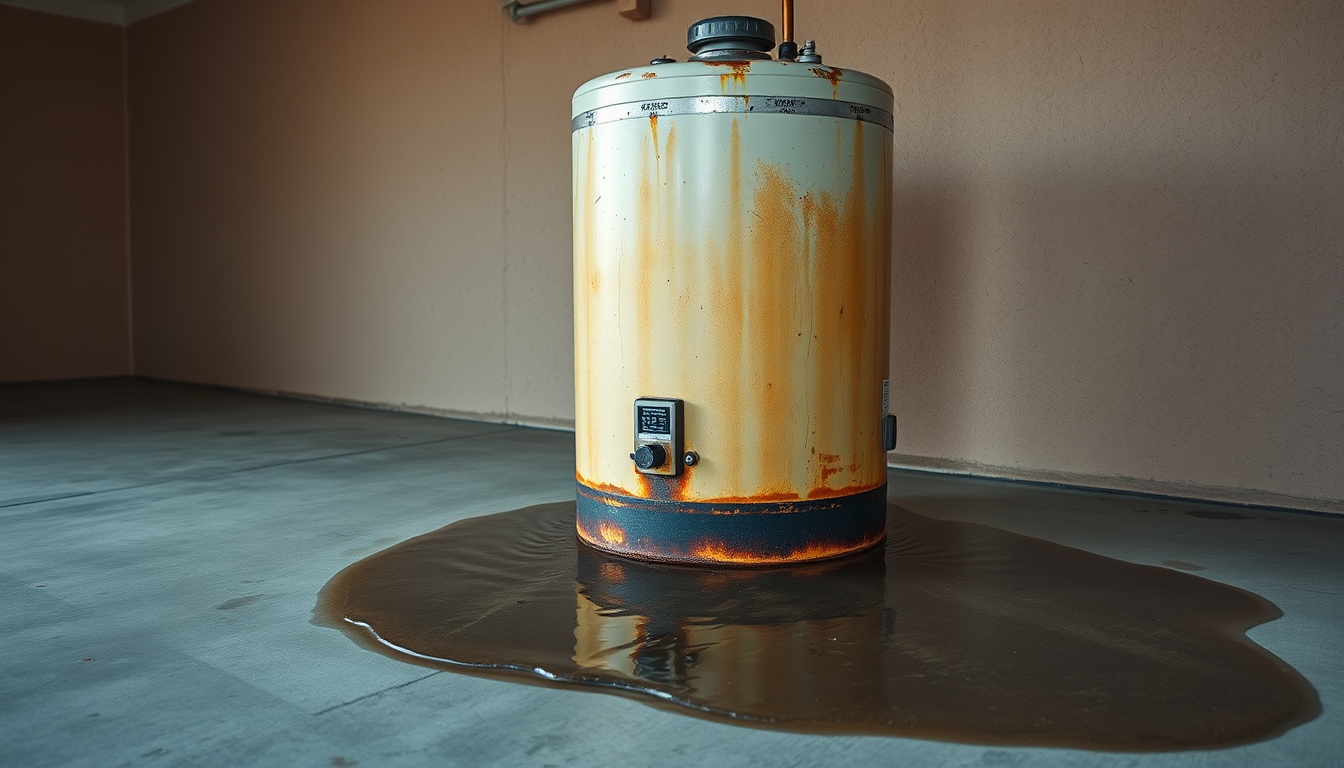
- A water heater leaking from the actual bottom of the tank usually means the steel has rusted through from the inside. That tank is done, and the fix is a full replacement.
- Not every puddle is a dead tank. A dripping drain valve, a temperature and pressure (T&P) relief valve, or a loose connection can pool water at the base and look the same. Those are repairs, not replacements.
- The first move is to find the exact spot the water comes from. ENERGY STAR says a unit more than 10 years old with rust or leaks is time to replace (ENERGY STAR).
You walk into the garage and there’s a puddle under the water heater. The first thing most LA homeowners want to know is simple: is this a quick fix, or do I need a new water heater? After 25 years on these calls, we can tell you it comes down to one question. Where exactly is the water coming from?
A water heater leaking from the bottom is the kind of leak that makes people nervous, and sometimes it should. But the bottom of the tank collects water from a lot of sources, and only one of them means the tank itself has failed. Here’s how to tell them apart.
Where is the water actually coming from?
Before you panic or call anyone, track the leak to its source. The bottom of a water heater is the low point, so water from a fitting six inches up still ends up in a puddle on the floor. That puddle fools a lot of people into thinking the tank is shot when it isn’t.
Dry the whole unit with a towel. Then watch for fifteen or twenty minutes and see where the first new drops show up. InterNACHI inspectors look for the same clues: dripping water, rust stains, or mineral buildup at the tank, the connections, the drain valve, and the relief valve, which often point to a slow leak (InterNACHI).
If the water is coming from a fitting, valve, or pipe up top, you likely have a repair on your hands. If it’s weeping from the seam at the very bottom of the steel tank with no fitting in sight, that’s the bad one.
What a leak from the actual tank means
When water seeps from the bottom seam of the tank itself, the steel has almost always corroded through, and a rusted-through tank cannot be patched. A storage water heater is a steel cylinder with a thin glass lining inside (U.S. Department of Energy). Once that lining cracks and the steel underneath rusts, the only real fix is a new unit.
Here’s why it starts at the bottom. Sediment, the calcium and mineral grit in LA’s hard water, settles to the floor of the tank and sits right where the burner heats. That trapped layer cooks the steel hotter than it was built for, and corrosion eats through from the inside out. By the time it weeps onto your garage floor, the damage has been building for years.
An anode rod is supposed to slow this down. It’s a sacrificial metal rod that corrodes in place of the tank, and the Department of Energy recommends inspecting it every three to four years (U.S. Department of Energy). Most homeowners never touch it, the rod wears out, and then the tank starts giving itself up. When that’s the cause, you’re looking at a water heater replacement, not a repair.
The leaks that are not the tank
Plenty of bottom puddles come from parts you can actually replace, and these are the good outcomes. None of them mean your tank is finished. InterNACHI flags the drain valve and the pressure relief valve, along with the plumbing connections, as the spots where a slow leak usually starts (InterNACHI). Those are the three we check on every call before we ever condemn a unit.
The drain valve
The drain valve sits near the base of the tank, the spigot you’d hook a hose to for flushing. These are often plastic, and they get crusty with mineral scale or simply fail to seal after years of disuse. A drip here looks exactly like a tank leak because it’s right at the bottom. It’s also one of the cheaper repairs in plumbing.
The temperature and pressure relief valve
The T&P valve is a safety device that opens if temperature or pressure inside the tank climbs too high. It has a discharge tube that runs down the side, usually to within a few inches of the floor, so its drips land right next to the base. A leaky T&P valve is a sign it needs to be replaced, and a properly working one fires a powerful jet of hot water when it opens, not a slow gentle drip (InterNACHI).
If yours is dribbling, don’t ignore it. It can mean the valve is failing, or that pressure in the tank is running too high, and that second one is worth a closer look.
The supply connections
The cold inlet and hot outlet fittings on top of the tank can loosen or corrode over time. Water from a bad connection runs down the outside of the tank and collects, you guessed it, at the bottom. Tighten or reseal the fitting and the leak stops. The tank is fine.
How do I tell a quick fix from a full replacement?
Match the leak’s source to the likely fix. A unit more than 10 years old that’s rusting or leaking is one ENERGY STAR says you should plan to replace (ENERGY STAR). A younger unit leaking from a valve or fitting is usually worth repairing. Use this to narrow it down.
| Where the water comes from | What it usually means |
|---|---|
| Seam at the bottom of the steel tank | Tank rusted through. Replace the unit. |
| Drain valve at the base | Failed or loose valve. Repairable. |
| T&P relief valve discharge tube | Valve or pressure issue. Repairable. |
| Cold or hot fitting on top | Loose or corroded connection. Repairable. |
| Unit over 10 years old, rusty water | Near end of life. Plan replacement. |
The age cutoff matters in LA more than most places. The typical water heater lasts about 10 years (InterNACHI), and our hard water tends to push them toward the short end of that range, not the long end.
Why do LA water heaters fail sooner?
It comes down to the water and the homes. LA runs hard water, heavy with calcium and minerals. The USGS puts the mechanism plainly: when hard water is heated, such as in a home water heater, solid calcium carbonate deposits form, and that scale can reduce the life of the equipment (USGS). InterNACHI sees the same pattern in the field, noting that in areas with higher mineral content, water heaters have shorter lifespans (InterNACHI). That scale is the same grit that piles up at the bottom of the tank and speeds up corrosion.
We see it most in the units nobody ever flushed. Pull the drain on a 12-year-old Valley water heater and what comes out first isn’t water, it’s a slug of gray-brown mineral sludge. That layer is what cooks the steel floor of the tank until it gives.
The buildup also reduces hot water and causes rumbling or popping sounds, two of the warning signs ENERGY STAR ties to a tank near the end of its life (ENERGY STAR). That popping is water trapped under the sediment layer, boiling against the hot steel.
Then there’s the housing. A lot of Valley and Tri-Cities homes have the heater tucked in a garage corner or a slab-side closet, where a slow leak can run for weeks before anyone notices. By the time the puddle is obvious, the tank has usually been failing for a long while.
What can I check myself, and when should I call?
You can do the detective work yourself in twenty minutes, and it’s worth doing before anyone comes out. Dry the unit, watch for the source, and check the simple stuff first.
- Find the source. Towel everything dry, wait, and see where water reappears. Top fitting, drain valve, relief tube, or the tank seam itself.
- Check the drain valve. Make sure it’s fully closed and not weeping. A snug cap on it can confirm whether that’s your leak.
- Look at the T&P discharge tube. If water is running from the tube, the valve or your pressure is the issue, not a rusted tank.
- Read the age. The serial number on the data plate usually encodes the build date. Past 10 years, lean toward replacement.
- Kill the power and water if it’s pouring. For a fast leak, shut the cold supply valve on top and turn off the gas or breaker to the unit.
Call a pro when the water traces back to the tank seam, when the unit is over a decade old, when you see rusty hot water, or when a T&P valve keeps leaking after you’ve looked. Those don’t get better on their own, and a failing tank can eventually let go all at once. Routine flushing and an anode check can extend a heater’s life (U.S. Department of Energy), but once the steel is breached, maintenance can’t undo it.
If your leak matches the tank-failure picture above, that’s genuinely a call-now situation, and you can reach Rooter Experts at 888-488-4808. We’ll tell you straight whether it’s a repair or a replacement. No upsell, just the honest read after 25 years of doing this around LA. You can see what we handle across our plumbing services, or get a sense of who we are on our about page.
Frequently Asked Questions
Is a water heater leaking from the bottom dangerous?
It can be. A slow tank leak risks water damage and mold, and a corroded tank can eventually fail suddenly and dump its full load. A leaking T&P relief valve can also signal dangerously high pressure inside the tank. If the leak is at the tank seam or the unit is over 10 years old, treat it as urgent and shut off the water and power.
Can you repair a water heater that leaks from the bottom of the tank?
No. If water is weeping from the bottom seam of the steel tank, the tank has rusted through and cannot be patched or sealed. At that point a full water heater replacement is the only real fix. Leaks from the drain valve, relief valve, or top fittings are a different story and can usually be repaired.
How long should a water heater last in Los Angeles?
The typical storage water heater lasts about 10 years (InterNACHI). LA’s hard water tends to shorten that, since mineral buildup speeds up corrosion. If yours is past 10 and showing rust or sediment noise, ENERGY STAR recommends planning a replacement before it fails.
Why is water pooling under my new water heater?
On a newer unit, the tank itself is rarely the problem. Look at the drain valve, the temperature and pressure relief valve, and the cold and hot connections on top. A loose or weeping fitting drips down the side and collects at the base, looking just like a tank leak. Those are repairs, not replacements.
Does flushing my water heater prevent leaks?
It helps. The Department of Energy recommends periodic flushing and an anode rod check to extend a heater’s life (U.S. Department of Energy). Flushing clears the sediment that overheats and corrodes the bottom of the tank. It won’t save a tank that’s already rusted through, but on a healthy unit it buys you years.
Sources
- U.S. Department of Energy, Energy Saver, Storage Water Heaters, retrieved 2026-06-01, https://www.energy.gov/energysaver/storage-water-heaters
- ENERGY STAR, Ask the Experts: When Should You Replace Your Water Heater, retrieved 2026-06-01, https://www.energystar.gov/products/ask-the-experts/when-should-you-replace-your-water-heater
- InterNACHI, Estimating the Lifespan of a Water Heater, retrieved 2026-06-01, https://www.nachi.org/lifespan-water-heater.htm
- InterNACHI, TPR Valves and Discharge Piping, retrieved 2026-06-01, https://www.nachi.org/tpr-valves-discharge-piping.htm
- U.S. Geological Survey, Water Science School, Hardness of Water, retrieved 2026-06-01, https://www.usgs.gov/special-topics/water-science-school/science/hardness-water
{“@context”:”https://schema.org”,”@type”:”FAQPage”,”mainEntity”:[{“@type”:”Question”,”name”:”Is a water heater leaking from the bottom dangerous?”,”acceptedAnswer”:{“@type”:”Answer”,”text”:”It can be. A slow tank leak risks water damage and mold, and a corroded tank can eventually fail suddenly and dump its full load. A leaking T&P relief valve can also signal dangerously high pressure inside the tank. If the leak is at the tank seam or the unit is over 10 years old, treat it as urgent and shut off the water and power.”}},{“@type”:”Question”,”name”:”Can you repair a water heater that leaks from the bottom of the tank?”,”acceptedAnswer”:{“@type”:”Answer”,”text”:”No. If water is weeping from the bottom seam of the steel tank, the tank has rusted through and cannot be patched or sealed. At that point a full water heater replacement is the only real fix. Leaks from the drain valve, relief valve, or top fittings are a different story and can usually be repaired.”}},{“@type”:”Question”,”name”:”How long should a water heater last in Los Angeles?”,”acceptedAnswer”:{“@type”:”Answer”,”text”:”The typical storage water heater lasts about 10 years ( InterNACHI ). LA’s hard water tends to shorten that, since mineral buildup speeds up corrosion. If yours is past 10 and showing rust or sediment noise, ENERGY STAR recommends planning a replacement before it fails.”}},{“@type”:”Question”,”name”:”Why is water pooling under my new water heater?”,”acceptedAnswer”:{“@type”:”Answer”,”text”:”On a newer unit, the tank itself is rarely the problem. Look at the drain valve, the temperature and pressure relief valve, and the cold and hot connections on top. A loose or weeping fitting drips down the side and collects at the base, looking just like a tank leak. Those are repairs, not replacements.”}},{“@type”:”Question”,”name”:”Does flushing my water heater prevent leaks?”,”acceptedAnswer”:{“@type”:”Answer”,”text”:”It helps. The Department of Energy recommends periodic flushing and an anode rod check to extend a heater’s life ( U.S. Department of Energy ). Flushing clears the sediment that overheats and corrodes the bottom of the tank. It won’t save a tank that’s already rusted through, but on a healthy unit it buys you years.”}}]}