Main Water Line Leak in Your LA Yard: How to Tell It From a Slab Leak Before the Bill Climbs
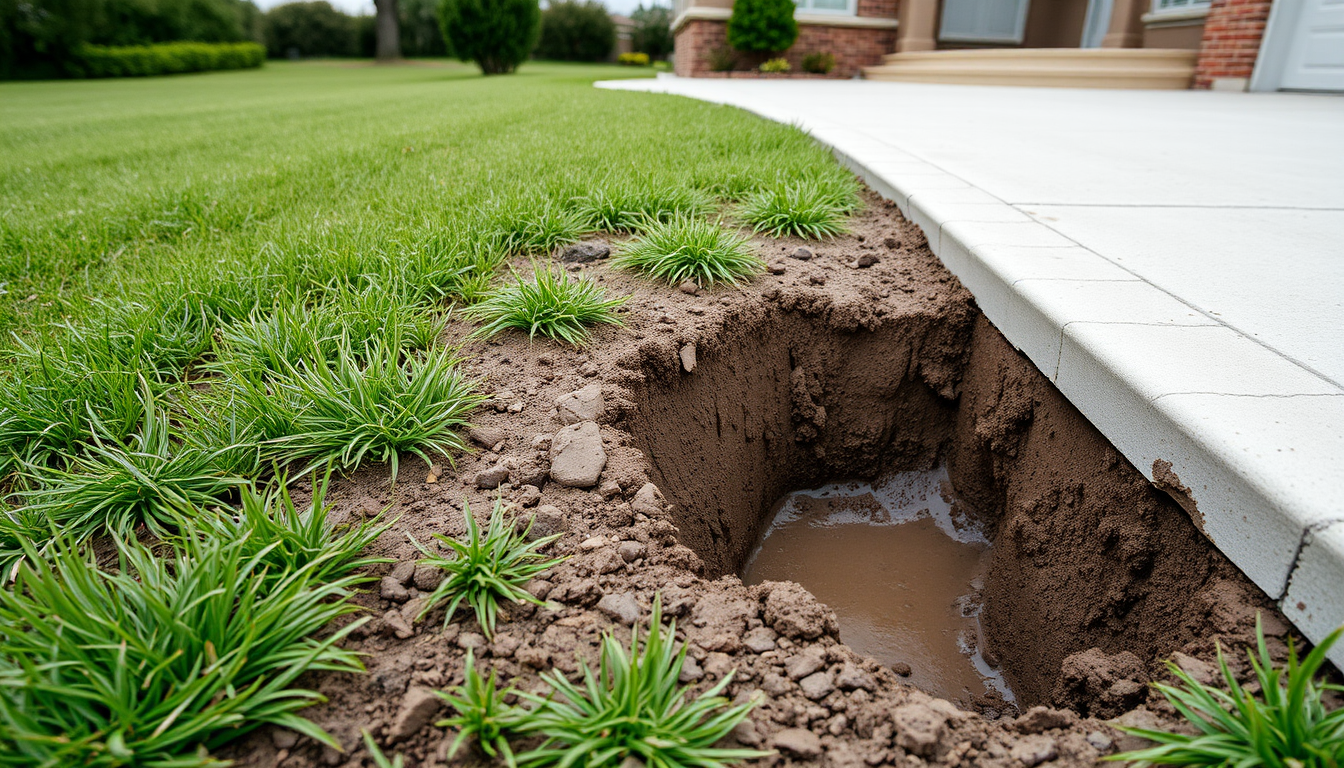
A soggy patch in the yard, a water bill that keeps climbing, and pressure that dropped off at every tap. That combination usually points to a main water line leak, the buried pipe that carries water from your meter to the house, not a slab leak under the concrete. The two get mixed up all the time, and they get fixed in very different ways. Here’s how we tell them apart on LA properties, and what an underground water line repair actually involves before you spend a dime.
The short answer: A main water line leak is a break in the water service line running underground across your yard, between the city meter and your home. A slab leak is a break in a supply line under the concrete foundation inside the footprint of the house. Yard clues (a wet or extra-green patch outside, water bubbling near the sidewalk, a spinning meter) point to the main line. Warm floors and damp carpet inside point to the slab. Confirm either one with the EPA’s two-hour meter test: shut off all water, read the meter, wait two hours, and read again. If it moved, water is escaping somewhere.
What Is a Main Water Line Leak?
Your main water line, also called the water service line, is the single pipe that carries all your household water from the city meter at the curb, underground across your yard, and into the house. When that buried pipe cracks or corrodes through, every gallon it leaks runs 24 hours a day, because the line is always under city pressure. That’s why a main line leak shows up on the bill fast and often soaks the yard before you notice anything indoors.
Here’s the part that catches LA homeowners off guard: that buried line is yours to maintain. LADWP installs and owns the pipe up to the meter, but the plumbing from the meter to the building is the customer’s responsibility (LADWP). So when the service line springs a leak in your yard, the repair falls on you, not the city. Knowing where that dividing line sits saves a lot of confused phone calls.
Main Water Line Leak vs Slab Leak: How Do You Tell Them Apart?
The quickest tell is location. A main water line leak is outside, in the yard, between the meter and the house. A slab leak is inside the footprint of the home, under the concrete floor. Both waste water around the clock, and household leaks add up to nearly 1 trillion gallons wasted nationwide every year, with the average home losing more than 9,300 gallons annually (EPA WaterSense). Where that water surfaces is what separates the two.
| Clue | Main water line leak (yard) | Slab leak (under the house) |
|---|---|---|
| Where water shows up | Soggy or sunken spot in the yard, water near the sidewalk or driveway | Damp carpet, warped flooring, or a dark patch on the floor indoors |
| Temperature clue | None. The service line carries cold water only | A warm spot on the floor if the leak is on a hot line |
| Grass and plants | One strip of lawn greener or growing faster than the rest | No effect on the yard |
| Pressure | Drops across the whole house at once | Can drop, but often with a warm-floor clue too |
| Sound | Rarely audible indoors | Hiss or trickle under the floor with everything off |
One warm spot on the floor with dry carpet outside is a slab leak until proven otherwise. A green stripe across the lawn with no indoor signs points to the main line. When you see clues in both places, get it tested rather than guessing, because the repairs are not interchangeable. If the leak turns out to be inside the slab, our repiping page walks through what that fix looks like.
What Are the Signs of a Main Water Line Leak in the Yard?
Most main line leaks announce themselves through the yard, the meter, or the water pressure long before you ever see a puddle at the door. A pressure-side leak on a buried service line never stops, so it leaves marks outside. Here’s what we tell LA homeowners to look for.
- A soggy or spongy patch in the yard. Ground that stays wet with no sprinkler running, or feels squishy underfoot, often sits right over the leaking line. In heavy cases the soil sinks or a small sinkhole forms.
- One strip of grass greener than the rest. A leaking line acts like free irrigation. If a band of lawn is lush and fast-growing while the rest is normal, follow that stripe. It usually traces the pipe.
- Water bubbling up near the curb or driveway. When the leak has nowhere to soak in, it surfaces along the sidewalk, the driveway edge, or the street. Standing water there in dry weather is a red flag.
- A water bill that climbs for no reason. Same household, same habits, bigger bill. A buried leak runs day and night, so it hits the bill before it shows anywhere else.
- A drop in pressure at every tap. When water escapes underground, less of it reaches the house. If pressure falls off across the whole home at once, a service-line leak is a prime suspect.
- Discolored or gritty water. A cracked line can pull dirt and rust in from the surrounding soil, so brown or cloudy water at every faucet can point to a break outside.
How Do You Confirm a Main Water Line Leak Yourself?
You can confirm a leak before you call anyone, and the best test is free. The EPA puts it plainly: “Check your water meter before and after a two-hour period when no water is being used. If the meter changes at all, you probably have a leak” (EPA WaterSense). Hidden leaks are common enough that WaterSense found nine percent of homes waste 50 gallons or more per day (EPA WaterSense). Here’s the step-by-step.
- Turn off every faucet and water-using appliance, and don’t flush a toilet for the duration.
- Find your meter, usually in a box near the curb, and write down the exact reading.
- Wait two hours with zero water used anywhere on the property.
- Read the meter again. If the numbers moved at all, water is escaping somewhere on your system.
To sort a yard leak from an indoor one, find the shutoff valve where the main line enters the house and close it. Then watch the meter again. If the meter keeps creeping with the house valve shut, the leak is out in the yard, between the meter and the house. If it stops, the leak is indoors, and a slab leak moves up the list.
Why Do LA Yards Spring Main Line Leaks?
A few local conditions stack up against buried service lines here. None of them is the whole story, but together they explain why we dig up so many leaking lines across the Valley and the Westside. Copper service lines are rated for roughly 70 years and plastic lines around 75 (InterNACHI), but LA conditions can push a line to fail well short of that.
Hard water working from the inside. Southern California tap runs hard. The USGS classifies anything above 180 mg/L as very hard, and a lot of LA water sits in that band (USGS). Scale builds inside the pipe and gives corrosion uneven spots to concentrate, which is how pinholes start.
High city pressure. Plumbing code calls for a pressure reducing valve (the PRV) once static pressure runs above 80 psi, to hold the house at or below that (plumbing code via UpCodes). When that valve is missing or has failed, every weak spot in the buried line takes extra strain and gives out sooner.
Age and tree roots. Plenty of LA service lines went in mid-century and are now decades into their life. Mature trees send roots toward the moisture and the pipe, and roots can wrap, crush, or work into a line that’s already weakened. Older pipe under harder conditions simply fails more often.
Underground Water Line Repair: What Does the Fix Take?
Underground water line repair is the work of locating a leak on the buried service line, then either patching the damaged section or replacing the full run from the meter to the house. It comes down to two broad approaches, and which one fits depends on where the leak is, the pipe’s condition, and what’s on top of it. The pipe is buried in your yard, so the first job is always pinpointing the exact spot, which takes acoustic listening gear and pressure testing rather than guesswork.
Open-trench repair or replacement. The classic method. A crew digs down to the line, then either repairs the damaged section or replaces the whole run from meter to house. It’s straightforward and lets the plumber see the pipe directly, but it means opening a trench across the yard, so any lawn, pavers, or hardscape over the line has to be restored afterward.
Trenchless replacement. When conditions allow, a new line can be pulled or bored through the ground along the old path with only small access pits at each end. That spares most of the yard and driveway. Not every leak or soil condition suits it, so a plumber confirms whether it’s an option after locating the break. Either way, if the line is old and failing in one place, replacing the full run is often smarter than chasing one leak at a time.
Should You DIY or Call a Plumber?
Some of this is genuinely a do-it-yourself job, and some of it isn’t. Knowing the line saves you money and saves your yard. Every diagnostic above is yours to run. Pinpointing and repairing a buried line is where a pro earns the call.
| Do it yourself | Call a plumber |
|---|---|
| Run the two-hour meter test | Pinpoint the buried leak with acoustic gear |
| Walk the yard for soggy spots and greener grass | Pressure-test the line to confirm the break |
| Isolate yard vs indoors with the house shutoff valve | Dig and repair, or replace the service line |
| Compare this month’s water bill to last year’s | Decide between a spot repair and a full new line |
| Shut off the main valve if the line is flooding | Advise on open-trench vs trenchless |
The reason pinpointing is a pro job is simple: the pipe is buried, so you can’t see it, and digging up the whole yard on a hunch is the expensive way to find a leak. Accurate location means opening only the ground that has to come up. For the full range of what a leak check involves, see our plumbing services.
If the signs at your place match what you’ve read here, that’s the moment to get eyes on it before the yard, the driveway, or the foundation take more damage. We’re a family-owned crew that’s been working under LA houses for 25 years (more about our LA plumbing team), and we’ll tell you straight whether it’s the service line, a slab leak, or something simpler. If your situation matches this, call Rooter Experts at 888-488-4808 for a leak check. No pressure, just a look.
Frequently Asked Questions
How do I know if it’s a main water line leak or a slab leak?
Location is the tell. A main water line leak surfaces outside, as a soggy yard, a greener strip of grass, or water near the curb. A slab leak shows up indoors, as warm flooring, damp carpet, or the sound of water with everything off. Confirm either with the EPA’s two-hour meter test (EPA WaterSense).
Who is responsible for the water line from the meter to my house in LA?
You are. LADWP owns and maintains the pipe up to the meter, but the plumbing from the meter to the building is the customer’s responsibility (LADWP). So a leak in the service line across your yard is your repair, not the city’s. The city handles breaks on its own mains in the street.
Can I fix a main water line leak myself?
The diagnostics are yours, but the repair isn’t a DIY job. You can run the two-hour meter test, walk the yard for soggy spots, and isolate the leak to outside with the house shutoff. Pinpointing a buried line takes acoustic gear and pressure testing, and repairing or replacing it means digging safely around other utilities.
Is a main water line leak an emergency?
It’s urgent even when nothing is flooding. A buried leak runs around the clock, and the average household’s leaks waste more than 9,300 gallons a year (EPA WaterSense). Left alone, escaping water erodes soil under walkways, driveways, and even the foundation, so the sooner it’s located and fixed, the less damage you’ll repair.
Sources
- US EPA WaterSense, Fix a Leak Week, retrieved 2026-07-06
- USGS, Hardness of Water, retrieved 2026-07-06
- InterNACHI, Standard Estimated Life Expectancy Chart for Homes, retrieved 2026-07-06
- LADWP, Meter Information, retrieved 2026-07-06
- International Plumbing Code, Excessive Water Pressure (via UpCodes), retrieved 2026-07-06
Water Bill Doubled in LA? How to Tell a High Water Bill Leak From a Meter Error Before You Overpay
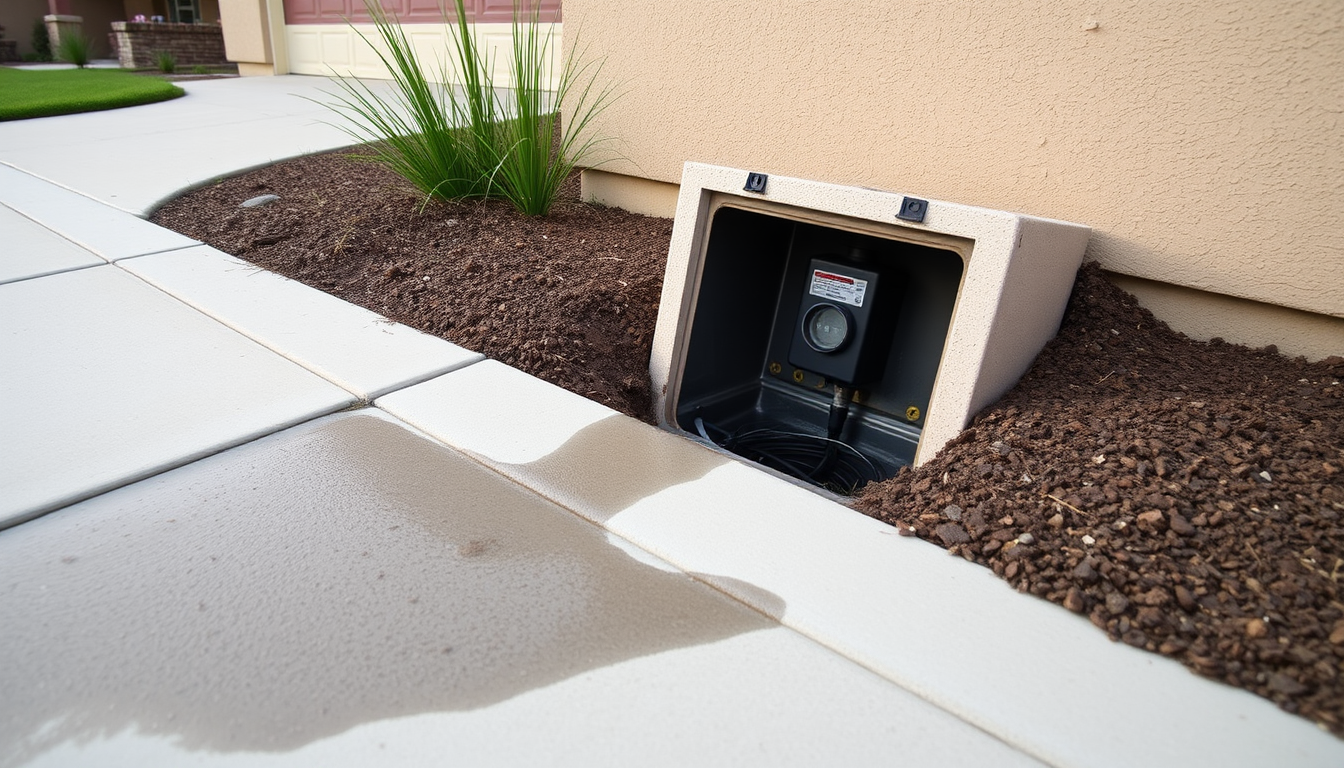
Your water bill jumped, maybe doubled, and nothing about your month changed. Before you panic or pay it, know this: a high water bill leak is the usual culprit, not a broken meter. Meters fail rarely. Hidden leaks run quietly around the clock. The good news is you can tell them apart yourself in about two hours, with no tools, before you ever call anyone. Here’s how we walk LA homeowners through it.
The short answer: A sudden spike almost always means water is escaping somewhere, usually a running toilet, an irrigation line, or a slab leak under the foundation. Rule out a meter misread first by checking for any real usage change. Then run the EPA’s two-hour meter test: shut off all water, read the meter, wait two hours, and read it again. If the number moved, you have a leak, not a billing error.
Is It a Leak or a Meter Error?
A real high water bill leak is far more likely than a faulty meter. Mechanical meters tend to slow down as they age and under-report, not over-report, so a meter that suddenly reads high is uncommon. Start by ruling out the simple stuff before you assume the worst.
Leaks are common, meter faults are not. As of 2026, the EPA reports that nine percent of homes have leaks wasting 50 gallons or more per day (EPA WaterSense). So when a bill spikes for no reason you can name, the odds strongly favor a hidden water leak over a broken meter.
Ask yourself what actually changed. House guests, a heat wave with extra lawn watering, a new water-hungry appliance, or filling a pool all push usage up for real reasons. The water company didn’t make a mistake there. Your habits did, and the bill is correct.
If none of that fits, you can request a meter re-read or accuracy test from your provider. LADWP, the city’s water utility, walks customers through indoor and outdoor checks on its how to detect a water leak page, and it runs a billing adjustment program for underground leak repairs that can take some sting out of a high bill once the leak is fixed. But don’t just wait on the utility. The test in the next section confirms a leak today, on your own, and it’s the same first step a good plumber would take.
The Two-Hour Meter Test: Confirm a Hidden Water Leak Yourself
This is the single most useful thing you can do, and it’s free. The EPA puts it plainly: “Check your water meter before and after a two-hour period when no water is being used. If the meter changes at all, you probably have a leak” (EPA WaterSense). A hidden water leak runs day and night, which is exactly why it shows up on the bill before you ever see a drop of water.
Here’s the step-by-step we use:
- Turn off every faucet and water-using appliance. Don’t flush a toilet, run the dishwasher, or let the irrigation cycle for the duration.
- Find your meter, usually in a box near the curb or sidewalk, and write down the exact reading.
- Look at the low-flow indicator. On most meters this is a small triangle, star, or gear that spins when any water moves through (Smart Home Water Guide, AMWUA). If it’s turning with everything off, water is escaping right now.
- Wait two hours with zero water used anywhere in the house.
- Read the meter again. If the numbers moved, you have a leak somewhere on your system.
Want to narrow it down to inside versus outside? Shut off the valve where the main line enters the house, then watch the meter. If the meter keeps moving, the leak is between the meter and the house, often the irrigation or service line. If it stops, the leak is indoors.
Where Do High Water Bill Leaks Actually Hide?
Most hidden leaks come down to a handful of usual suspects. Household leaks waste nearly 1 trillion gallons of water annually nationwide, and the average home loses more than 9,300 gallons a year to them (EPA WaterSense). Here’s where that water usually goes.
The toilet (most common by far)
A running toilet is the number-one cause of a mystery bill, and it often makes no sound. The flapper, that rubber seal at the bottom of the tank, wears out and lets water seep from tank to bowl. The EPA notes a worn flapper “can cause your toilet to flush on its own or silently leak thousands of gallons a year” (EPA WaterSense).
Test it in ten minutes. Put a few drops of food coloring in the tank, wait 15 minutes without flushing, and check the bowl. If color shows up in the bowl, the flapper is leaking. A new flapper is a cheap, genuine DIY fix.
Irrigation and outdoor lines
In LA, the sprinklers are a prime suspect, and an irrigation leak can dwarf anything indoors. The EPA reports that outdoor use can be as much as 60 percent of total household water in arid regions, and “as much as 50 percent of the water we use outdoors is lost” to inefficient systems (EPA WaterSense). A valve that doesn’t seat shut, a cracked lateral line, or a broken sprinkler head can run water into the ground long after the system “turns off.” You won’t see it because it soaks straight into the dirt.
Slab leaks, the LA classic
Many LA homes are built slab-on-grade, meaning copper supply lines run through or under the concrete foundation. When one of those buried lines springs a pinhole, water has nowhere to go and the bill climbs with no visible cause. The telltale signs are a warm spot on the floor, the sound of running water with everything off, and that creeping meter you just tested. A slab leak is the one on this list you can’t fix yourself, and it’s worth catching early before it undermines the foundation. If the buried copper is failing in one place, repiping is sometimes the smarter long-term call than chasing one pinhole at a time.
Faucets, the water heater, and the softener
A steady drip from a worn faucet washer adds up over a billing cycle. So does a water heater leaking at the tank, drain valve, or temperature-and-pressure relief valve, and a sticking water softener that regenerates over and over. None of these are dramatic, but any one can quietly pad your bill. If your water heater is pooling water at the base, that’s both a leak and a sign the tank may be near the end of its life.
Why Do LA Homes Spring Hidden Leaks?
A few things stack the deck against pipes in Southern California. None is the whole story, but together they explain why we pull leaking lines out of so many homes across the Valley and the Westside.
Hard water. SoCal tap water runs hard. The USGS classifies anything above 180 mg/L as “very hard,” and a lot of LA water sits in that range (USGS). Hard water leaves scale inside pipes and gives corrosion uneven spots to concentrate, which is how pinhole leaks start.
High city pressure. Plumbing code calls for a pressure reducing valve (the PRV) to hold house pressure at or below 80 psi (plumbing code via UpCodes). When that valve is missing or failed, every weak spot in your pipes takes extra strain and gives out sooner.
Older homes and tree roots. Plenty of LA copper went in mid-century and is now decades old. Mature trees send roots toward buried supply and sewer lines, and a bimonthly billing cycle, the every-two-months schedule LADWP uses, means a slow leak can run for weeks before the bill even tips you off.
Should You DIY or Call a Plumber?
Some of this is genuinely a do-it-yourself job, and some of it isn’t. Knowing the line saves you money and saves your floors. Every diagnostic above is yours to run. Pinpointing and fixing a buried leak is where a pro earns the call.
| Do it yourself | Call a plumber |
|---|---|
| Run the two-hour meter test | Pinpoint a slab or service-line leak with acoustic gear |
| Do the toilet dye test and swap a flapper | Open the slab and make the repair |
| Check sprinkler heads and valves for soggy spots | Pressure-test the lines to confirm a hidden leak |
| Isolate indoor vs. outdoor with the main valve | Decide between a spot repair and a repipe |
| Request a meter re-read from your utility | Check a leaking water heater or PRV |
The reason pinpointing is a pro job is simple: the pipe is buried in concrete or underground, so you can’t see it. Finding the exact spot takes electronic listening gear and pressure testing, not a hammer and a guess. For the full range of what a leak check involves, see our plumbing services.
If the signs at your place match what you’ve read here, that’s the moment to get eyes on it before the damage grows. We’re a family-owned crew that’s been working under LA houses for 25 years (more about our LA plumbing team), and we’ll tell you straight whether it’s a slab leak or a five-dollar flapper. If your situation matches this, call Rooter Experts at 888-488-4808 for a leak check. No pressure, just a look.
Frequently Asked Questions
Can a running toilet really double my water bill?
Yes, it’s the most common cause we see. A worn flapper can silently leak thousands of gallons a year without a sound (EPA WaterSense). Drop food coloring in the tank, wait 15 minutes, and if color reaches the bowl, the flapper is leaking. A replacement flapper is a cheap fix.
How do I know if it’s a meter error and not a leak?
Meter errors are uncommon, and aging meters usually under-report rather than over-report. Confirm a real leak first with the EPA’s two-hour test: shut off all water, read the meter, wait two hours, and read again. If it moved, you have a leak (EPA WaterSense). You can also ask your utility for a re-read.
Can an irrigation system leak when it’s turned off?
Yes. A valve that fails to seat shut, a cracked line, or a broken head can run water into the soil long after the timer stops. Outdoor use reaches as much as 60 percent of household water in arid regions like LA (EPA WaterSense). Isolate it by shutting the house main and watching whether the meter still moves.
Why are hidden leaks so common in LA homes?
Several things stack up. SoCal hard water above the USGS “very hard” mark of 180 mg/L corrodes pipes from the inside (USGS), high city pressure strains weak spots, and many homes have decades-old copper running through slab foundations. A bimonthly billing cycle lets a slow leak run for weeks before you notice.
Is a high water bill leak an emergency?
It’s urgent even when nothing is flooding. A hidden leak runs around the clock, and nine percent of homes have leaks wasting 50 gallons or more per day (EPA WaterSense). A slab leak left alone can wash out soil under the foundation, so the sooner you confirm and locate it, the less damage you’ll repair.
Sources
- US EPA WaterSense, Fix a Leak Week, retrieved 2026-06-29
- US EPA WaterSense, Statistics and Facts, retrieved 2026-06-29
- USGS, Hardness of Water, retrieved 2026-06-29
- International Plumbing Code, Excessive Water Pressure (via UpCodes), retrieved 2026-06-29
- Smart Home Water Guide (AMWUA), How to Read Your Water Meter, retrieved 2026-06-29
Find Your Water Shut Off Valve Before a Pipe Bursts
It’s 11 p.m. on a Tuesday in Encino. You walk into the kitchen for a glass of water and your sock hits a puddle. Under the sink, a supply line has let go and it’s spraying the cabinet like a garden hose. The clock is now your enemy, because every minute that passes is another few gallons soaking into your subfloor and drywall. This is the exact moment you need to know where your water shut off valve is, and you need to know it without thinking. If you have to Google it while standing in an inch of water, you’ve already lost. Most LA homeowners have never touched their main water shutoff, never opened the meter box at the curb, and have no idea whether their valve is a lever or a wheel. That’s a problem you fix today, dry and calm, not tonight in a panic. This guide walks you through finding it, testing it, and shutting it down fast.
Why Every LA Homeowner Needs to Know This Cold
A burst supply line, a failed washing machine hose, or a slab leak doesn’t wait for business hours. In the time it takes a plumber to drive across the Valley, an open half-inch line can dump hundreds of gallons into your house. The single fastest thing you can do to save your floors, cabinets, and baseboards is kill the water at the source. That means knowing your water shut off valve location before you ever need it.
Here’s the part people miss. Los Angeles is a warm-climate region, so most homes here do not have the main shutoff tucked in a basement like back east. Per the American Red Cross, in colder climates the main house valve sits in the basement near the front wall, but in warmer climates it’s usually outside on an exterior wall or in an underground box with a removable lid. So if you’ve been hunting in your garage or a crawlspace and coming up empty, you’re probably looking in the wrong place. Walk the perimeter of your house, especially the side facing the street, and look low on the wall where the supply pipe comes up out of the ground.
One more reason to practice now: shutting the main does more than stop a flood. It also keeps gravity from siphoning the rest of your plumbing dry through the break, and it stops dirty outside water from getting pulled back into your lines if there’s a main break on the street side.
The Two Valves: House Valve vs. the Curb Stop
Almost every LA property has two ways to stop the water, and they are not the same thing.
Your house shutoff valve
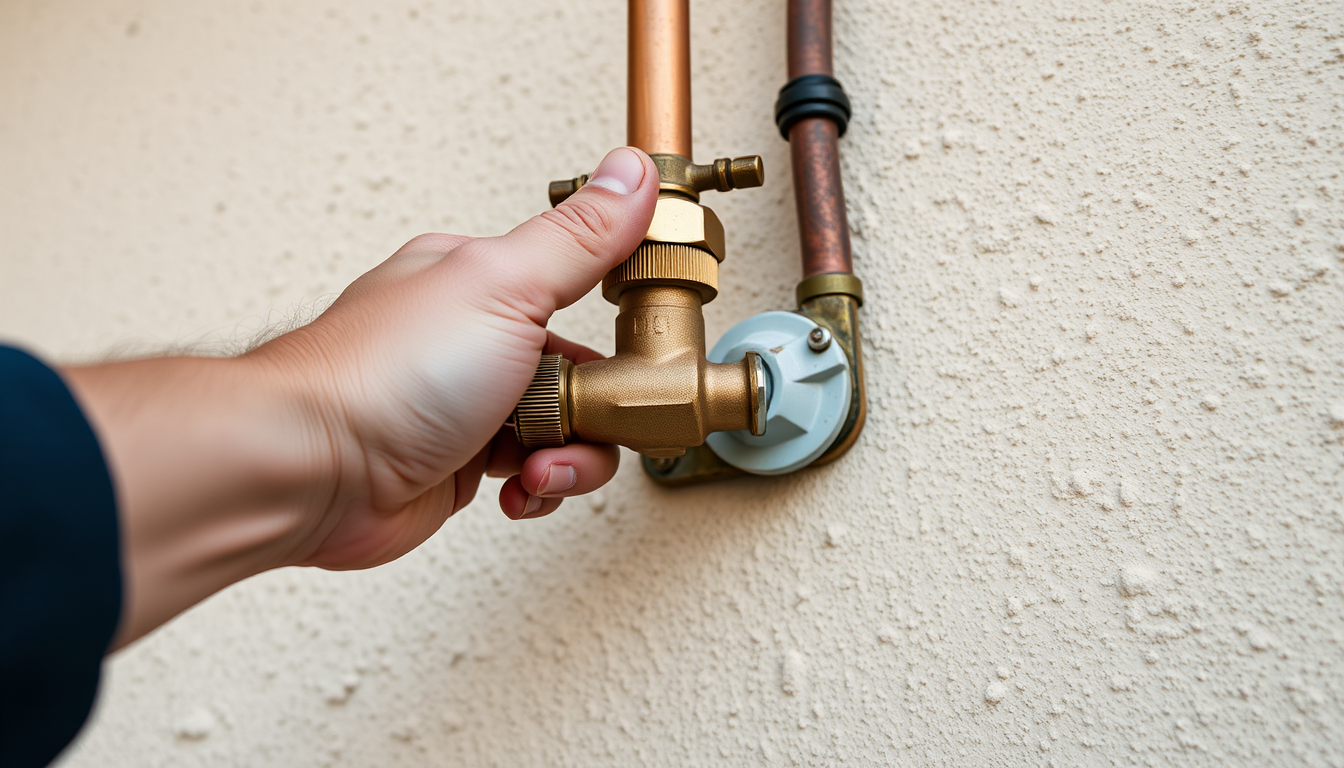
This is the one you want in an emergency. It controls water to your home only and it’s on your side of the meter, which makes it your responsibility to maintain. To find it, start where the main water line enters the house and follow that pipe. You’ll often pass a bell-shaped pressure regulator first, and the house shutoff is usually right at that point. In LA that’s commonly on an exterior wall, near a hose bib, or in a small in-ground box near the foundation. This is the valve you should exercise twice a year so it doesn’t seize.
The curb stop at the meter
Out near the street, your water meter sits in a concrete or plastic box stamped “WATER.” Inside is a customer-side shutoff, sometimes called the curb stop. This is the backup if your house valve fails or you can’t find it. The catch: the street valve is often stiff and may need a water meter key, that odd T-shaped tool, to open the lid and turn it. The Red Cross specifically warns that the curb valve is hard to turn and needs a special tool, so don’t count on it as your only plan. Grab a meter key at any hardware store for a few bucks and keep it where you’ll remember it.
Gate Valve vs. Ball Valve: Know What You’re Grabbing
When you find your shutoff, look at the handle. It tells you what you’re dealing with and how it’ll behave under pressure.
A ball valve has a straight lever handle. It’s a quarter turn valve, meaning you swing it 90 degrees and the water is off. When the lever points along the pipe, it’s open. When it’s crossways to the pipe, it’s closed. These are common in newer construction and on repipes, and they’re the gold standard because they shut off fast and rarely fail.
A gate valve has a round wheel handle, like a little spigot. You turn it clockwise several full rotations to close. These are common in older homes all over the San Fernando Valley, and here’s the tell competing articles skip: a gate valve that has sat untouched for 20 years will often seize, and worse, the stem can snap or the internal gate can crumble the moment you crank on it. In a 1955 SFV ranch still running its original galvanized supply lines, that old gate valve is a coin flip. If yours is a corroded gate valve, the smart move is to have it swapped for a quarter turn ball valve before it strands you. If you’re already dealing with rusty galvanized pipe, that’s a good time to talk about a whole-home repipe while the walls are a consideration.
Either way, the direction to close is the same: righty tighty. Turn clockwise to shut the water off.
How to Actually Shut It Off, Step by Step
Practice this on a dry afternoon so it’s muscle memory when it counts.
First, go to your house shutoff valve. If it’s a ball valve, rotate the lever a quarter turn until it’s crossways to the pipe. If it’s a gate valve, turn the wheel clockwise until it stops. Don’t muscle a stuck gate valve into submission. If it won’t move with firm hand pressure, stop and move to the curb stop instead, because forcing a brittle old valve can break it open and make the flood worse.
Second, confirm the water is actually off. Walk inside and open a cold faucet, like the kitchen sink. The stream should sputter and die within a few seconds. If water keeps flowing, you turned the wrong valve or it didn’t seat fully.
Third, when the repair is done and you turn the water back on, open the valve slowly. Snapping it open fast sends a pressure spike, called water hammer, that can rattle or even crack your pipes. Ease it open, then run a faucet to let the air burp out of the lines.
If the leak is gushing and you genuinely cannot stop it, LADWP will help you shut it down at the street. Their residential leak line is (800) 342-5397.
Commercial Buildings and Older Homes: The Special Cases
If you manage a strip retail center in the Tri-Cities or an apartment building on the Westside, the layout is different and you can’t wing it. Larger buildings often have a backflow preventer assembly and a dedicated main isolation valve near the meter or in a mechanical room, plus separate shutoffs per unit or per tenant space. The worst time to learn which valve feeds which suite is during an active flood with a tenant calling. Map it once, label every valve, and keep the meter key on site. For multi-tenant or mixed-use properties, our commercial plumbing crew can walk the building and tag every shutoff so your staff isn’t guessing at 2 a.m.
Older single-family homes have their own gotcha. A lot of mid-century LA houses were built on a slab, and if the leak is under that slab, shutting the main is only step one. You’ve stopped the flood, but you still have a pressurized line failing inside the foundation. That’s a slab leak, and it needs to be located and isolated, not just shut off and ignored. Same goes for a water heater that’s weeping from the tank: kill the cold supply at the heater’s own valve, and if that valve is stuck, fall back to the main. When the tank itself is shot, that’s a water heater conversation, not a valve one.
Quick Takeaways
• In LA’s warm climate, your main house valve is usually outside on an exterior wall or in a ground box near the foundation, not in a basement.
• You have two shutoffs: the house valve (your first move) and the curb stop at the meter (backup, needs a water meter key).
• Ball valve = lever, quarter turn, fast and reliable. Gate valve = round wheel, many turns, prone to seizing in older homes.
• Always close clockwise, then verify by opening an inside faucet until it runs dry.
• Reopen slowly to avoid water hammer that can crack pipes.
• A corroded gate valve on galvanized pipe is a liability. Replace it with a ball valve before it fails.
• Buy a $5 meter key now and keep it where the whole household can find it.
Conclusion
A burst pipe is one of the few home emergencies where your own two hands can save thousands of dollars in damage, but only if you’ve done the homework. Spend ten minutes this weekend finding your water shut off valve, figuring out whether it’s a lever or a wheel, and giving it a test turn. Show everyone in the house where it is. Toss a meter key by the front door or in the garage. That small bit of prep is the difference between a quick mop-up and a month of drywall demo and dehumidifiers.
If you test your main water shutoff and the gate valve won’t budge, snaps, or starts dripping the second you touch it, that’s your sign it was already failing and you got lucky catching it dry. And if you’re standing in water right now with a valve you can’t move, don’t keep fighting it. Call Rooter Experts at 888-488-4808. We’ve been on LA trucks for 25 years, we answer after hours, and if a stuck valve or a burst line matches what you’re dealing with tonight, we’ll get the water stopped and the line fixed.
Frequently Asked Questions
Where is my water shut off valve if I live in a Valley home with no basement?
Start where the water line enters the house and follow the pipe. In most LA homes it’s outside, low on an exterior wall near a hose bib, or in a small in-ground box by the foundation. Look for a bell-shaped pressure regulator. The house shutoff is usually right there.
What if I can’t turn the valve, or it’s totally stuck?
Don’t force a stuck gate valve, because the brittle stem or gate can break and flood worse. Move to the curb stop at your meter box using a meter key, or call for the water to be shut at the street. Then have the seized valve replaced with a quarter turn ball valve.
Do I need a special tool to shut off the water at the street?
Usually yes. The meter box lid and the curb stop often need a T-shaped water meter key, available at any hardware store. The street valve is also stiff by design, so it’s a backup, not your first choice.
Which way do I turn the valve to shut the water off?
Clockwise, righty tighty. On a ball valve, swing the lever a quarter turn until it’s crossways to the pipe. On a gate valve, turn the wheel clockwise until it stops.
The water is off but I still hear running. What’s wrong?
Either you closed the wrong valve, the valve didn’t seat fully, or the leak is downstream of a different shutoff (like a slab leak still draining trapped water). Open a cold faucet to confirm. If it keeps running, you likely have a deeper issue worth a professional look.
References
EPA WaterSense: Fix a Leak Week
Seattle Public Utilities: How to Shut Off Your Water
Western Municipal Water District (CA): How to Turn Off Your Water
American Red Cross: Preventing and Thawing Frozen Pipes
Ready.gov: Safety Skills
{“@context”:”https://schema.org”,”@type”:”FAQPage”,”mainEntity”:[{“@type”:”Question”,”name”:”Where is my water shut off valve if I live in a Valley home with no basement?”,”acceptedAnswer”:{“@type”:”Answer”,”text”:”Start where the water line enters the house and follow the pipe. In most LA homes it’s outside, low on an exterior wall near a hose bib, or in a small in-ground box by the foundation. Look for a bell-shaped pressure regulator. The house shutoff is usually right there.”}},{“@type”:”Question”,”name”:”What if I can’t turn the valve, or it’s totally stuck?”,”acceptedAnswer”:{“@type”:”Answer”,”text”:”Don’t force a stuck gate valve, because the brittle stem or gate can break and flood worse. Move to the curb stop at your meter box using a meter key, or call for the water to be shut at the street. Then have the seized valve replaced with a quarter turn ball valve.”}},{“@type”:”Question”,”name”:”Do I need a special tool to shut off the water at the street?”,”acceptedAnswer”:{“@type”:”Answer”,”text”:”Usually yes. The meter box lid and the curb stop often need a T-shaped water meter key, available at any hardware store. The street valve is also stiff by design, so it’s a backup, not your first choice.”}},{“@type”:”Question”,”name”:”Which way do I turn the valve to shut the water off?”,”acceptedAnswer”:{“@type”:”Answer”,”text”:”Clockwise, righty tighty. On a ball valve, swing the lever a quarter turn until it’s crossways to the pipe. On a gate valve, turn the wheel clockwise until it stops.”}},{“@type”:”Question”,”name”:”The water is off but I still hear running. What’s wrong?”,”acceptedAnswer”:{“@type”:”Answer”,”text”:”Either you closed the wrong valve, the valve didn’t seat fully, or the leak is downstream of a different shutoff (like a slab leak still draining trapped water). Open a cold faucet to confirm. If it keeps running, you likely have a deeper issue worth a professional look.”}}]}