PEX vs Copper Repipe: Which Pipe Actually Holds Up in an LA Home
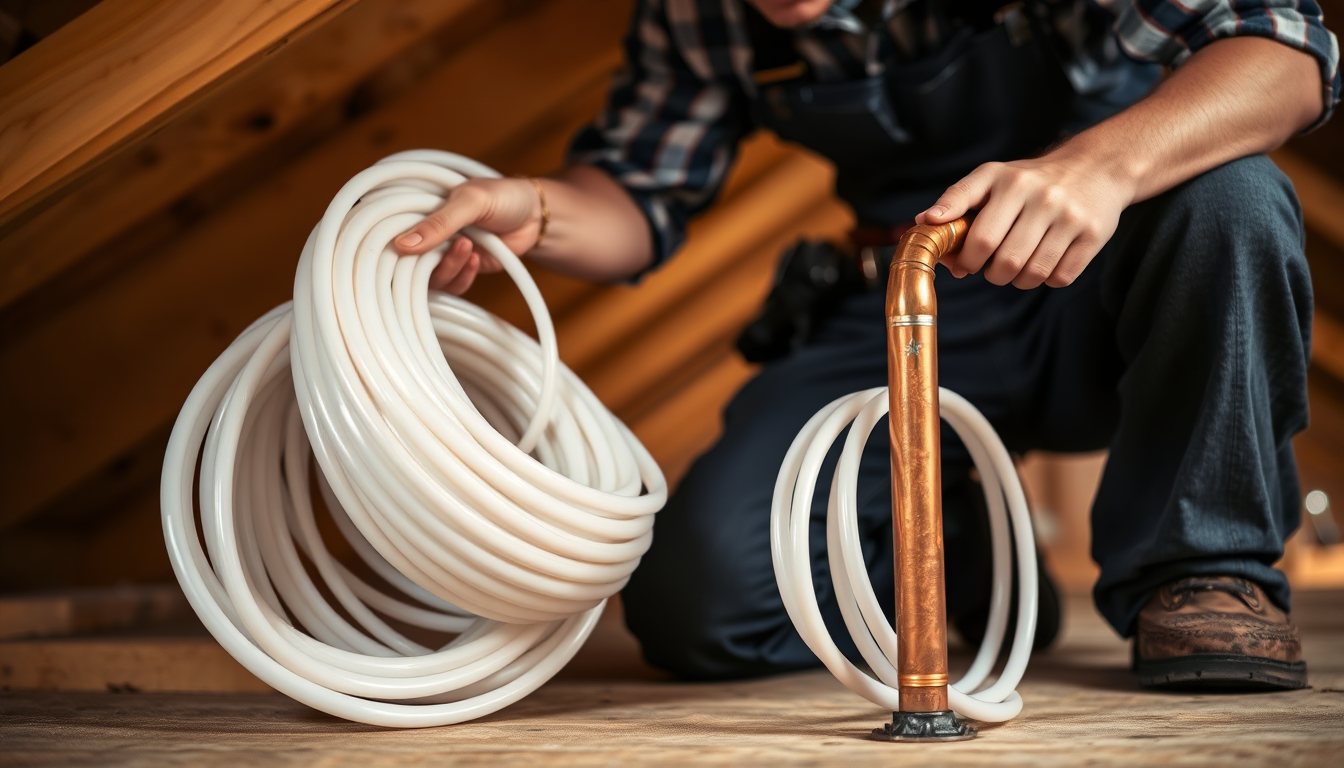
The short answer: For most LA homes, PEX holds up better against our hard water and costs less to install for a whole house repipe. Copper still has a place for water heater stub-outs, exposed runs, and homes where a buyer’s inspector expects to see it. The right call in a pex vs copper repipe decision depends on your home’s age and your slab. It also depends on what you plan to do with the property, not just which pipe sounds more premium.
- PEX resists the pinhole leaks that hard water causes in copper over time.
- Copper has a longer track record and resists rodent damage that PEX doesn’t.
- Pre-1960 homes with galvanized pipe need a full repipe either way. The question is just the material.
- A hybrid approach, PEX for the runs and copper at the water heater, is common and code-legal in California.
We’ve repiped homes across the San Fernando Valley, the Tri-Cities, the Westside, and the Conejo corridor for 25 years, on both the residential and commercial side, and this is what we’ve actually seen hold up under LA conditions, not what a sales flyer says.
What Are PEX and Copper Pipe, Actually?
Copper is rigid metal tubing, soldered together at every joint. It’s been the standard supply line material in American homes for decades, and most plumbers your age or older learned on it first.
PEX, cross-linked polyethylene, is a flexible plastic tubing that snakes through walls and joists in long runs with far fewer joints. California didn’t always allow it. The state’s Building Standards Commission certified the environmental review and formally added PEX to the California Plumbing Code effective August 1, 2009. That’s after years of the material already being used in other states. Source
| Factor | PEX | Copper |
|---|---|---|
| Corrosion from hard water | Resistant | Vulnerable over decades, pinhole leaks |
| Typical service life | Manufacturer warranties vary by brand | 50 years or more with good water chemistry |
| Installation joints | Fewer, no soldering | More, each one soldered |
| Rodent resistance | Vulnerable, rats and mice can chew through it | Resistant |
| UV exposure | Degrades in direct sunlight | Unaffected |
| Best use in a repipe | Long runs through walls and attics | Water heater stub-outs, exposed exterior runs |
How Does Each Pipe Hold Up to LA’s Hard Water?
This is the part that actually matters for a repipe decision, not the sales pitch.
Los Angeles water runs hard to very hard depending on your neighborhood and which source feeds it, generally in the range LADWP itself reports for the system. Source Hard water carries more dissolved minerals. Over the years, those minerals contribute to the pinhole leaks we see in copper supply lines, especially in homes with the original 1960s-1980s copper that’s now decades old.
PEX doesn’t corrode from mineral content the way copper does. It’s plastic, so hard water scale builds up differently and doesn’t eat through the pipe wall from the inside. That’s the main reason we’ve shifted toward recommending PEX for whole house repipe work. It’s especially true in homes on well water or on the harder end of the LA supply.
Copper isn’t defenseless. Under normal city pressure and with decent water chemistry, copper still gives you 50 years of service life, often longer. Source The failures we get called out for are almost always tied to water chemistry or stray electrical current. Sometimes it’s just a bad original installation, not copper failing on its own by design.
Slab Homes and Pre-1960 Houses: Where the Pipe Choice Matters Most
A huge share of the homes we work on in the Valley, the Tri-Cities, and the older Westside neighborhoods are slab-on-grade. Supply lines run through or under the concrete. That changes the calculus.
If your original lines are galvanized steel, common in homes built before 1960, you’re on borrowed time no matter which replacement material you pick. Galvanized pipe corrodes from the inside as its zinc coating wears away. It typically holds up somewhere in the 40 to 70 year range before problems set in, and most of those homes are well past that now. Source
For a slab repipe, PEX has a real practical edge. Its flexibility lets a crew reroute supply lines through the attic and down interior walls instead of tunneling through the slab again. That usually means less concrete cut open and a faster job. Copper can be rerouted the same way, but the rigid tubing needs more fittings and more solder joints to make the same turns. That adds labor time and more potential failure points down the line.
What Does a Whole House Repipe Actually Involve?
Whether you land on PEX or copper, a whole house repipe is not a quick visit. A crew has to shut off water to the house, cut access points in drywall or the attic, and run new lines to every fixture. Then they pressure test the new system and patch what they opened. You’ll be without full water service for stretches of the work. Plan on some drywall and paint touch-up afterward regardless of which pipe you choose.
The permit and inspection process is the same either way in most LA-area jurisdictions. A licensed plumber pulls the permit, the work gets inspected before walls close back up, and the job isn’t final until it passes. If a contractor is skipping permits to save you money, that’s a red flag, not a discount.
Where Does Copper Still Have the Edge?
We’re not going to pretend PEX wins everything.
- Rodents. Rats and mice will chew through PEX tubing the same way they gnaw through plastic-coated wiring, and mainstream home publications have documented it. Source Rigid copper doesn’t give them anything to gnaw through. If you’ve had a rodent problem in the attic or crawlspace, that’s a real factor to weigh.
- UV exposure. PEX degrades if it’s left exposed to direct sunlight for extended periods. Copper doesn’t care. Any exposed exterior runs are usually better off in copper regardless of what’s used inside the walls.
- Buyer perception. Some buyers and inspectors in this market still see copper as the “real” repipe and treat PEX as the cheaper option, fair or not. If you’re repiping specifically to help a sale, that perception is worth knowing about before you pick a material.
Where Does PEX Win for Most LA Homes?
- Speed. Fewer joints and flexible runs mean less time with your water shut off and less drywall opened up.
- Corrosion resistance. No pinhole leaks from hard water mineral content over the decades ahead.
- Noise. PEX doesn’t transmit the water hammer and pipe knock you sometimes get with rigid copper runs.
- Cost. Less material cost and less labor time generally add up to real savings on a whole house repipe. Your actual number still depends on your home’s layout and how much access the crew has.
Can You Mix PEX and Copper in One Repipe?
Yes, and we do it often. A common approach is PEX for the long horizontal and vertical runs through the attic and walls, with copper stub-outs at the water heater and any exposed exterior connections. This gives you PEX’s corrosion resistance and installation speed where it matters most, while keeping copper’s heat tolerance and durability right at the water heater, where temperatures run highest.
If you’re also due for a water heater swap, a repipe is a smart time to handle both at once. That’s especially true if you’re considering a tankless water heater installation, since it requires different connection sizing than your old tank.
Is Repiping a DIY Job?
No. We’ll say this plainly: don’t attempt a whole house repipe yourself. This isn’t like swapping a faucet washer. You’re dealing with a pressurized system feeding every fixture in your home. There are permit requirements, and there’s the very real risk of a bad joint flooding a wall you already closed up.
What you can do yourself is the early diagnosis. Watch for recurring pinhole leaks, rusty water from multiple fixtures, or a pressure drop across the whole house rather than one fixture. Any of those is a signal to get a licensed plumber out and find out whether you’re looking at a repair or a full repiping job.
Frequently Asked Questions
Does PEX cost less than copper for a whole house repipe?
Generally yes. PEX typically costs less in both material and labor because it requires fewer fittings and installs faster than soldered copper. Your actual cost depends on your home’s size, how accessible the walls and attic are, and how many fixtures you’re running to. Get a written quote based on a walkthrough rather than a phone estimate.
Will PEX hold up in an older LA home with hard water?
Yes. PEX doesn’t corrode from dissolved minerals the way copper can over decades. That’s one of the main reasons it’s become a common choice for a pex vs copper repipe in homes on the harder end of the LA water supply.
Can rats or rodents chew through PEX pipe?
Yes, rodents can chew through PEX, and they can’t chew through copper. If your home has had an active rodent problem in the attic or crawlspace, that’s a legitimate reason to lean toward copper for those exposed runs. You can also use rodent-resistant PEX sleeving where lines are exposed.
Is a hybrid PEX and copper repipe a real option?
Yes, and it’s common practice. Many repipes use PEX for the long runs through walls and attics and copper for the water heater stub-outs and any exposed exterior connections. That combines PEX’s corrosion resistance with copper’s heat tolerance right where it matters most.
How long does a whole house repipe take?
It depends on your home’s size and how the crew has to access the walls. As a rule, PEX installs faster than copper because it needs fewer joints and solder connections. Ask your plumber for a timeline specific to your home’s layout rather than relying on a general estimate.
The Bottom Line
For most LA homes dealing with hard water and an aging copper or galvanized system, PEX is the more practical choice for a pex vs copper repipe. Copper still earns its keep at the spots where heat tolerance and rodent resistance matter most.
If you’re seeing pinhole leaks, rusty water, or pressure problems that point to failing supply lines, that’s worth a real evaluation, not a guess. Call Rooter Experts at 888-488-4808 and we’ll take a look at what’s actually going on in your walls before you commit to either material. We’ve been doing this on LA trucks for 25 years, and we’ll tell you straight what your home needs.