High Water Pressure in Your LA Home: The Quiet Damage Behind Banging Pipes and Early Appliance Failures
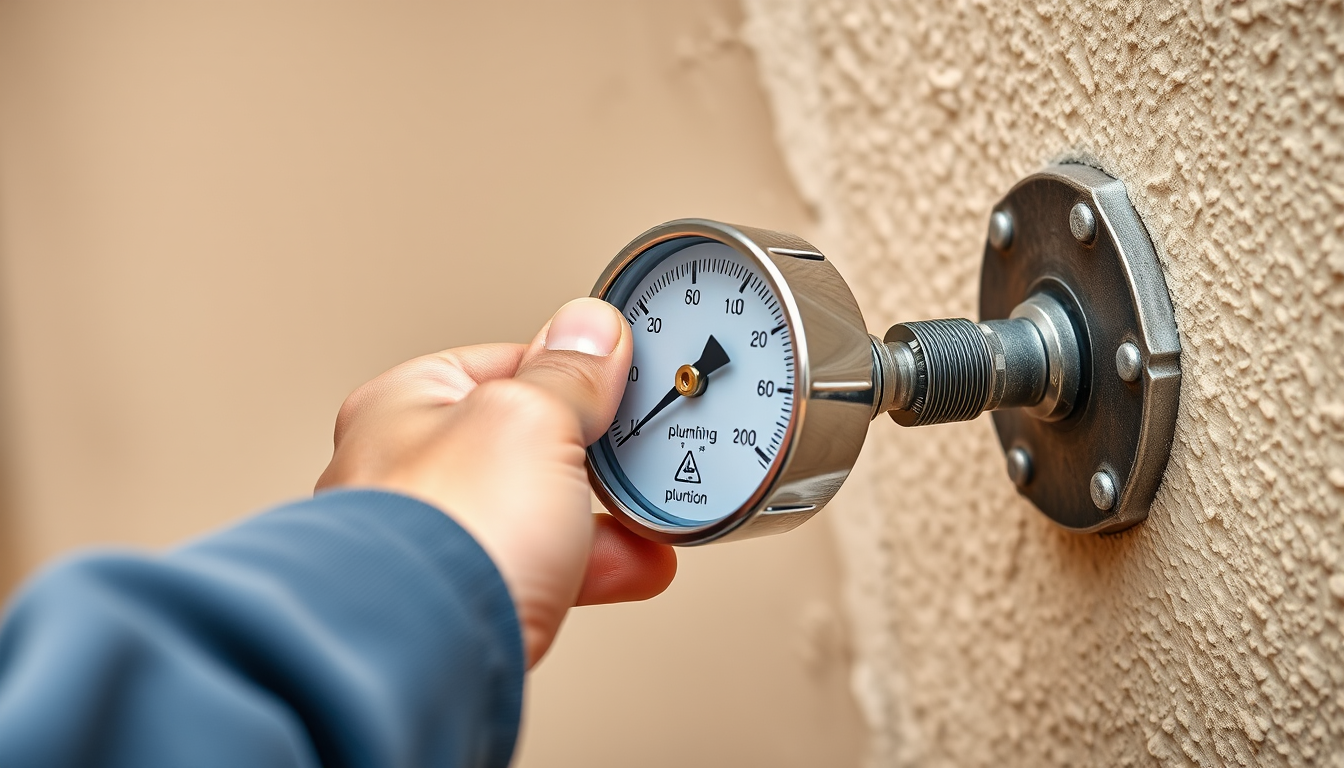
High water pressure feels great in the shower. It also puts constant, invisible strain on every pipe joint, hose, and appliance connected to your water line. If your water heater keeps failing early, your hoses split, or you hear a bang in the walls every time a faucet shuts off, high pressure is usually the reason, not bad luck.
The short answer:
- Normal household water pressure runs 40 to 80 psi. Above 80 psi, California code requires a pressure reducing valve (the PRV).
- Banging pipes, dripping faucets, and short-lived appliances are the tell-tale signs of pressure running too high.
- You can test your own pressure at an outdoor spigot with a $10 gauge in under five minutes.
- LA’s hillside elevation zones and older homes make this a bigger deal here than in a lot of other cities.
- A failed or missing PRV is a straightforward fix. Ongoing damage from ignoring it is not.
What Counts as High Water Pressure in an LA Home?
Most plumbing pros consider 40 to 80 psi the normal working range for a house, and pressure above 80 psi is when problems start Source. That 80 psi number is not just a rule of thumb. It’s written into California Plumbing Code Section 608.2, which requires a pressure reducing valve any time static pressure at the meter exceeds 80 psi Source.
Here’s the part a lot of homeowners don’t know. In Los Angeles, distribution zones commonly deliver 80 to 150 psi at the meter, depending on your elevation and how close you are to a booster station Source. If you live on a hill in the Hollywood Hills, parts of the Valley, or up in the Conejo corridor, your incoming pressure can run well past code minimum. That’s before it ever hits your PRV. That’s not a defect. It’s how the water utility keeps pressure adequate for fire hydrants across a huge elevation range. Your job, and ours, is making sure the pressure gets knocked down before it reaches your fixtures.
| Reading at an outdoor spigot | What it means |
|---|---|
| Below 40 psi | Low pressure, a separate problem from what this article covers |
| 40 to 60 psi | The comfort zone most plumbers aim for |
| 60 to 80 psi | Still within the normal range, but worth watching for the warning signs below |
| Above 80 psi | Exceeds California Plumbing Code Section 608.2. A pressure reducing valve is required |
| 80 to 150 psi at the meter | Common incoming pressure in LA’s hillside and elevation zones before a PRV steps it down |
What Warning Signs Should You Watch For?
Most people live with high pressure for years before they connect the dots. Here’s what to watch for:
- Water hammer. A loud bang or thud in the walls right when a faucet or washing machine valve shuts off. That’s the shockwave from water slamming to a stop with nowhere to go.
- Faucets that drip or spit. Especially right after you turn off a nearby fixture, when the pressure spike has nowhere else to go.
- A toilet that runs on its own. High pressure wears out fill valves faster than they’re built to handle.
- Appliances that die young. Washing machine hoses, dishwasher supply lines, and water heater tanks all take the damage caused by excess pressure on hoses and internal components Source.
- A water bill that keeps climbing. More pressure means more water pushed through every fixture, every time you turn one on.
None of these show up overnight. That’s what makes high pressure sneaky. It’s not a flood. It’s a slow tax on everything in your house that touches water.
How Do You Test Your Water Pressure Yourself?
You don’t need us to tell you if your pressure is high. A hose bib gauge from any hardware store does the job in a few minutes:
- Turn off every water-using appliance and fixture in the house.
- Thread the gauge onto an outdoor spigot, ideally one close to your water meter.
- Open the spigot all the way and read the dial.
A reading between 40 and 60 psi is the ideal range most plumbers aim for, and anything consistently reading higher points to a pressure problem that needs attention Source. Test in the early morning if you can. City demand is lower overnight, so pressure tends to read a bit higher then, which gives you a worst-case number.
If you’re reading north of 80 psi, don’t wait. That’s above the code threshold, and it’s actively working against your pipes right now.
Why LA Homes Are Especially at Risk
A few things stack up against LA plumbing that you won’t see in a lot of other markets:
- Elevation and hillside pressure zones. LADWP zones can run 80 to 150 psi at the meter before your PRV ever touches it. A worn-out or missing valve sends that pressure straight into your walls.
- Pre-1960 housing stock. Homes in the Valley, Tri-Cities, and older Westside neighborhoods often still run original galvanized steel or early copper supply lines, rated for the pressure standards of their era and degrading ever since.
- Slab-on-grade construction. Most LA homes run their main lines under a concrete slab instead of a basement. A joint that fails under pressure often shows up as a warm spot on the floor or a rising water bill long before you see standing water.
- Hard water. Mineral buildup narrows pipes over time, so the same volume of water moves at a higher velocity and a bigger pressure spike when a valve closes. Hard water and high pressure make a worse combination than either one alone.
What Does High Pressure Actually Break?
This is the part that costs money later. High pressure doesn’t blow a pipe apart in dramatic fashion. It wears things out early, quietly, one cycle at a time.
Water Heaters
Every time a fixture shuts off under high pressure, the tank and fittings absorb part of that shock. The T&P relief valve ends up doing more work than it should. If you’re replacing water heaters more often than seems reasonable, check your pressure before you install another one.
Pipe Joints and Slab Leaks
Soldered copper joints, compression fittings, and old galvanized threads all have a pressure rating. Push past it for months or years and the weak point, usually a joint, is where a leak starts. In a slab-on-grade LA home, that means a leak you can’t see until it’s already caused damage.
Hoses and Appliance Supply Lines
Washing machine hoses, dishwasher lines, and ice maker tubing are rated for a specific pressure range. High pressure pushes them past their design life, which is one of the more common causes of a sudden flood under a washing machine.
Toilet Fill Valves and Faucets
These are the cheapest parts in your house to replace, and the first ones to fail under sustained high pressure. Replacing fill valves or cartridge faucets every year or two is a symptom, not a coincidence.
What Does a Pressure Reducing Valve Do?
A pressure reducing valve is a bell-shaped fitting installed on your main water line, immediately after the water meter, with a strainer upstream of it Source. It takes whatever pressure the city sends and knocks it down to a steady level, typically 40 to 60 psi. That happens before the water reaches a single fixture in your home.
Under California Plumbing Code Section 608.2, a PRV is required any time static pressure at the meter exceeds 80 psi. That requirement applies to single-family homes, multi-family buildings, commercial properties, and accessory dwelling units under LADBS jurisdiction Source. If your incoming pressure is above code, this isn’t optional equipment. It’s what stands between city pressure and your plumbing.
PRVs wear out. The internal diaphragm and spring lose their set point over years of use, and when that happens, pressure creeps back up even though the valve is still physically there. If your home has a PRV and you’re still seeing the warning signs above, the valve itself may be the problem, not a missing one.
There’s a second wrinkle a PRV creates. Once it’s installed, your home becomes a closed system, and your water heater’s own heating cycle expands the water inside it with nowhere to go Source. That’s why code pairs a PRV with a thermal expansion tank on the cold side of the water heater. Skip the expansion tank and you can end up with pressure spikes again, even with a good PRV in place.
When Should You DIY vs. Call a Plumber?
Testing your pressure with a gauge is a fine DIY project, and so is watching for the warning signs above. Where we’d tell you to stop and call someone:
- Installing or replacing a PRV. It ties into your main line and needs to be sized and set correctly, or you either don’t fix the problem or you starve the house of pressure.
- Suspected slab leaks. A warm spot on the floor, a running water meter with everything off, or an unexplained bill spike needs a real diagnostic, not guesswork.
- Repeated appliance or fixture failures. Replacing the same part twice in two years means the pressure is the actual problem.
- Older galvanized or original copper systems. A plumber can tell you whether they’re still sound or whether repiping makes more sense than patching joint after joint.
Frequently Asked Questions
What is considered high water pressure for a house?
Most plumbers consider 40 to 80 psi the normal range for a home, with 40 to 60 psi being the comfort zone most aim for. Anything reading consistently above 80 psi is above California’s code threshold and requires a pressure reducing valve.
Can high water pressure cause a leak I can’t see?
Yes. In slab-on-grade LA homes, a joint under the concrete can fail slowly under sustained high pressure. It often shows up first as a warm floor spot or a rising water bill, not visible water.
How do I know if my pressure reducing valve is failing?
If your home has a PRV but you’re still hearing water hammer, seeing dripping faucets, or replacing appliance parts often, that’s a clue. The valve’s internal spring and diaphragm may have worn out and lost their set point. That needs a plumber’s inspection.
Is high water pressure an emergency?
Not usually on its own. But an active leak, a sudden pressure spike, or a burst hose is a different story. Treat it like any active leak: shut off your main water valve until a plumber can look at it.
Will a plumber charge me just to test my water pressure?
You can test it yourself first with a $10 gauge from a hardware store. If you’re not comfortable doing that, or the reading is unclear, that’s a reasonable thing to ask a plumber to check during a visit.
If any of this sounds like what’s happening in your house right now, banging pipes, a water heater that just won’t last, a fill valve you’ve replaced more than once, it’s worth having someone look at your pressure and your PRV. Rooter Experts has been on LA trucks for 25 years. We know which neighborhoods run hot on pressure and which older homes need a closer look. Call us at 888-488-4808, or see our full list of plumbing services and who we are.