Relief Valve Dripping? Here’s How to Tell Normal Thermal Expansion From a Warning Sign
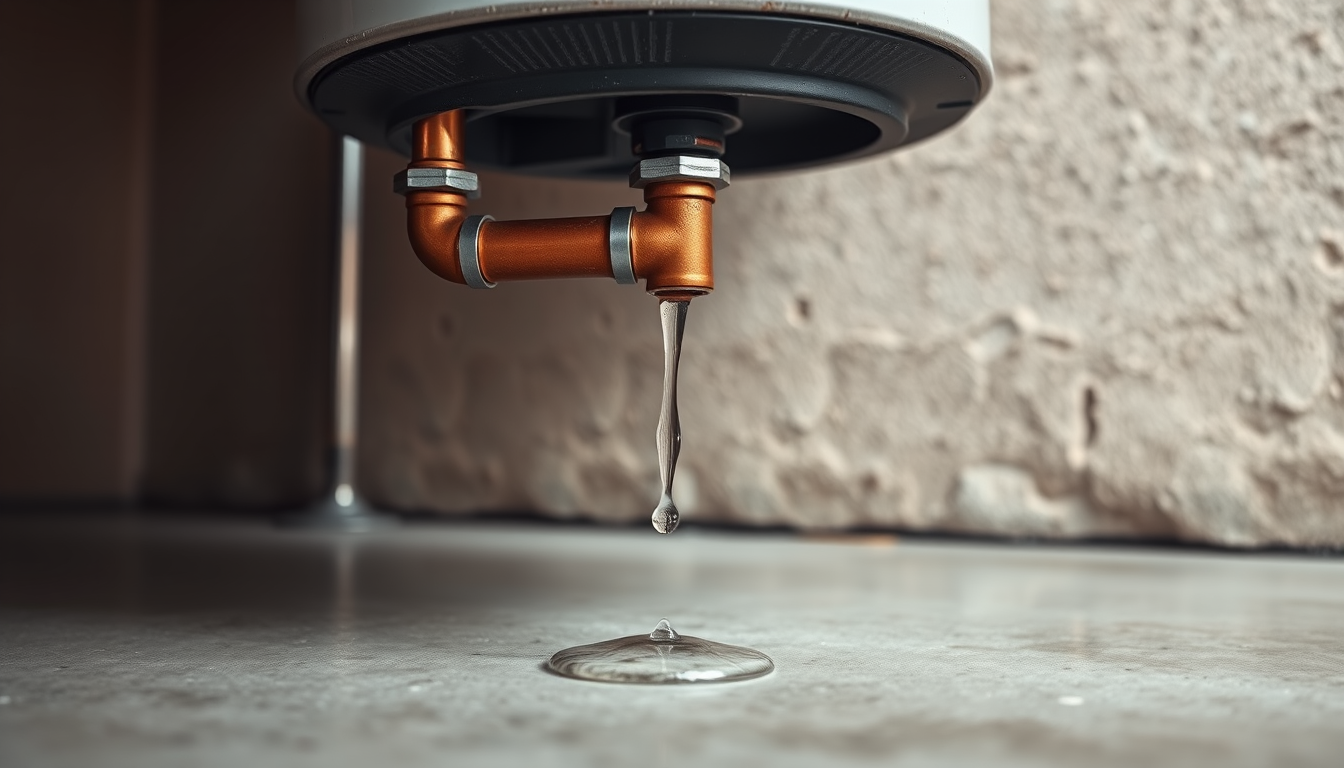
Relief valve dripping is one of the most common calls we get on a water heater. Most of the time it’s not an emergency. Sometimes it is. The difference comes down to how often it drips, how much water shows up, and what’s been happening with your tank lately.
The short answer: a few drops during or right after the heating cycle can be normal, especially in a closed system without an expansion tank. Water that runs steadily, drips daily, or puddles under the tank is not normal and means the valve is doing its job because something upstream is off.
What Does the Water Heater Pressure Relief Valve Do?
The water heater pressure relief valve (plumbers call it the T&P valve, for temperature and pressure) is a safety device, not a fixture. It sits on top of or on the side of your tank with a discharge pipe running down toward the floor.
Its job is simple. If the pressure or temperature inside the tank climbs past a safe limit, the valve opens and dumps water to relieve the buildup before something worse happens, like a tank failure. On a standard residential water heater, that valve is built to open around 150 psi and 210 degrees Fahrenheit (Watts). That’s well above where your tank should ever operate day to day, so if yours is opening, the tank got close to a limit it shouldn’t be near.
Is Relief Valve Dripping Normal, or a Warning Sign?
Here’s the short version. Occasional dripping during a heating cycle can be normal. Continuous or daily dripping is not, and it means the valve is compensating for a pressure or temperature problem somewhere in the system.
When It’s Normal
Every time your water heater fires up, the water inside expands slightly. In a closed plumbing system, one with a check valve or pressure regulator at the meter and no expansion tank, that expanding water has nowhere to go. So a few drops discharge from the relief valve to release the extra pressure. If it happens occasionally, right after the burner or elements kick on, and stops on its own, that’s the system working as designed.
When It Isn’t
Steady dripping, a puddle that shows up every day, or water running even when the tank has been sitting cold for hours is different. That points to a real cause, not routine expansion, and it’s worth tracking down before it gets worse.
| Sign | Normal | Warning Sign |
|---|---|---|
| Frequency | Occasional, after heating cycles | Daily or continuous |
| Timing | Right after the burner or elements run | Even when the tank has been cold for hours |
| Amount | A few drops | Steady trickle or puddle |
| System type | Closed system, no expansion tank | Any system, especially with rising temperature or pressure |
What Causes a Relief Valve to Drip in LA Homes?
We see a handful of causes over and over on service calls across the San Fernando Valley, the Tri-Cities, the Westside, and the Conejo corridor. Most trace back to pressure, temperature, or a valve that’s simply worn out. The pattern we run into most is a 12-plus-year-old tank in an older home, no expansion tank in sight, still running on whatever temperature setting it shipped with.
High Tank Pressure
California Plumbing Code requires a pressure reducing valve at the point where the water line enters the building whenever incoming pressure exceeds 80 psi (California Plumbing Prep). A lot of older LA homes, especially anything built before that requirement was enforced, either never had one installed or have one that’s failed. Without it regulating pressure down, your tank can sit closer to the relief valve’s threshold than it should, and any small spike pushes it over.
Thermal Expansion With No Expansion Tank
If your home has a check valve or pressure regulator at the meter, your plumbing is a closed system. Heated water expands and, without a dedicated expansion tank to absorb that extra volume, the relief valve becomes the only pressure release available. This is the single biggest cause of “normal” dripping, and it’s also the easiest one to actually fix.
Temperature Set Too High
The U.S. water heater industry generally recommends a 120 degree Fahrenheit setting as the standard for most households, balancing safety, energy use, and scald risk (A. O. Smith). Many tanks ship set higher than that. Push the temperature dial too far and you’re closer to that 210 degree valve threshold than you realize.
Sediment Buildup
LA’s hard water leaves mineral deposits at the bottom of the tank over time. That sediment layer can coat the valve seat, keep it from sealing fully after it opens, and cause a slow, steady drip long after the pressure has normalized. It’s more common in tanks that have never been flushed.
A Worn-Out or Failing Valve
Relief valves don’t last forever. Years of mineral exposure, hard water, and repeated cycling wear down the seal inside. If your tank is older and the valve is dripping even after you’ve ruled out pressure and temperature, the valve itself is probably the problem. If your plumbing is old enough that pressure issues keep recurring across the house, it may be worth having the whole system evaluated, sometimes a repipe is the real fix, not just the water heater.
How to Check It Yourself (and When Not To)
You can safely gather information before you decide whether to call someone. Here’s what’s reasonable to check on your own:
- Watch the discharge for a day. Is it a few drops after the burner runs, or a steady trickle at all hours?
- Check the temperature dial. If it’s set above 120°F, that’s worth noting.
- Look at the tank’s age on its data plate. Anything past 10 to 12 years old is more likely to need a valve or full replacement soon.
- Check whether you have a visible expansion tank near the water heater. If you don’t and your home has a pressure regulator, that’s a strong clue.
What you shouldn’t do is cap, plug, or tie down the relief valve to stop the drip. That valve is the one thing standing between a pressure buildup and a tank failure. Don’t attempt to replace it yourself either. The tank is pressurized and often still hot, and a valve swapped in wrong can leave you with a bigger problem than a drip.
DIY Fix or Call a Plumber?
Turning down the thermostat to 120°F is something most homeowners can do safely and it’s worth trying first if your tank is set higher. Beyond that, we’d rather you call.
Installing a thermal expansion tank, testing actual system pressure, and replacing a worn relief valve all involve working on a pressurized, often hot system, and getting it wrong risks a bigger leak or a scalding injury. If you’ve checked the temperature setting and the dripping is still steady, or your water heater is older and you’re not sure what’s causing it, that’s when it’s time to get a water heater looked at by someone who does this daily.
Frequently Asked Questions
Is it normal for a water heater relief valve to drip?
Occasional dripping right after the heating cycle can be normal, especially in a closed plumbing system without an expansion tank. Steady or daily dripping is not normal and usually means tank pressure, temperature, or the valve itself needs attention.
Can I just cap or tighten a dripping relief valve to stop it?
No. The valve is a safety device that releases pressure before a tank failure. Capping or plugging it removes that protection entirely and can turn a minor drip into a serious hazard.
What temperature should I set my water heater to?
120 degrees Fahrenheit is the standard recommendation for most households, balancing scald safety with energy use. Relief valves are typically rated to open around 210 degrees, so a lower thermostat setting keeps you well clear of that threshold.
Does a dripping relief valve mean I need a new water heater?
Not necessarily. Many drips trace back to a missing expansion tank, a high temperature setting, or a worn valve that can be replaced on its own. An aging tank with a dripping valve and other signs of wear is a different story and may be closer to the end of its life.
Why does my relief valve drip more in summer or after long showers?
Heavy hot water use makes the tank cycle more often, which means more heating cycles and more chances for thermal expansion to push water out through the valve. If your home lacks an expansion tank, that pattern tends to show up most after periods of high demand.
If what you’re seeing matches the warning signs above, steady dripping, an old tank, or you’re just not sure what’s causing it, give us a call at 888-488-4808. We’re a licensed, family-run plumbing crew serving Los Angeles, Ventura, and Orange counties, and we’ve been diagnosing water heaters across all three for 25 years. We’ll tell you straight whether it’s a quick fix or something bigger. If it turns out your plumbing needs a closer look beyond the water heater, you can see the full range of what we handle on our plumbing services page, or read more about who we are and how long we’ve been doing this.