Main Water Line Leak in Your LA Yard: How to Tell It From a Slab Leak Before the Bill Climbs
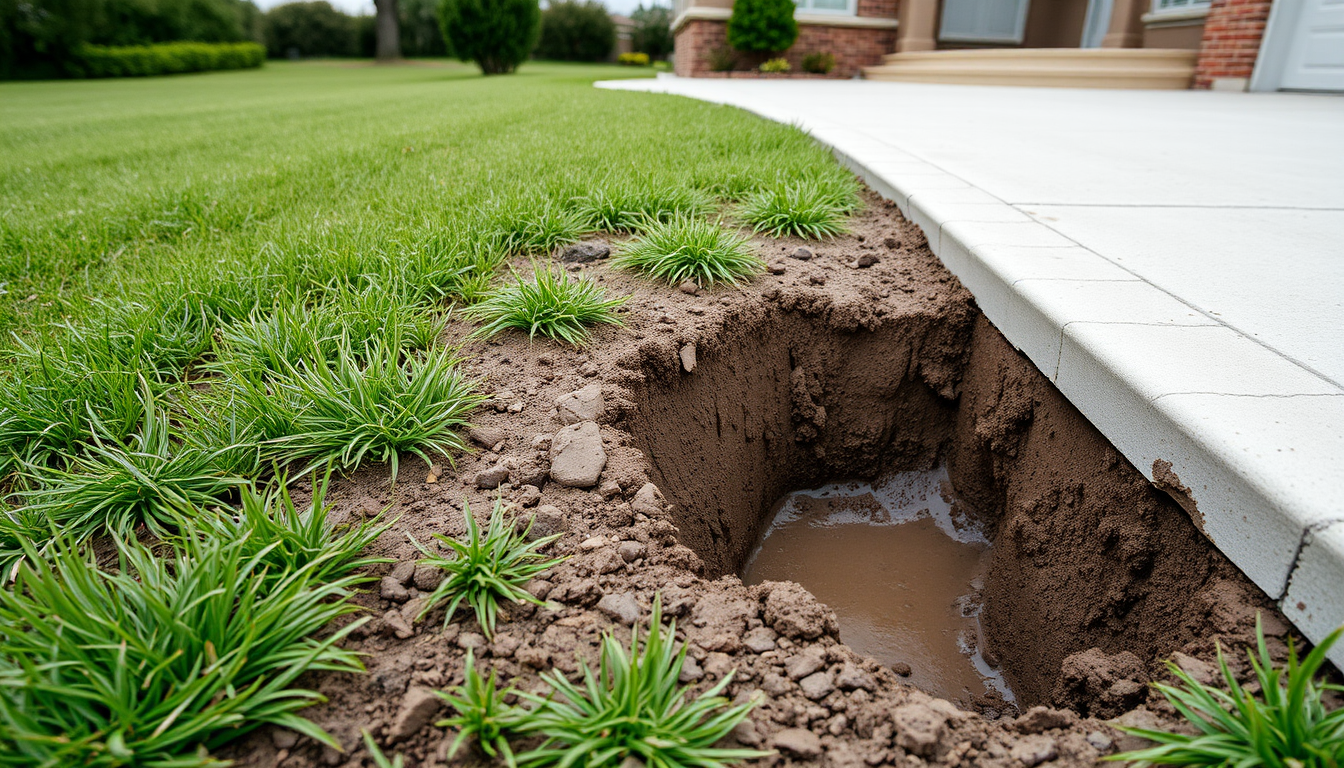
A soggy patch in the yard, a water bill that keeps climbing, and pressure that dropped off at every tap. That combination usually points to a main water line leak, the buried pipe that carries water from your meter to the house, not a slab leak under the concrete. The two get mixed up all the time, and they get fixed in very different ways. Here’s how we tell them apart on LA properties, and what an underground water line repair actually involves before you spend a dime.
The short answer: A main water line leak is a break in the water service line running underground across your yard, between the city meter and your home. A slab leak is a break in a supply line under the concrete foundation inside the footprint of the house. Yard clues (a wet or extra-green patch outside, water bubbling near the sidewalk, a spinning meter) point to the main line. Warm floors and damp carpet inside point to the slab. Confirm either one with the EPA’s two-hour meter test: shut off all water, read the meter, wait two hours, and read again. If it moved, water is escaping somewhere.
What Is a Main Water Line Leak?
Your main water line, also called the water service line, is the single pipe that carries all your household water from the city meter at the curb, underground across your yard, and into the house. When that buried pipe cracks or corrodes through, every gallon it leaks runs 24 hours a day, because the line is always under city pressure. That’s why a main line leak shows up on the bill fast and often soaks the yard before you notice anything indoors.
Here’s the part that catches LA homeowners off guard: that buried line is yours to maintain. LADWP installs and owns the pipe up to the meter, but the plumbing from the meter to the building is the customer’s responsibility (LADWP). So when the service line springs a leak in your yard, the repair falls on you, not the city. Knowing where that dividing line sits saves a lot of confused phone calls.
Main Water Line Leak vs Slab Leak: How Do You Tell Them Apart?
The quickest tell is location. A main water line leak is outside, in the yard, between the meter and the house. A slab leak is inside the footprint of the home, under the concrete floor. Both waste water around the clock, and household leaks add up to nearly 1 trillion gallons wasted nationwide every year, with the average home losing more than 9,300 gallons annually (EPA WaterSense). Where that water surfaces is what separates the two.
| Clue | Main water line leak (yard) | Slab leak (under the house) |
|---|---|---|
| Where water shows up | Soggy or sunken spot in the yard, water near the sidewalk or driveway | Damp carpet, warped flooring, or a dark patch on the floor indoors |
| Temperature clue | None. The service line carries cold water only | A warm spot on the floor if the leak is on a hot line |
| Grass and plants | One strip of lawn greener or growing faster than the rest | No effect on the yard |
| Pressure | Drops across the whole house at once | Can drop, but often with a warm-floor clue too |
| Sound | Rarely audible indoors | Hiss or trickle under the floor with everything off |
One warm spot on the floor with dry carpet outside is a slab leak until proven otherwise. A green stripe across the lawn with no indoor signs points to the main line. When you see clues in both places, get it tested rather than guessing, because the repairs are not interchangeable. If the leak turns out to be inside the slab, our repiping page walks through what that fix looks like.
What Are the Signs of a Main Water Line Leak in the Yard?
Most main line leaks announce themselves through the yard, the meter, or the water pressure long before you ever see a puddle at the door. A pressure-side leak on a buried service line never stops, so it leaves marks outside. Here’s what we tell LA homeowners to look for.
- A soggy or spongy patch in the yard. Ground that stays wet with no sprinkler running, or feels squishy underfoot, often sits right over the leaking line. In heavy cases the soil sinks or a small sinkhole forms.
- One strip of grass greener than the rest. A leaking line acts like free irrigation. If a band of lawn is lush and fast-growing while the rest is normal, follow that stripe. It usually traces the pipe.
- Water bubbling up near the curb or driveway. When the leak has nowhere to soak in, it surfaces along the sidewalk, the driveway edge, or the street. Standing water there in dry weather is a red flag.
- A water bill that climbs for no reason. Same household, same habits, bigger bill. A buried leak runs day and night, so it hits the bill before it shows anywhere else.
- A drop in pressure at every tap. When water escapes underground, less of it reaches the house. If pressure falls off across the whole home at once, a service-line leak is a prime suspect.
- Discolored or gritty water. A cracked line can pull dirt and rust in from the surrounding soil, so brown or cloudy water at every faucet can point to a break outside.
How Do You Confirm a Main Water Line Leak Yourself?
You can confirm a leak before you call anyone, and the best test is free. The EPA puts it plainly: “Check your water meter before and after a two-hour period when no water is being used. If the meter changes at all, you probably have a leak” (EPA WaterSense). Hidden leaks are common enough that WaterSense found nine percent of homes waste 50 gallons or more per day (EPA WaterSense). Here’s the step-by-step.
- Turn off every faucet and water-using appliance, and don’t flush a toilet for the duration.
- Find your meter, usually in a box near the curb, and write down the exact reading.
- Wait two hours with zero water used anywhere on the property.
- Read the meter again. If the numbers moved at all, water is escaping somewhere on your system.
To sort a yard leak from an indoor one, find the shutoff valve where the main line enters the house and close it. Then watch the meter again. If the meter keeps creeping with the house valve shut, the leak is out in the yard, between the meter and the house. If it stops, the leak is indoors, and a slab leak moves up the list.
Why Do LA Yards Spring Main Line Leaks?
A few local conditions stack up against buried service lines here. None of them is the whole story, but together they explain why we dig up so many leaking lines across the Valley and the Westside. Copper service lines are rated for roughly 70 years and plastic lines around 75 (InterNACHI), but LA conditions can push a line to fail well short of that.
Hard water working from the inside. Southern California tap runs hard. The USGS classifies anything above 180 mg/L as very hard, and a lot of LA water sits in that band (USGS). Scale builds inside the pipe and gives corrosion uneven spots to concentrate, which is how pinholes start.
High city pressure. Plumbing code calls for a pressure reducing valve (the PRV) once static pressure runs above 80 psi, to hold the house at or below that (plumbing code via UpCodes). When that valve is missing or has failed, every weak spot in the buried line takes extra strain and gives out sooner.
Age and tree roots. Plenty of LA service lines went in mid-century and are now decades into their life. Mature trees send roots toward the moisture and the pipe, and roots can wrap, crush, or work into a line that’s already weakened. Older pipe under harder conditions simply fails more often.
Underground Water Line Repair: What Does the Fix Take?
Underground water line repair is the work of locating a leak on the buried service line, then either patching the damaged section or replacing the full run from the meter to the house. It comes down to two broad approaches, and which one fits depends on where the leak is, the pipe’s condition, and what’s on top of it. The pipe is buried in your yard, so the first job is always pinpointing the exact spot, which takes acoustic listening gear and pressure testing rather than guesswork.
Open-trench repair or replacement. The classic method. A crew digs down to the line, then either repairs the damaged section or replaces the whole run from meter to house. It’s straightforward and lets the plumber see the pipe directly, but it means opening a trench across the yard, so any lawn, pavers, or hardscape over the line has to be restored afterward.
Trenchless replacement. When conditions allow, a new line can be pulled or bored through the ground along the old path with only small access pits at each end. That spares most of the yard and driveway. Not every leak or soil condition suits it, so a plumber confirms whether it’s an option after locating the break. Either way, if the line is old and failing in one place, replacing the full run is often smarter than chasing one leak at a time.
Should You DIY or Call a Plumber?
Some of this is genuinely a do-it-yourself job, and some of it isn’t. Knowing the line saves you money and saves your yard. Every diagnostic above is yours to run. Pinpointing and repairing a buried line is where a pro earns the call.
| Do it yourself | Call a plumber |
|---|---|
| Run the two-hour meter test | Pinpoint the buried leak with acoustic gear |
| Walk the yard for soggy spots and greener grass | Pressure-test the line to confirm the break |
| Isolate yard vs indoors with the house shutoff valve | Dig and repair, or replace the service line |
| Compare this month’s water bill to last year’s | Decide between a spot repair and a full new line |
| Shut off the main valve if the line is flooding | Advise on open-trench vs trenchless |
The reason pinpointing is a pro job is simple: the pipe is buried, so you can’t see it, and digging up the whole yard on a hunch is the expensive way to find a leak. Accurate location means opening only the ground that has to come up. For the full range of what a leak check involves, see our plumbing services.
If the signs at your place match what you’ve read here, that’s the moment to get eyes on it before the yard, the driveway, or the foundation take more damage. We’re a family-owned crew that’s been working under LA houses for 25 years (more about our LA plumbing team), and we’ll tell you straight whether it’s the service line, a slab leak, or something simpler. If your situation matches this, call Rooter Experts at 888-488-4808 for a leak check. No pressure, just a look.
Frequently Asked Questions
How do I know if it’s a main water line leak or a slab leak?
Location is the tell. A main water line leak surfaces outside, as a soggy yard, a greener strip of grass, or water near the curb. A slab leak shows up indoors, as warm flooring, damp carpet, or the sound of water with everything off. Confirm either with the EPA’s two-hour meter test (EPA WaterSense).
Who is responsible for the water line from the meter to my house in LA?
You are. LADWP owns and maintains the pipe up to the meter, but the plumbing from the meter to the building is the customer’s responsibility (LADWP). So a leak in the service line across your yard is your repair, not the city’s. The city handles breaks on its own mains in the street.
Can I fix a main water line leak myself?
The diagnostics are yours, but the repair isn’t a DIY job. You can run the two-hour meter test, walk the yard for soggy spots, and isolate the leak to outside with the house shutoff. Pinpointing a buried line takes acoustic gear and pressure testing, and repairing or replacing it means digging safely around other utilities.
Is a main water line leak an emergency?
It’s urgent even when nothing is flooding. A buried leak runs around the clock, and the average household’s leaks waste more than 9,300 gallons a year (EPA WaterSense). Left alone, escaping water erodes soil under walkways, driveways, and even the foundation, so the sooner it’s located and fixed, the less damage you’ll repair.
Sources
- US EPA WaterSense, Fix a Leak Week, retrieved 2026-07-06
- USGS, Hardness of Water, retrieved 2026-07-06
- InterNACHI, Standard Estimated Life Expectancy Chart for Homes, retrieved 2026-07-06
- LADWP, Meter Information, retrieved 2026-07-06
- International Plumbing Code, Excessive Water Pressure (via UpCodes), retrieved 2026-07-06