Low Water Pressure in the Whole House? What’s Really Going On in LA Homes
Low Water Pressure in the Whole House? What’s Really Going On in LA Homes
The short answer
- If pressure is weak at every fixture, the problem is upstream: usually a failing pressure regulator (PRV), a partly closed main shutoff, corroded old pipes, or low pressure coming from the street.
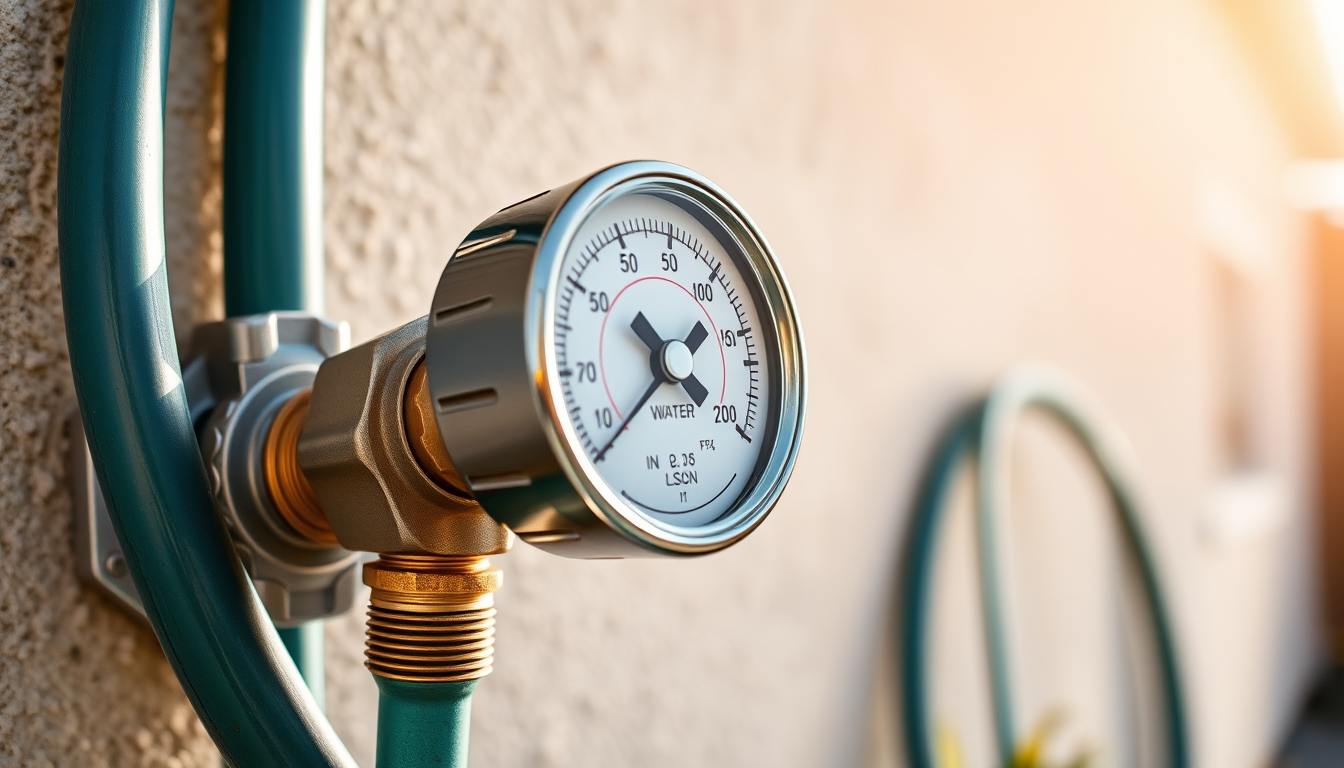
- The first thing to check is a pressure gauge reading at an outside hose bib. WaterSense recommends incoming service pressure between 45 and 60 psi (EPA WaterSense, 2023). Read well below that and you’ve confirmed it’s pressure, not a clogged faucet.
- In older LA homes, hard-water scale and corroded galvanized pipe are the most common hidden causes, and those usually mean a repair or repipe, not a quick fix.
Weak showers, a kitchen faucet that trickles, a washing machine that takes forever to fill. When low water pressure hits the whole house at once, it’s frustrating and it’s almost never the fixture’s fault. After 25 years on LA plumbing calls, we can tell you the cause is usually one of a handful of things, and a few of them you can check yourself in ten minutes.
Here’s how to figure out what’s happening, what you can test on your own, and when it’s worth a call.
Is it the whole house, or just one fixture?
Before anything else, figure out the scope. This one question points you at the right cause and saves you money.
Run cold water at several fixtures around the house: kitchen, both bathrooms, the laundry line. If only one spot is weak, the problem is local. Think clogged aerator, a gummed-up cartridge, or a half-closed angle stop under the sink. If everything is weak at the same time, the cause is upstream of the whole system.
| What you notice | Likely location of the problem |
|---|---|
| One faucet or shower weak, rest are fine | That fixture (aerator, cartridge, supply valve) |
| Only hot water is weak everywhere | Water heater or its shutoff valve |
| Cold and hot weak at every fixture | Main line, PRV, meter valve, or street pressure |
| Pressure dropped suddenly overnight | Failed PRV, a main leak, or a city supply change |
If you landed in the bottom two rows, keep reading. That’s the whole-house category, and it’s what the rest of this guide covers.
What causes low water pressure in the whole house?
Whole-house low pressure almost always traces back to one of five things. Most LA homes we visit fall into the first three. Supply pressure can vary a lot before it ever reaches your fixtures, since service mains can run 100 psi or more at the street and get stepped down at the house (EPA WaterSense, 2023).
1. A failing pressure regulator (PRV)
Most LA homes have a pressure regulator, a bell-shaped brass valve where the main line enters the house. Its job is to knock down high street pressure to a safe level. Plumbing code caps static pressure at 80 psi, and anything above that is supposed to run through a regulator (Uniform Plumbing Code 608.2, IAPMO). California’s plumbing code follows the same rule.
When a PRV wears out, it can drift the wrong way and choke your pressure down to a trickle. These valves don’t last forever, and a slow decline across the whole house is the classic symptom of one going bad. The good news: a PRV is a repairable part, not a whole-system job.
2. Corroded galvanized pipes
If your home was built before the 1960s and still has its original steel water lines, this is the usual suspect. Galvanized pipe rusts from the inside out. Over decades the rust narrows the opening until barely any water can get through, and no amount of valve-adjusting fixes a pipe that’s closed up.
You’ll often see it as pressure that got worse slowly over years, sometimes with rusty-colored water on the first draw. At that point the fix is usually a repipe, swapping the old galvanized for copper or PEX.
3. Hard-water scale buildup
LA has hard water. Hard water is most common across the Southwest United States (EPA WaterSense, 2026), and the calcium and magnesium in it leave mineral scale inside pipes and fixtures. The USGS puts it plainly: long-term movement of hard water through a pipe builds up scale that gradually closes the pipe, reducing water movement and lowering water pressure (USGS, Hardness of Water).
Scale loves heat, so it hits the water heater and hot-water lines first. If your hot side is weaker than your cold, mineral buildup is a strong candidate.
4. A partly closed main shutoff or meter valve
This is the one we love to find, because it’s free to fix. If a valve at the meter or the main shutoff got bumped or was never reopened all the way after a repair, you get low pressure everywhere. Always worth a look before you assume the worst.
5. Low pressure from the city
Sometimes it isn’t your house at all. A water main break nearby, hydrant testing, or a pressure change on the city’s side can drop your supply. If a neighbor reports the same thing, or pressure returns on its own, the cause was upstream of your property line.
How do I diagnose low water pressure myself?
You can narrow this down with a $12 gauge and fifteen minutes. WaterSense recommends incoming service pressure sit between 45 and 60 psi (EPA WaterSense, 2023), so that range is your benchmark.
- Test the pressure. Screw a water-pressure gauge onto an outside hose bib, turn it on full, and read it. Well below 45 psi confirms the problem is pressure, not a clogged faucet.
- Check the main shutoff and meter valve. Make sure both are open all the way. A half-turn closed is enough to weaken the whole house.
- Compare hot vs cold. Cold fine but hot weak points at the water heater or scale. Both weak points upstream to the PRV or main line.
- Look at the PRV. If you have a regulator and pressure is far below the WaterSense range, the valve is the prime suspect. Some have an adjustment screw, but a failing one needs replacing, not just turning.
- Ask a neighbor. If they’re low too, the issue is the city’s, and there’s nothing to fix on your end.
Did the pressure problem show up the same week as a slab or main leak? Sudden whole-house drops can mean water is escaping before it reaches your fixtures, which is worth ruling out fast.
When should I call a plumber?
Call when the easy checks come up empty. If your shutoffs are open, your neighbors are fine, and the gauge still reads low, the cause is inside your system and needs hands-on diagnosis. A pro can test pressure at multiple points, confirm whether the PRV is the culprit, and scope the lines to see if scale or corrosion has closed them up.
It’s also a call-now situation when pressure drops suddenly and you can’t find a reason, when you see rusty water, or when only your home on the block is affected. Those point to a failing regulator, corroded pipe, or a hidden leak, none of which get better on their own.
When buildup is the problem, the right fix depends on where it is. Mineral and debris blockages in drain and supply lines sometimes call for hydrojetting, while corroded supply pipe usually means a repipe. A plumber sizes the fix to the actual cause instead of guessing.
Why do older LA homes get this more often?
Two reasons stack up here, and a lot of LA housing stock hits both. First, the age. Neighborhoods full of pre-1960 homes still have original galvanized lines that have spent decades rusting shut. Second, the water. Southwest hard water keeps depositing scale year after year, and the USGS notes that buildup gradually narrows pipes and lowers pressure over time (USGS, Hardness of Water).
Put an old metal pipe and hard water together and you get a slow, steady decline that’s easy to write off as normal, right up until the shower won’t rinse the shampoo out of your hair. That’s the point where most of our customers finally call. See all of our plumbing services if you want to know what a fix involves.
Frequently asked questions
What is a normal water pressure for a house?
EPA WaterSense recommends incoming service pressure between 45 and 60 psi for efficient, reliable performance (EPA WaterSense, 2023). Plumbing code caps static pressure at 80 psi and requires a regulator above that (Uniform Plumbing Code 608.2). If your gauge reads well under 45 psi, that’s genuinely low.
Why is my water pressure low all of a sudden?
A sudden whole-house drop usually means a failed pressure regulator, a valve that got closed, a nearby city main issue, or a hidden leak draining pressure before it reaches your fixtures. Check your main shutoff first, then test pressure at a hose bib to confirm.
Can hard water cause low water pressure?
Yes. The USGS explains that hard water deposits scale inside pipes over time, gradually narrowing them and lowering water pressure (USGS, Hardness of Water). In LA’s hard-water environment this is common, and it hits hot-water lines and the water heater first.
How do I test my home’s water pressure?
Screw a water-pressure gauge onto an outdoor hose bib, open the valve fully, and read the dial. Compare it to the 45 to 60 psi WaterSense range. It’s a quick, inexpensive test that tells you whether you have a true pressure problem or just a clogged fixture.
Is low water pressure expensive to fix?
It depends entirely on the cause. An open valve or a worn pressure regulator is a small repair. Corroded galvanized pipe usually means a repipe, which is a larger job. That’s why diagnosing the real cause first, rather than guessing, saves you money.
Sources
- U.S. Environmental Protection Agency, WaterSense, Service Water Pressure Technical Sheet, retrieved 2026-05-28, https://www.epa.gov/system/files/documents/2023-08/ws-homes-TRM-12-ServiceWaterPressureTechSheet.pdf
- IAPMO, Uniform Plumbing Code Section 608.2 Excessive Water Pressure, retrieved 2026-05-28, https://forms.iapmo.org/email_marketing/codespotlight/2018/Jan4.htm
- U.S. Geological Survey, Water Science School, Hardness of Water, retrieved 2026-05-28, https://www.usgs.gov/water-science-school/science/hardness-water
- U.S. Environmental Protection Agency, WaterSense, Guide to Selecting and Maintaining a Water-Efficient Water Softener, retrieved 2026-05-28, https://www.epa.gov/system/files/documents/2026-05/ws-products-water-softener-guide.pdf