Find Your Water Shut Off Valve Before a Pipe Bursts
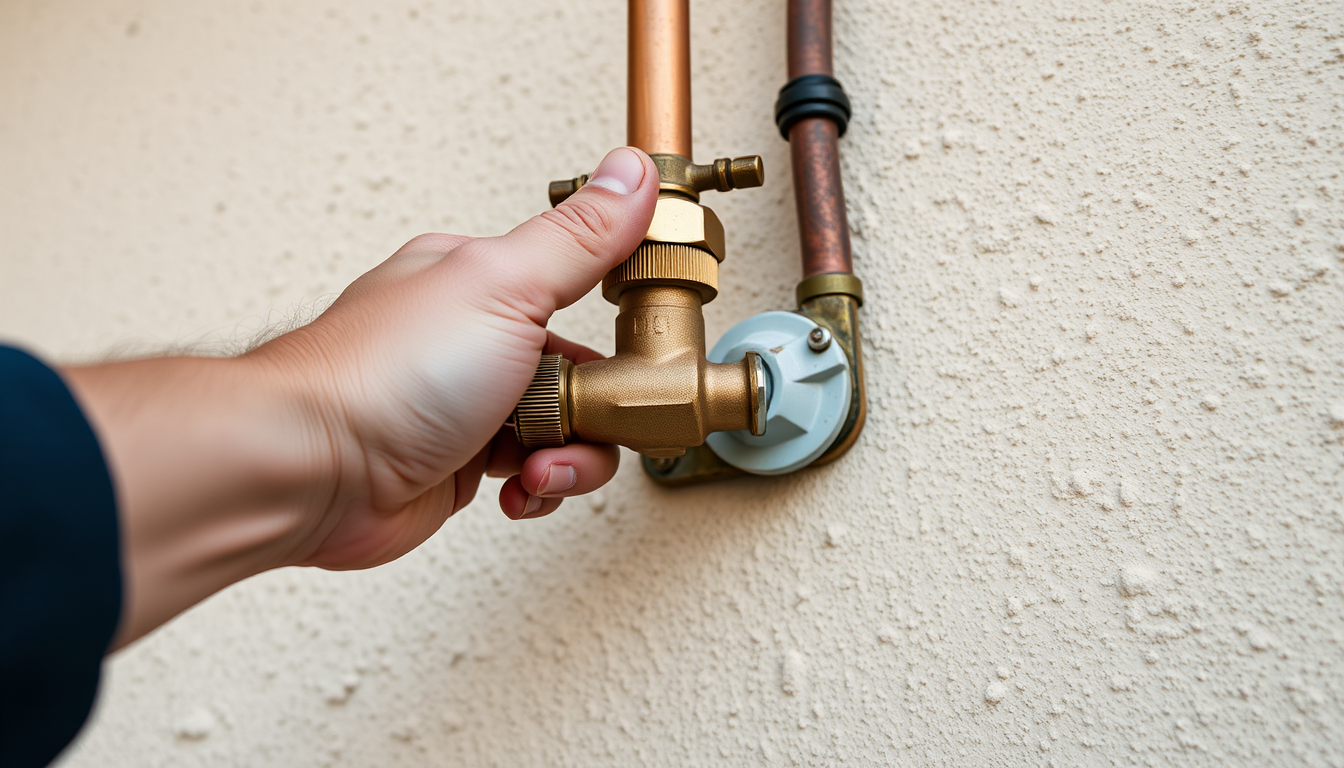
It’s 11 p.m. on a Tuesday in Encino. You walk into the kitchen for a glass of water and your sock hits a puddle. Under the sink, a supply line has let go and it’s spraying the cabinet like a garden hose. The clock is now your enemy, because every minute that passes is another few gallons soaking into your subfloor and drywall. This is the exact moment you need to know where your water shut off valve is, and you need to know it without thinking. If you have to Google it while standing in an inch of water, you’ve already lost. Most LA homeowners have never touched their main water shutoff, never opened the meter box at the curb, and have no idea whether their valve is a lever or a wheel. That’s a problem you fix today, dry and calm, not tonight in a panic. This guide walks you through finding it, testing it, and shutting it down fast.
Why Every LA Homeowner Needs to Know This Cold
A burst supply line, a failed washing machine hose, or a slab leak doesn’t wait for business hours. In the time it takes a plumber to drive across the Valley, an open half-inch line can dump hundreds of gallons into your house. The single fastest thing you can do to save your floors, cabinets, and baseboards is kill the water at the source. That means knowing your water shut off valve location before you ever need it.
Here’s the part people miss. Los Angeles is a warm-climate region, so most homes here do not have the main shutoff tucked in a basement like back east. Per the American Red Cross, in colder climates the main house valve sits in the basement near the front wall, but in warmer climates it’s usually outside on an exterior wall or in an underground box with a removable lid. So if you’ve been hunting in your garage or a crawlspace and coming up empty, you’re probably looking in the wrong place. Walk the perimeter of your house, especially the side facing the street, and look low on the wall where the supply pipe comes up out of the ground.
One more reason to practice now: shutting the main does more than stop a flood. It also keeps gravity from siphoning the rest of your plumbing dry through the break, and it stops dirty outside water from getting pulled back into your lines if there’s a main break on the street side.
The Two Valves: House Valve vs. the Curb Stop
Almost every LA property has two ways to stop the water, and they are not the same thing.
Your house shutoff valve
This is the one you want in an emergency. It controls water to your home only and it’s on your side of the meter, which makes it your responsibility to maintain. To find it, start where the main water line enters the house and follow that pipe. You’ll often pass a bell-shaped pressure regulator first, and the house shutoff is usually right at that point. In LA that’s commonly on an exterior wall, near a hose bib, or in a small in-ground box near the foundation. This is the valve you should exercise twice a year so it doesn’t seize.
The curb stop at the meter
Out near the street, your water meter sits in a concrete or plastic box stamped “WATER.” Inside is a customer-side shutoff, sometimes called the curb stop. This is the backup if your house valve fails or you can’t find it. The catch: the street valve is often stiff and may need a water meter key, that odd T-shaped tool, to open the lid and turn it. The Red Cross specifically warns that the curb valve is hard to turn and needs a special tool, so don’t count on it as your only plan. Grab a meter key at any hardware store for a few bucks and keep it where you’ll remember it.
Gate Valve vs. Ball Valve: Know What You’re Grabbing
When you find your shutoff, look at the handle. It tells you what you’re dealing with and how it’ll behave under pressure.
A ball valve has a straight lever handle. It’s a quarter turn valve, meaning you swing it 90 degrees and the water is off. When the lever points along the pipe, it’s open. When it’s crossways to the pipe, it’s closed. These are common in newer construction and on repipes, and they’re the gold standard because they shut off fast and rarely fail.
A gate valve has a round wheel handle, like a little spigot. You turn it clockwise several full rotations to close. These are common in older homes all over the San Fernando Valley, and here’s the tell competing articles skip: a gate valve that has sat untouched for 20 years will often seize, and worse, the stem can snap or the internal gate can crumble the moment you crank on it. In a 1955 SFV ranch still running its original galvanized supply lines, that old gate valve is a coin flip. If yours is a corroded gate valve, the smart move is to have it swapped for a quarter turn ball valve before it strands you. If you’re already dealing with rusty galvanized pipe, that’s a good time to talk about a whole-home repipe while the walls are a consideration.
Either way, the direction to close is the same: righty tighty. Turn clockwise to shut the water off.
How to Actually Shut It Off, Step by Step
Practice this on a dry afternoon so it’s muscle memory when it counts.
First, go to your house shutoff valve. If it’s a ball valve, rotate the lever a quarter turn until it’s crossways to the pipe. If it’s a gate valve, turn the wheel clockwise until it stops. Don’t muscle a stuck gate valve into submission. If it won’t move with firm hand pressure, stop and move to the curb stop instead, because forcing a brittle old valve can break it open and make the flood worse.
Second, confirm the water is actually off. Walk inside and open a cold faucet, like the kitchen sink. The stream should sputter and die within a few seconds. If water keeps flowing, you turned the wrong valve or it didn’t seat fully.
Third, when the repair is done and you turn the water back on, open the valve slowly. Snapping it open fast sends a pressure spike, called water hammer, that can rattle or even crack your pipes. Ease it open, then run a faucet to let the air burp out of the lines.
If the leak is gushing and you genuinely cannot stop it, LADWP will help you shut it down at the street. Their residential leak line is (800) 342-5397.
Commercial Buildings and Older Homes: The Special Cases
If you manage a strip retail center in the Tri-Cities or an apartment building on the Westside, the layout is different and you can’t wing it. Larger buildings often have a backflow preventer assembly and a dedicated main isolation valve near the meter or in a mechanical room, plus separate shutoffs per unit or per tenant space. The worst time to learn which valve feeds which suite is during an active flood with a tenant calling. Map it once, label every valve, and keep the meter key on site. For multi-tenant or mixed-use properties, our commercial plumbing crew can walk the building and tag every shutoff so your staff isn’t guessing at 2 a.m.
Older single-family homes have their own gotcha. A lot of mid-century LA houses were built on a slab, and if the leak is under that slab, shutting the main is only step one. You’ve stopped the flood, but you still have a pressurized line failing inside the foundation. That’s a slab leak, and it needs to be located and isolated, not just shut off and ignored. Same goes for a water heater that’s weeping from the tank: kill the cold supply at the heater’s own valve, and if that valve is stuck, fall back to the main. When the tank itself is shot, that’s a water heater conversation, not a valve one.
Quick Takeaways
• In LA’s warm climate, your main house valve is usually outside on an exterior wall or in a ground box near the foundation, not in a basement.
• You have two shutoffs: the house valve (your first move) and the curb stop at the meter (backup, needs a water meter key).
• Ball valve = lever, quarter turn, fast and reliable. Gate valve = round wheel, many turns, prone to seizing in older homes.
• Always close clockwise, then verify by opening an inside faucet until it runs dry.
• Reopen slowly to avoid water hammer that can crack pipes.
• A corroded gate valve on galvanized pipe is a liability. Replace it with a ball valve before it fails.
• Buy a $5 meter key now and keep it where the whole household can find it.
Conclusion
A burst pipe is one of the few home emergencies where your own two hands can save thousands of dollars in damage, but only if you’ve done the homework. Spend ten minutes this weekend finding your water shut off valve, figuring out whether it’s a lever or a wheel, and giving it a test turn. Show everyone in the house where it is. Toss a meter key by the front door or in the garage. That small bit of prep is the difference between a quick mop-up and a month of drywall demo and dehumidifiers.
If you test your main water shutoff and the gate valve won’t budge, snaps, or starts dripping the second you touch it, that’s your sign it was already failing and you got lucky catching it dry. And if you’re standing in water right now with a valve you can’t move, don’t keep fighting it. Call Rooter Experts at 888-488-4808. We’ve been on LA trucks for 25 years, we answer after hours, and if a stuck valve or a burst line matches what you’re dealing with tonight, we’ll get the water stopped and the line fixed.
Frequently Asked Questions
Where is my water shut off valve if I live in a Valley home with no basement?
Start where the water line enters the house and follow the pipe. In most LA homes it’s outside, low on an exterior wall near a hose bib, or in a small in-ground box by the foundation. Look for a bell-shaped pressure regulator. The house shutoff is usually right there.
What if I can’t turn the valve, or it’s totally stuck?
Don’t force a stuck gate valve, because the brittle stem or gate can break and flood worse. Move to the curb stop at your meter box using a meter key, or call for the water to be shut at the street. Then have the seized valve replaced with a quarter turn ball valve.
Do I need a special tool to shut off the water at the street?
Usually yes. The meter box lid and the curb stop often need a T-shaped water meter key, available at any hardware store. The street valve is also stiff by design, so it’s a backup, not your first choice.
Which way do I turn the valve to shut the water off?
Clockwise, righty tighty. On a ball valve, swing the lever a quarter turn until it’s crossways to the pipe. On a gate valve, turn the wheel clockwise until it stops.
The water is off but I still hear running. What’s wrong?
Either you closed the wrong valve, the valve didn’t seat fully, or the leak is downstream of a different shutoff (like a slab leak still draining trapped water). Open a cold faucet to confirm. If it keeps running, you likely have a deeper issue worth a professional look.
References
EPA WaterSense: Fix a Leak Week
Seattle Public Utilities: How to Shut Off Your Water
Western Municipal Water District (CA): How to Turn Off Your Water
American Red Cross: Preventing and Thawing Frozen Pipes
Ready.gov: Safety Skills
{“@context”:”https://schema.org”,”@type”:”FAQPage”,”mainEntity”:[{“@type”:”Question”,”name”:”Where is my water shut off valve if I live in a Valley home with no basement?”,”acceptedAnswer”:{“@type”:”Answer”,”text”:”Start where the water line enters the house and follow the pipe. In most LA homes it’s outside, low on an exterior wall near a hose bib, or in a small in-ground box by the foundation. Look for a bell-shaped pressure regulator. The house shutoff is usually right there.”}},{“@type”:”Question”,”name”:”What if I can’t turn the valve, or it’s totally stuck?”,”acceptedAnswer”:{“@type”:”Answer”,”text”:”Don’t force a stuck gate valve, because the brittle stem or gate can break and flood worse. Move to the curb stop at your meter box using a meter key, or call for the water to be shut at the street. Then have the seized valve replaced with a quarter turn ball valve.”}},{“@type”:”Question”,”name”:”Do I need a special tool to shut off the water at the street?”,”acceptedAnswer”:{“@type”:”Answer”,”text”:”Usually yes. The meter box lid and the curb stop often need a T-shaped water meter key, available at any hardware store. The street valve is also stiff by design, so it’s a backup, not your first choice.”}},{“@type”:”Question”,”name”:”Which way do I turn the valve to shut the water off?”,”acceptedAnswer”:{“@type”:”Answer”,”text”:”Clockwise, righty tighty. On a ball valve, swing the lever a quarter turn until it’s crossways to the pipe. On a gate valve, turn the wheel clockwise until it stops.”}},{“@type”:”Question”,”name”:”The water is off but I still hear running. What’s wrong?”,”acceptedAnswer”:{“@type”:”Answer”,”text”:”Either you closed the wrong valve, the valve didn’t seat fully, or the leak is downstream of a different shutoff (like a slab leak still draining trapped water). Open a cold faucet to confirm. If it keeps running, you likely have a deeper issue worth a professional look.”}}]}