Water Heater Leaking From the Bottom: What It Means and When to Replace It in LA
The short answer
- A water heater leaking from the actual bottom of the tank usually means the steel has rusted through from the inside. That tank is done, and the fix is a full replacement.
- Not every puddle is a dead tank. A dripping drain valve, a temperature and pressure (T&P) relief valve, or a loose connection can pool water at the base and look the same. Those are repairs, not replacements.
- The first move is to find the exact spot the water comes from. ENERGY STAR says a unit more than 10 years old with rust or leaks is time to replace (ENERGY STAR).
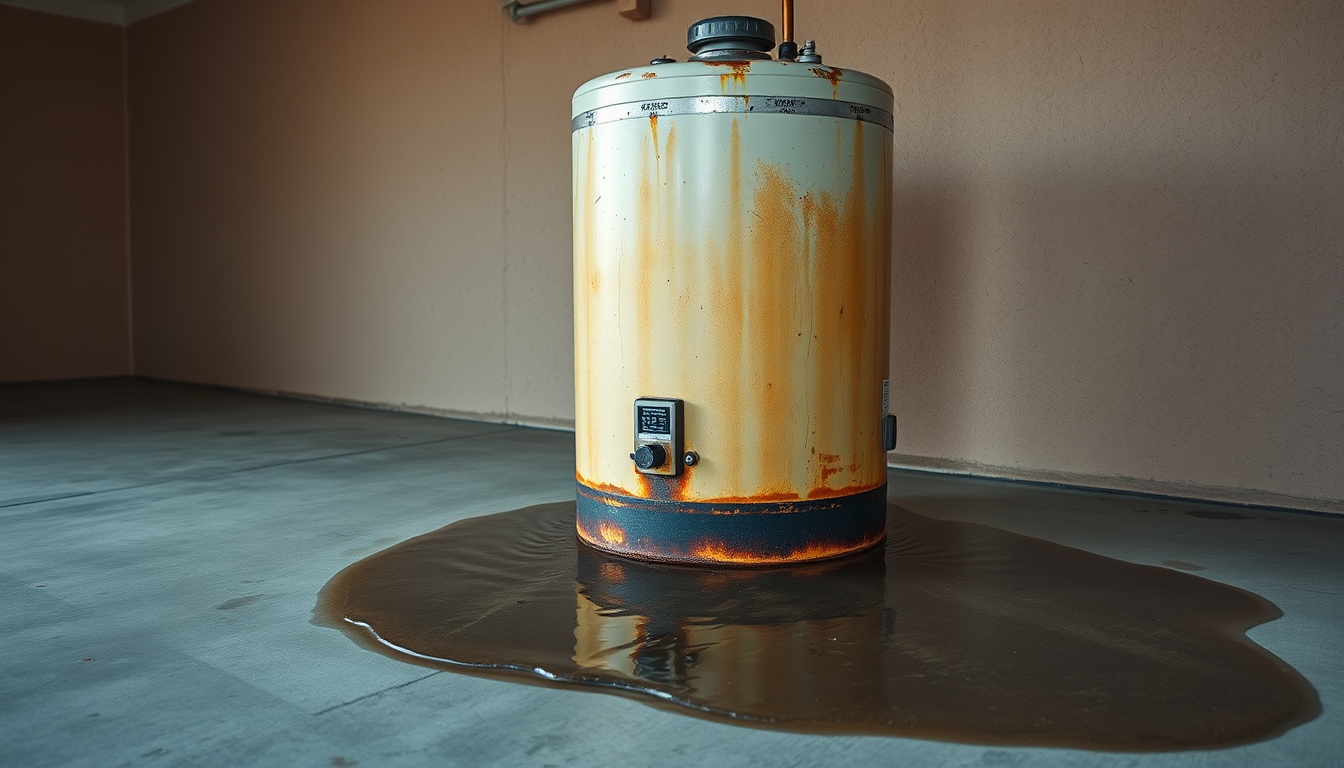
You walk into the garage and there’s a puddle under the water heater. The first thing most LA homeowners want to know is simple: is this a quick fix, or do I need a new water heater? After 25 years on these calls, we can tell you it comes down to one question. Where exactly is the water coming from?
A water heater leaking from the bottom is the kind of leak that makes people nervous, and sometimes it should. But the bottom of the tank collects water from a lot of sources, and only one of them means the tank itself has failed. Here’s how to tell them apart.
Where is the water actually coming from?
Before you panic or call anyone, track the leak to its source. The bottom of a water heater is the low point, so water from a fitting six inches up still ends up in a puddle on the floor. That puddle fools a lot of people into thinking the tank is shot when it isn’t.
Dry the whole unit with a towel. Then watch for fifteen or twenty minutes and see where the first new drops show up. InterNACHI inspectors look for the same clues: dripping water, rust stains, or mineral buildup at the tank, the connections, the drain valve, and the relief valve, which often point to a slow leak (InterNACHI).
If the water is coming from a fitting, valve, or pipe up top, you likely have a repair on your hands. If it’s weeping from the seam at the very bottom of the steel tank with no fitting in sight, that’s the bad one.
What a leak from the actual tank means
When water seeps from the bottom seam of the tank itself, the steel has almost always corroded through, and a rusted-through tank cannot be patched. A storage water heater is a steel cylinder with a thin glass lining inside (U.S. Department of Energy). Once that lining cracks and the steel underneath rusts, the only real fix is a new unit.
Here’s why it starts at the bottom. Sediment, the calcium and mineral grit in LA’s hard water, settles to the floor of the tank and sits right where the burner heats. That trapped layer cooks the steel hotter than it was built for, and corrosion eats through from the inside out. By the time it weeps onto your garage floor, the damage has been building for years.
An anode rod is supposed to slow this down. It’s a sacrificial metal rod that corrodes in place of the tank, and the Department of Energy recommends inspecting it every three to four years (U.S. Department of Energy). Most homeowners never touch it, the rod wears out, and then the tank starts giving itself up. When that’s the cause, you’re looking at a water heater replacement, not a repair.
The leaks that are not the tank
Plenty of bottom puddles come from parts you can actually replace, and these are the good outcomes. None of them mean your tank is finished. InterNACHI flags the drain valve and the pressure relief valve, along with the plumbing connections, as the spots where a slow leak usually starts (InterNACHI). Those are the three we check on every call before we ever condemn a unit.
The drain valve
The drain valve sits near the base of the tank, the spigot you’d hook a hose to for flushing. These are often plastic, and they get crusty with mineral scale or simply fail to seal after years of disuse. A drip here looks exactly like a tank leak because it’s right at the bottom. It’s also one of the cheaper repairs in plumbing.
The temperature and pressure relief valve
The T&P valve is a safety device that opens if temperature or pressure inside the tank climbs too high. It has a discharge tube that runs down the side, usually to within a few inches of the floor, so its drips land right next to the base. A leaky T&P valve is a sign it needs to be replaced, and a properly working one fires a powerful jet of hot water when it opens, not a slow gentle drip (InterNACHI).
If yours is dribbling, don’t ignore it. It can mean the valve is failing, or that pressure in the tank is running too high, and that second one is worth a closer look.
The supply connections
The cold inlet and hot outlet fittings on top of the tank can loosen or corrode over time. Water from a bad connection runs down the outside of the tank and collects, you guessed it, at the bottom. Tighten or reseal the fitting and the leak stops. The tank is fine.
How do I tell a quick fix from a full replacement?
Match the leak’s source to the likely fix. A unit more than 10 years old that’s rusting or leaking is one ENERGY STAR says you should plan to replace (ENERGY STAR). A younger unit leaking from a valve or fitting is usually worth repairing. Use this to narrow it down.
| Where the water comes from | What it usually means |
|---|---|
| Seam at the bottom of the steel tank | Tank rusted through. Replace the unit. |
| Drain valve at the base | Failed or loose valve. Repairable. |
| T&P relief valve discharge tube | Valve or pressure issue. Repairable. |
| Cold or hot fitting on top | Loose or corroded connection. Repairable. |
| Unit over 10 years old, rusty water | Near end of life. Plan replacement. |
The age cutoff matters in LA more than most places. The typical water heater lasts about 10 years (InterNACHI), and our hard water tends to push them toward the short end of that range, not the long end.
Why do LA water heaters fail sooner?
It comes down to the water and the homes. LA runs hard water, heavy with calcium and minerals. The USGS puts the mechanism plainly: when hard water is heated, such as in a home water heater, solid calcium carbonate deposits form, and that scale can reduce the life of the equipment (USGS). InterNACHI sees the same pattern in the field, noting that in areas with higher mineral content, water heaters have shorter lifespans (InterNACHI). That scale is the same grit that piles up at the bottom of the tank and speeds up corrosion.
We see it most in the units nobody ever flushed. Pull the drain on a 12-year-old Valley water heater and what comes out first isn’t water, it’s a slug of gray-brown mineral sludge. That layer is what cooks the steel floor of the tank until it gives.
The buildup also reduces hot water and causes rumbling or popping sounds, two of the warning signs ENERGY STAR ties to a tank near the end of its life (ENERGY STAR). That popping is water trapped under the sediment layer, boiling against the hot steel.
Then there’s the housing. A lot of Valley and Tri-Cities homes have the heater tucked in a garage corner or a slab-side closet, where a slow leak can run for weeks before anyone notices. By the time the puddle is obvious, the tank has usually been failing for a long while.
What can I check myself, and when should I call?
You can do the detective work yourself in twenty minutes, and it’s worth doing before anyone comes out. Dry the unit, watch for the source, and check the simple stuff first.
- Find the source. Towel everything dry, wait, and see where water reappears. Top fitting, drain valve, relief tube, or the tank seam itself.
- Check the drain valve. Make sure it’s fully closed and not weeping. A snug cap on it can confirm whether that’s your leak.
- Look at the T&P discharge tube. If water is running from the tube, the valve or your pressure is the issue, not a rusted tank.
- Read the age. The serial number on the data plate usually encodes the build date. Past 10 years, lean toward replacement.
- Kill the power and water if it’s pouring. For a fast leak, shut the cold supply valve on top and turn off the gas or breaker to the unit.
Call a pro when the water traces back to the tank seam, when the unit is over a decade old, when you see rusty hot water, or when a T&P valve keeps leaking after you’ve looked. Those don’t get better on their own, and a failing tank can eventually let go all at once. Routine flushing and an anode check can extend a heater’s life (U.S. Department of Energy), but once the steel is breached, maintenance can’t undo it.
If your leak matches the tank-failure picture above, that’s genuinely a call-now situation, and you can reach Rooter Experts at 888-488-4808. We’ll tell you straight whether it’s a repair or a replacement. No upsell, just the honest read after 25 years of doing this around LA. You can see what we handle across our plumbing services, or get a sense of who we are on our about page.
Frequently Asked Questions
Is a water heater leaking from the bottom dangerous?
It can be. A slow tank leak risks water damage and mold, and a corroded tank can eventually fail suddenly and dump its full load. A leaking T&P relief valve can also signal dangerously high pressure inside the tank. If the leak is at the tank seam or the unit is over 10 years old, treat it as urgent and shut off the water and power.
Can you repair a water heater that leaks from the bottom of the tank?
No. If water is weeping from the bottom seam of the steel tank, the tank has rusted through and cannot be patched or sealed. At that point a full water heater replacement is the only real fix. Leaks from the drain valve, relief valve, or top fittings are a different story and can usually be repaired.
How long should a water heater last in Los Angeles?
The typical storage water heater lasts about 10 years (InterNACHI). LA’s hard water tends to shorten that, since mineral buildup speeds up corrosion. If yours is past 10 and showing rust or sediment noise, ENERGY STAR recommends planning a replacement before it fails.
Why is water pooling under my new water heater?
On a newer unit, the tank itself is rarely the problem. Look at the drain valve, the temperature and pressure relief valve, and the cold and hot connections on top. A loose or weeping fitting drips down the side and collects at the base, looking just like a tank leak. Those are repairs, not replacements.
Does flushing my water heater prevent leaks?
It helps. The Department of Energy recommends periodic flushing and an anode rod check to extend a heater’s life (U.S. Department of Energy). Flushing clears the sediment that overheats and corrodes the bottom of the tank. It won’t save a tank that’s already rusted through, but on a healthy unit it buys you years.
Sources
- U.S. Department of Energy, Energy Saver, Storage Water Heaters, retrieved 2026-06-01, https://www.energy.gov/energysaver/storage-water-heaters
- ENERGY STAR, Ask the Experts: When Should You Replace Your Water Heater, retrieved 2026-06-01, https://www.energystar.gov/products/ask-the-experts/when-should-you-replace-your-water-heater
- InterNACHI, Estimating the Lifespan of a Water Heater, retrieved 2026-06-01, https://www.nachi.org/lifespan-water-heater.htm
- InterNACHI, TPR Valves and Discharge Piping, retrieved 2026-06-01, https://www.nachi.org/tpr-valves-discharge-piping.htm
- U.S. Geological Survey, Water Science School, Hardness of Water, retrieved 2026-06-01, https://www.usgs.gov/special-topics/water-science-school/science/hardness-water
{“@context”:”https://schema.org”,”@type”:”FAQPage”,”mainEntity”:[{“@type”:”Question”,”name”:”Is a water heater leaking from the bottom dangerous?”,”acceptedAnswer”:{“@type”:”Answer”,”text”:”It can be. A slow tank leak risks water damage and mold, and a corroded tank can eventually fail suddenly and dump its full load. A leaking T&P relief valve can also signal dangerously high pressure inside the tank. If the leak is at the tank seam or the unit is over 10 years old, treat it as urgent and shut off the water and power.”}},{“@type”:”Question”,”name”:”Can you repair a water heater that leaks from the bottom of the tank?”,”acceptedAnswer”:{“@type”:”Answer”,”text”:”No. If water is weeping from the bottom seam of the steel tank, the tank has rusted through and cannot be patched or sealed. At that point a full water heater replacement is the only real fix. Leaks from the drain valve, relief valve, or top fittings are a different story and can usually be repaired.”}},{“@type”:”Question”,”name”:”How long should a water heater last in Los Angeles?”,”acceptedAnswer”:{“@type”:”Answer”,”text”:”The typical storage water heater lasts about 10 years ( InterNACHI ). LA’s hard water tends to shorten that, since mineral buildup speeds up corrosion. If yours is past 10 and showing rust or sediment noise, ENERGY STAR recommends planning a replacement before it fails.”}},{“@type”:”Question”,”name”:”Why is water pooling under my new water heater?”,”acceptedAnswer”:{“@type”:”Answer”,”text”:”On a newer unit, the tank itself is rarely the problem. Look at the drain valve, the temperature and pressure relief valve, and the cold and hot connections on top. A loose or weeping fitting drips down the side and collects at the base, looking just like a tank leak. Those are repairs, not replacements.”}},{“@type”:”Question”,”name”:”Does flushing my water heater prevent leaks?”,”acceptedAnswer”:{“@type”:”Answer”,”text”:”It helps. The Department of Energy recommends periodic flushing and an anode rod check to extend a heater’s life ( U.S. Department of Energy ). Flushing clears the sediment that overheats and corrodes the bottom of the tank. It won’t save a tank that’s already rusted through, but on a healthy unit it buys you years.”}}]}