Water Bill Doubled in LA? How to Tell a High Water Bill Leak From a Meter Error Before You Overpay
Your water bill jumped, maybe doubled, and nothing about your month changed. Before you panic or pay it, know this: a high water bill leak is the usual culprit, not a broken meter. Meters fail rarely. Hidden leaks run quietly around the clock. The good news is you can tell them apart yourself in about two hours, with no tools, before you ever call anyone. Here’s how we walk LA homeowners through it.
The short answer: A sudden spike almost always means water is escaping somewhere, usually a running toilet, an irrigation line, or a slab leak under the foundation. Rule out a meter misread first by checking for any real usage change. Then run the EPA’s two-hour meter test: shut off all water, read the meter, wait two hours, and read it again. If the number moved, you have a leak, not a billing error.
Is It a Leak or a Meter Error?
A real high water bill leak is far more likely than a faulty meter. Mechanical meters tend to slow down as they age and under-report, not over-report, so a meter that suddenly reads high is uncommon. Start by ruling out the simple stuff before you assume the worst.
Leaks are common, meter faults are not. As of 2026, the EPA reports that nine percent of homes have leaks wasting 50 gallons or more per day (EPA WaterSense). So when a bill spikes for no reason you can name, the odds strongly favor a hidden water leak over a broken meter.
Ask yourself what actually changed. House guests, a heat wave with extra lawn watering, a new water-hungry appliance, or filling a pool all push usage up for real reasons. The water company didn’t make a mistake there. Your habits did, and the bill is correct.
If none of that fits, you can request a meter re-read or accuracy test from your provider. LADWP, the city’s water utility, walks customers through indoor and outdoor checks on its how to detect a water leak page, and it runs a billing adjustment program for underground leak repairs that can take some sting out of a high bill once the leak is fixed. But don’t just wait on the utility. The test in the next section confirms a leak today, on your own, and it’s the same first step a good plumber would take.
The Two-Hour Meter Test: Confirm a Hidden Water Leak Yourself
This is the single most useful thing you can do, and it’s free. The EPA puts it plainly: “Check your water meter before and after a two-hour period when no water is being used. If the meter changes at all, you probably have a leak” (EPA WaterSense). A hidden water leak runs day and night, which is exactly why it shows up on the bill before you ever see a drop of water.
Here’s the step-by-step we use:
- Turn off every faucet and water-using appliance. Don’t flush a toilet, run the dishwasher, or let the irrigation cycle for the duration.
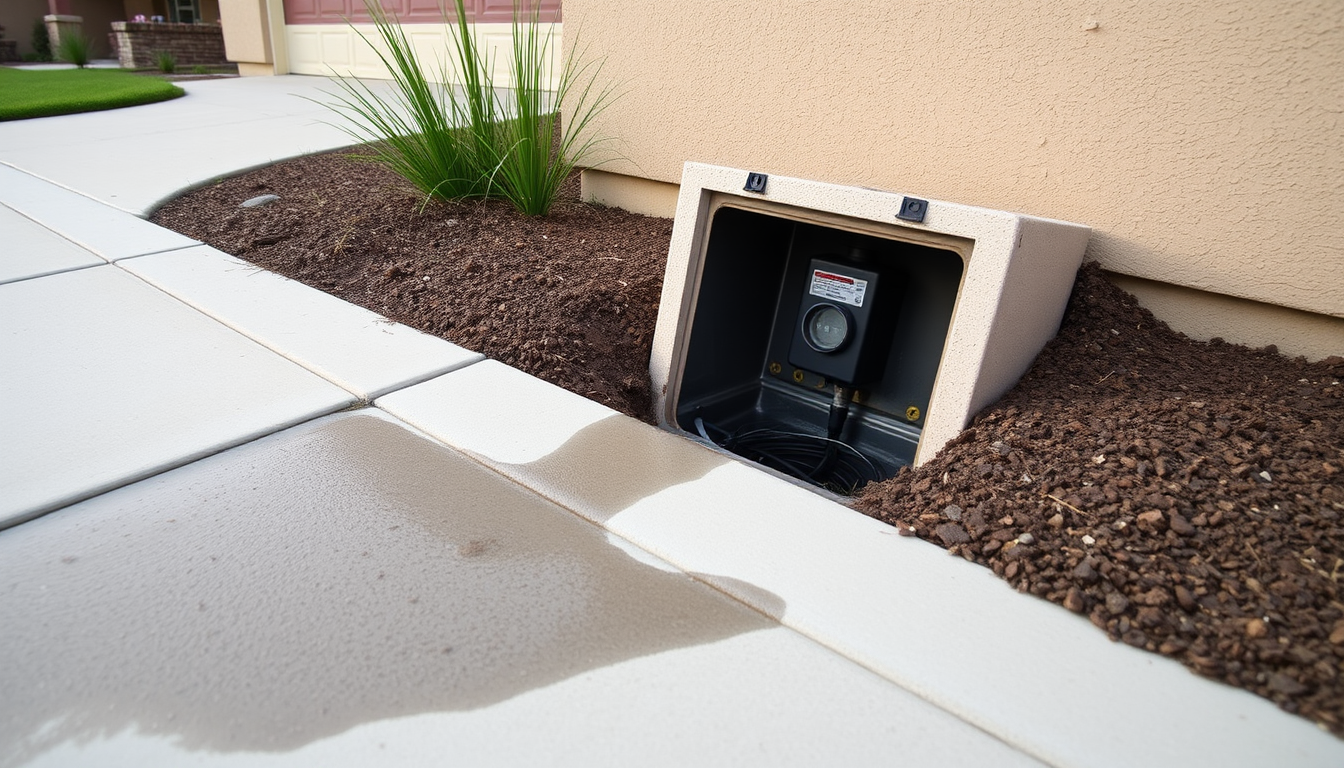
- Find your meter, usually in a box near the curb or sidewalk, and write down the exact reading.
- Look at the low-flow indicator. On most meters this is a small triangle, star, or gear that spins when any water moves through (Smart Home Water Guide, AMWUA). If it’s turning with everything off, water is escaping right now.
- Wait two hours with zero water used anywhere in the house.
- Read the meter again. If the numbers moved, you have a leak somewhere on your system.
Want to narrow it down to inside versus outside? Shut off the valve where the main line enters the house, then watch the meter. If the meter keeps moving, the leak is between the meter and the house, often the irrigation or service line. If it stops, the leak is indoors.
Where Do High Water Bill Leaks Actually Hide?
Most hidden leaks come down to a handful of usual suspects. Household leaks waste nearly 1 trillion gallons of water annually nationwide, and the average home loses more than 9,300 gallons a year to them (EPA WaterSense). Here’s where that water usually goes.
The toilet (most common by far)
A running toilet is the number-one cause of a mystery bill, and it often makes no sound. The flapper, that rubber seal at the bottom of the tank, wears out and lets water seep from tank to bowl. The EPA notes a worn flapper “can cause your toilet to flush on its own or silently leak thousands of gallons a year” (EPA WaterSense).
Test it in ten minutes. Put a few drops of food coloring in the tank, wait 15 minutes without flushing, and check the bowl. If color shows up in the bowl, the flapper is leaking. A new flapper is a cheap, genuine DIY fix.
Irrigation and outdoor lines
In LA, the sprinklers are a prime suspect, and an irrigation leak can dwarf anything indoors. The EPA reports that outdoor use can be as much as 60 percent of total household water in arid regions, and “as much as 50 percent of the water we use outdoors is lost” to inefficient systems (EPA WaterSense). A valve that doesn’t seat shut, a cracked lateral line, or a broken sprinkler head can run water into the ground long after the system “turns off.” You won’t see it because it soaks straight into the dirt.
Slab leaks, the LA classic
Many LA homes are built slab-on-grade, meaning copper supply lines run through or under the concrete foundation. When one of those buried lines springs a pinhole, water has nowhere to go and the bill climbs with no visible cause. The telltale signs are a warm spot on the floor, the sound of running water with everything off, and that creeping meter you just tested. A slab leak is the one on this list you can’t fix yourself, and it’s worth catching early before it undermines the foundation. If the buried copper is failing in one place, repiping is sometimes the smarter long-term call than chasing one pinhole at a time.
Faucets, the water heater, and the softener
A steady drip from a worn faucet washer adds up over a billing cycle. So does a water heater leaking at the tank, drain valve, or temperature-and-pressure relief valve, and a sticking water softener that regenerates over and over. None of these are dramatic, but any one can quietly pad your bill. If your water heater is pooling water at the base, that’s both a leak and a sign the tank may be near the end of its life.
Why Do LA Homes Spring Hidden Leaks?
A few things stack the deck against pipes in Southern California. None is the whole story, but together they explain why we pull leaking lines out of so many homes across the Valley and the Westside.
Hard water. SoCal tap water runs hard. The USGS classifies anything above 180 mg/L as “very hard,” and a lot of LA water sits in that range (USGS). Hard water leaves scale inside pipes and gives corrosion uneven spots to concentrate, which is how pinhole leaks start.
High city pressure. Plumbing code calls for a pressure reducing valve (the PRV) to hold house pressure at or below 80 psi (plumbing code via UpCodes). When that valve is missing or failed, every weak spot in your pipes takes extra strain and gives out sooner.
Older homes and tree roots. Plenty of LA copper went in mid-century and is now decades old. Mature trees send roots toward buried supply and sewer lines, and a bimonthly billing cycle, the every-two-months schedule LADWP uses, means a slow leak can run for weeks before the bill even tips you off.
Should You DIY or Call a Plumber?
Some of this is genuinely a do-it-yourself job, and some of it isn’t. Knowing the line saves you money and saves your floors. Every diagnostic above is yours to run. Pinpointing and fixing a buried leak is where a pro earns the call.
| Do it yourself | Call a plumber |
|---|---|
| Run the two-hour meter test | Pinpoint a slab or service-line leak with acoustic gear |
| Do the toilet dye test and swap a flapper | Open the slab and make the repair |
| Check sprinkler heads and valves for soggy spots | Pressure-test the lines to confirm a hidden leak |
| Isolate indoor vs. outdoor with the main valve | Decide between a spot repair and a repipe |
| Request a meter re-read from your utility | Check a leaking water heater or PRV |
The reason pinpointing is a pro job is simple: the pipe is buried in concrete or underground, so you can’t see it. Finding the exact spot takes electronic listening gear and pressure testing, not a hammer and a guess. For the full range of what a leak check involves, see our plumbing services.
If the signs at your place match what you’ve read here, that’s the moment to get eyes on it before the damage grows. We’re a family-owned crew that’s been working under LA houses for 25 years (more about our LA plumbing team), and we’ll tell you straight whether it’s a slab leak or a five-dollar flapper. If your situation matches this, call Rooter Experts at 888-488-4808 for a leak check. No pressure, just a look.
Frequently Asked Questions
Can a running toilet really double my water bill?
Yes, it’s the most common cause we see. A worn flapper can silently leak thousands of gallons a year without a sound (EPA WaterSense). Drop food coloring in the tank, wait 15 minutes, and if color reaches the bowl, the flapper is leaking. A replacement flapper is a cheap fix.
How do I know if it’s a meter error and not a leak?
Meter errors are uncommon, and aging meters usually under-report rather than over-report. Confirm a real leak first with the EPA’s two-hour test: shut off all water, read the meter, wait two hours, and read again. If it moved, you have a leak (EPA WaterSense). You can also ask your utility for a re-read.
Can an irrigation system leak when it’s turned off?
Yes. A valve that fails to seat shut, a cracked line, or a broken head can run water into the soil long after the timer stops. Outdoor use reaches as much as 60 percent of household water in arid regions like LA (EPA WaterSense). Isolate it by shutting the house main and watching whether the meter still moves.
Why are hidden leaks so common in LA homes?
Several things stack up. SoCal hard water above the USGS “very hard” mark of 180 mg/L corrodes pipes from the inside (USGS), high city pressure strains weak spots, and many homes have decades-old copper running through slab foundations. A bimonthly billing cycle lets a slow leak run for weeks before you notice.
Is a high water bill leak an emergency?
It’s urgent even when nothing is flooding. A hidden leak runs around the clock, and nine percent of homes have leaks wasting 50 gallons or more per day (EPA WaterSense). A slab leak left alone can wash out soil under the foundation, so the sooner you confirm and locate it, the less damage you’ll repair.
Sources
- US EPA WaterSense, Fix a Leak Week, retrieved 2026-06-29
- US EPA WaterSense, Statistics and Facts, retrieved 2026-06-29
- USGS, Hardness of Water, retrieved 2026-06-29
- International Plumbing Code, Excessive Water Pressure (via UpCodes), retrieved 2026-06-29
- Smart Home Water Guide (AMWUA), How to Read Your Water Meter, retrieved 2026-06-29