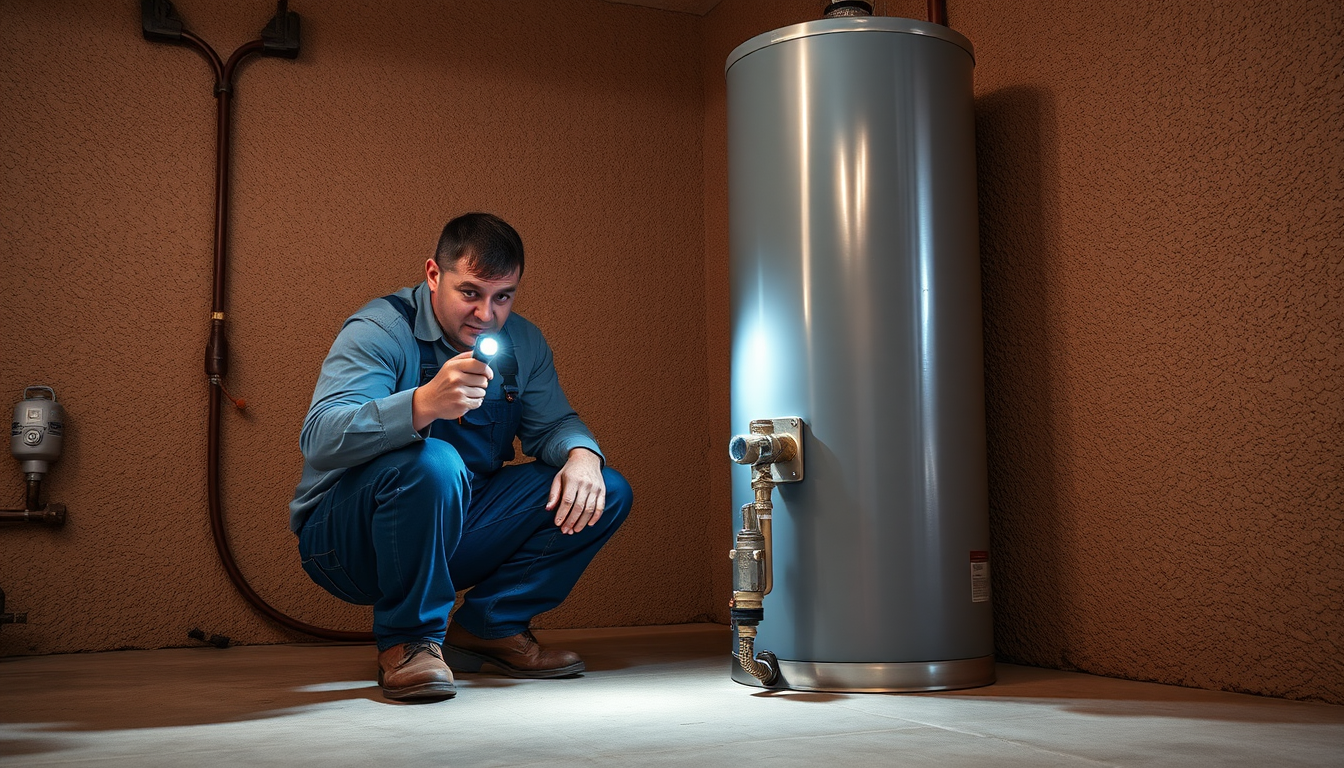
A Rooter Experts plumber checks the pilot light and thermocouple before recommending a repair or replacement.
Introduction
You turn the shower on, wait the usual thirty seconds, and it never comes. Just cold, then lukewarm, then cold again. A water heater not heating is one of the most common service calls we get across the San Fernando Valley, the Tri-Cities, and out along the Conejo corridor, and about half the time the homeowner assumes the whole unit is dead when the real problem is one part that costs fifteen dollars to replace. The other half, the tank really is done, and no amount of pilot-light lighting is going to fix a forty-gallon shell that’s rusted through from the inside.
Before you call anyone, including us, it helps to know which situation you’re actually in. No hot water doesn’t always mean “replace the water heater.” Sometimes it’s a tripped breaker. Sometimes it’s a thermocouple that stopped generating enough voltage to hold a gas valve open. Sometimes, especially in older LA housing stock, it’s years of hard water finally catching up with the tank. We’ve run trucks out of Sun Valley for 25 years, and the diagnosis almost always fits one of a handful of patterns below.
Quick Takeaways
• Gas units: no hot water usually traces to a pilot that won’t stay lit, a bad thermocouple, or a failed gas control valve, in that order of likelihood. • Electric units: check the breaker first, then the high-limit reset button behind the upper access panel, then the heating elements themselves. • Water that starts hot and turns lukewarm fast, rather than gradually, points to a cracked dip tube, not a dying tank. • If your reset button trips more than once, stop pressing it and call a plumber. That switch is a safety device, not an inconvenience. • LA’s hard water accelerates sediment buildup, so tanks here often show heating problems years before the manufacturer’s rated lifespan. • A rotten-egg smell near the heater is a gas leak, not a plumbing symptom. Leave the house and call SoCalGas before you troubleshoot anything. • Past year eight or nine, repairing an aging tank is often money spent delaying a replacement you’ll need anyway.
Gas or Electric? Confirm This First
It sounds obvious, but we still get calls where a homeowner has been troubleshooting the wrong system for an hour. Look at the bottom of the tank. A gas water heater has a burner compartment and a flue pipe running up through the center to the roof. An electric unit has no flue and usually shows two round access panels on the front, one upper and one lower, covering the heating elements and thermostats. Tankless units, gas or electric, are wall-mounted boxes with no storage tank at all. Once you know which you’re dealing with, the troubleshooting path splits completely, so don’t waste time checking a pilot light on a unit that doesn’t have one.
Gas Water Heater Not Heating: Pilot Light, Thermocouple, and Gas Valve
In a gas system, heat comes from a burner at the bottom of the tank, lit by a standing pilot and controlled by a gas valve that reads temperature through a thermostat probe. When any link in that chain fails, you lose heat even though the tank itself is fine.
Pilot Light Won’t Stay Lit
If the pilot lights and holds while you’re pressing the igniter button, then dies the second you let go, that’s a classic water heater thermocouple symptom, not a pilot problem. The thermocouple is a small copper probe that sits in the pilot flame and generates a tiny electrical current that holds the gas valve open. When it weakens with age or gets coated in soot, the valve reads “no flame” even though there is one, and it shuts the gas off as a safety measure. This is the single most common reason for a gas water heater not heating that we run into on service calls, and it’s usually a twenty-minute fix.
The Millivolt Test: Thermocouple or Gas Control Valve
Here’s the tell most articles skip. A healthy thermocouple puts out roughly 12 to 20 millivolts when it’s sitting in a lit pilot flame. Clamp a multimeter on the two thermocouple leads (unscrew it from the gas valve first) and read it while the pilot burns. Anything close to zero, and you’ve confirmed the thermocouple, not the valve, is your problem. Gas control valves fail far less often than thermocouples, but when the pilot won’t light at all, or lights but the main burner never kicks on even with good millivolt readings, the valve itself is the more likely culprit, and that’s not a DIY repair. If you smell gas at any point during this process, stop, don’t attempt to light anything, and get out of the house. Our water heater repair and installation team carries thermocouples and gas valves on the truck for exactly this reason.
Electric Water Heater Not Heating: Breakers, Elements, and the Reset Button
Electric tanks use two heating elements, upper and lower, each with its own thermostat. Start at the breaker panel. A tripped breaker with no obvious cause is worth resetting once. If it trips again immediately, stop, because that’s usually a shorted element pulling too much current, and repeated resets risk damaging the wiring.
When the High-Limit Reset Won’t Stay Reset
Pull the upper access panel and insulation, and you’ll find a red button on the upper thermostat, the high-limit switch or ECO (energy cutoff). It trips when water in the tank gets hotter than it should, which sounds like a thermostat problem but often isn’t. A shorted heating element that stays on regardless of what the thermostat tells it, a bad thermostat itself, or sediment insulating the lower element so it overheats trying to compensate, can all trip this switch. Press it once. If it won’t hold, or trips again within a day, that’s your sign to call someone rather than keep resetting a safety device that exists specifically to stop the tank from cooking itself. Worth knowing: the Consumer Product Safety Commission’s own burn data shows why the thermostat setting matters as much as the switch. Water at 150 degrees causes a third-degree burn in about two seconds; at 140 degrees it takes about six seconds; at 130 degrees, about thirty. Even 120-degree water can cause a serious burn after five minutes of exposure. If your reset keeps tripping because someone bumped the thermostat up past 140, that’s an easy, free fix before you replace anything.
No Hot Water But the Tank Seems Fine: Sediment and the Dip Tube
This is the pattern that confuses people most: water starts out properly hot, then goes lukewarm within a minute or two, every single time. That’s not a heating element or a thermocouple problem. It’s almost always a cracked dip tube, the plastic pipe that carries cold incoming water down to the bottom of the tank so it can heat before rising. When that tube splits, cold water dumps in near the top and mixes straight into what should be your hot supply. Check your faucet aerators and showerheads for white or gray plastic flecks, sometimes described as looking like shaved wax or eggshell fragments. That debris is the dip tube itself breaking apart, and it’s close to a definitive diagnosis. Dip tubes fail most often in tanks past the ten-year mark. Separately, sediment settling at the bottom of the tank (more on why LA sees this early, below) reduces effective tank capacity and can make hot water run out faster even with an intact dip tube and working elements. A full drain-and-flush sometimes buys real time; a badly scaled tank often doesn’t recover.
Tankless Water Heater Not Heating: A Different Set of Suspects
Tankless units don’t fail the same way storage tanks do. Two issues account for most “tankless water heater not heating” calls we take. First, minimum flow activation: these units need a certain flow rate through the unit, often around 0.5 gallons per minute, before the burner or elements fire at all. A partially closed shutoff valve, a clogged inlet water filter, or a low-flow fixture can keep you under that threshold, and the unit just never turns on. Second, mineral scale on the heat exchanger, which is a bigger issue here than almost anywhere else in the country given LA’s water hardness, restricts flow through the internal coil and can trigger a flow sensor or temperature sensor error code entirely separate from a “cold water sandwich,” which is normal, brief cooling when you cycle the tap off and on and not a malfunction. Manufacturers generally call for descaling every twelve months in hard water areas; many LA households are overdue. If you’re weighing a switch from tank to tankless during a replacement anyway, our tankless water heater installation page covers what that conversion involves.
Why This Hits LA Homes Harder: Hard Water and Aging Housing Stock
According to LADWP’s own water quality data, much of the city falls in the 10 to 15 grains-per-gallon range, solidly hard to very hard, and several surrounding cities test even higher. Every gallon that passes through a gas or electric tank leaves mineral deposits behind, and in a tank water heater those deposits settle at the bottom, insulating the burner or lower element from the water it’s supposed to be heating. That’s why a water heater in Panorama City or Reseda can start showing heating problems years before a comparable unit in a soft-water climate. Older neighborhoods compound this. In homes built through the 1950s and 60s across the Valley and the Tri-Cities that still run galvanized supply lines, mineral buildup narrows the pipe itself, which can show up as reduced hot water pressure that gets mistaken for a heater problem when the tank is heating just fine. If a repipe is on the table for other reasons, our repiping page walks through what that involves.
Earthquake Country Detail Most Articles Skip: Strapping and Access
California Health and Safety Code Section 19211 requires every residential water heater, new or existing, to be braced, anchored, or strapped against falling or shifting during an earthquake, typically with two straps, one in the upper third of the tank and one in the lower third. This isn’t just a code checkbox. A tank that shifts in a quake can shear its own gas line or water connections, and we’ve seen unstrapped units in older Valley garages that had clearly moved even in moderate shaking. If you’re troubleshooting a no-heat issue and notice your strapping is missing, rusted through, or was never installed, mention it when you call a plumber. It’s a cheap, fast fix to add while someone’s already got the access panel open.
Property Managers and Commercial Buildings: A Different Calculus
For multi-unit properties and commercial buildings, a single water heater not heating usually means multiple tenants without hot water at once, which changes the urgency math considerably. Commercial units also run larger recovery rates and different code requirements than a residential system, and a DIY diagnosis isn’t realistic when you’re dealing with a 100-plus gallon commercial tank or a bank of tankless units feeding a building. If your property is on a maintenance contract, ask whether it includes annual anode rod inspection and descaling, since that single step prevents most of the early failures described above. Our commercial plumbing services cover this kind of ongoing account work in addition to emergency calls.
When It’s Not the Heater at All: Gas Leaks
If you smell that rotten-egg odor near the water heater, that’s not a heating problem, it’s mercaptan, the odorant added to natural gas specifically so leaks get noticed. Don’t light a pilot, don’t flip switches, don’t use your phone inside the house. Leave the doors open behind you, get everyone and any pets out, and call SoCalGas at 1-800-427-2200 from outside, or 911 if there’s an immediate danger. Come back to your no-hot-water troubleshooting after the gas company clears the situation, not before.
Repair or Replace? The Math After Year 8
Tank water heaters are generally built for a 8 to 12 year service life, and in LA’s hard water, homes often land at the shorter end of that range without regular flushing. A thermocouple or heating element repair on a five-year-old tank is worth doing every time. The same repair on a twelve-year-old tank that’s already showing rust at the fittings or a slow leak at the drain valve is usually money spent delaying a replacement you’re going to need within a year or two anyway. If you’re on the fence, ask whoever’s diagnosing it to check the anode rod condition and look for rust in the water itself; both are honest indicators of how much life is actually left in the tank, separate from whatever specific part failed this week.
Conclusion
Most of the time, a water heater not heating comes down to one of a short list of parts: a thermocouple, a heating element, a high-limit switch, a dip tube, or sediment that’s been building for years in LA’s hard water. None of those require guessing, and most of them are diagnosable in the time it takes to pull an access panel and check a multimeter reading. The exceptions are the ones worth taking seriously: a reset button that won’t stay reset, a gas valve that won’t hold a flame even with a good thermocouple, or any hint of a gas smell, all of which call for a professional rather than a second attempt at a DIY fix.
If what you’re dealing with matches one of the patterns above, especially a tank past year eight, a reset button that keeps tripping, or a gas smell you can’t explain, give us a call at 888-488-4808. We’ve been diagnosing these exact failures across the Valley, the Tri-Cities, the Westside, and the Conejo corridor for 25 years, and we can usually tell you over the phone whether it’s a quick part swap or time to talk replacement.
Frequently Asked Questions
Can I relight my gas water heater’s pilot light myself?
Yes, most manufacturers print relighting instructions right on a label on the tank, and it’s a normal homeowner task. The line to stop is if you smell gas before or during the process, if the pilot won’t stay lit after two or three attempts, or if you’re not comfortable working around an open flame near a gas line. At that point it’s a thermocouple or valve issue, not a lighting technique issue.
Why does my reset button keep popping, and should I keep pressing it?
Press it once. If it trips again, stop. The high-limit switch is a safety device that shuts off power when tank water gets hotter than it should, and repeatedly resetting it without fixing the underlying cause, a bad thermostat, a shorted element, or sediment insulating the lower element, risks a genuinely dangerous overheat condition.
How long should a water heater actually last in an LA home?
Most tank units are rated for 8 to 12 years, but LA’s harder water accelerates sediment buildup inside the tank, which is the leading cause of early heating problems here. A tank that gets flushed annually will generally outlast one that never has.
My water heater is only a few years old. Why is it already struggling?
Check whether it’s ever been flushed. In hard water areas like much of LA and the surrounding cities, sediment can build up meaningfully within the first two or three years without maintenance. A cracked dip tube is also possible even in a newer unit if it came with a defective part, though that’s less common than sediment.
Is it worth repairing an old water heater, or should I just replace it?
If the tank is under eight years old and otherwise sound, repair almost always makes sense. Past that, especially with visible rust at the fittings, a slow drain valve leak, or a second major part failure in two years, you’re usually better off putting that repair money toward a replacement instead.
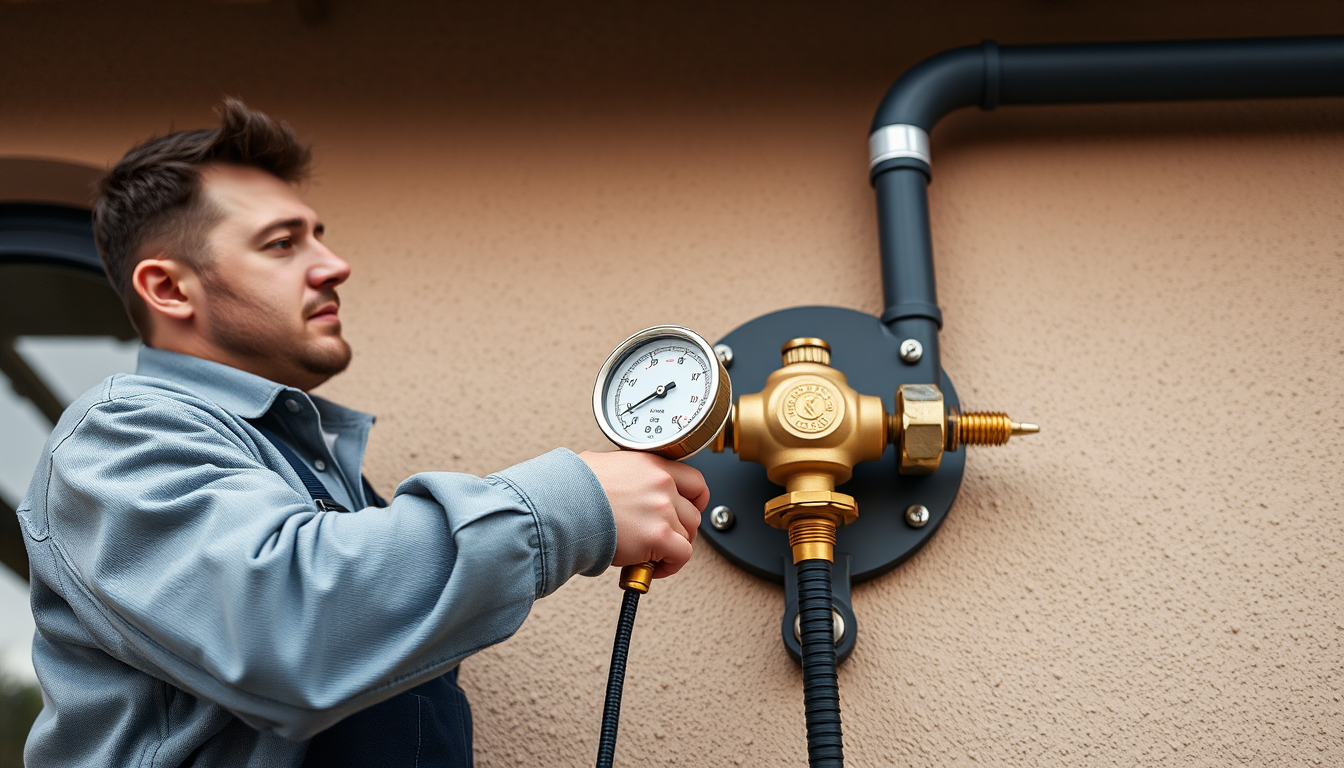
Annual backflow preventer testing keeps contaminated water from siphoning back into the clean supply line.
Backflow preventer testing is the annual check that confirms the valve on your irrigation line, fire sprinkler system, or commercial water service is still doing its one job: keeping dirty water from siphoning backward into the clean water supply. If you got a notice from your water district or a property manager just told you the test failed, you’re probably wondering what that little valve actually stops and why the district treats a missed test like a big deal.
It’s not bureaucratic busywork. When that valve fails, water can flow the wrong direction under the right pressure conditions, and whatever is on the other side of the connection (irrigation chemicals, boiler additives, grease trap runoff) can end up in the drinking water line. That’s why the test isn’t optional and why a failed one gets your water shut off if you ignore it long enough.
The short answer: Backflow preventer testing is a state-required annual check, done by a certified tester, that confirms your backflow assembly still stops contaminated water from reversing into the potable supply. Commercial properties, irrigation systems, and fire lines almost always need one. Skip it and your water district can eventually shut off service until it’s done.
What Does a Backflow Preventer Actually Stop?
A cross-connection is any point where your plumbing links up to something that isn’t clean drinking water, like an irrigation system, a boiler, a fire sprinkler riser, or a commercial dishwasher’s chemical line. Backflow is what happens when water reverses through that connection instead of flowing the way it’s supposed to.
Per the EPA, a cross-connection is any actual or potential link between a drinking water system and a source of contamination, and backflow happens when a change in pressure reverses the normal direction of flow. That’s the exact failure mode a backflow preventer is built to block, and it’s why annual testing exists: to catch a worn valve before pressure conditions line up to push contamination the wrong way.
There are two ways it happens. Backsiphonage occurs when pressure in the main drops (a water main break, heavy firefighting draw, or a big shutdown nearby) and creates a vacuum that pulls water backward. Backpressure occurs when something downstream, like a boiler or a pump, pushes water back into the supply line harder than the incoming pressure can resist.
A backflow preventer sits at that connection point and only lets water flow one direction. When it’s working, you’d never notice it. When the internal check valves wear out or get gummed up with debris or hard water scale, which we see constantly on older Valley and Tri-Cities properties, it can fail quietly. That’s the entire reason for the yearly test: nobody wants to find out a preventer failed by tracing a contamination complaint back to their building.
In our 25 years running calls across the San Fernando Valley, Tri-Cities, Westside, and Conejo corridor, the properties that fail most often are the ones with original galvanized or older copper supply lines feeding the assembly. Corrosion inside those lines sheds scale straight into the check valve seats. If your building’s supply piping is original to a pre-1970s structure, that’s worth a look alongside the backflow test itself. You can read more about when repiping makes sense if corrosion keeps showing up on inspection reports.
The Three Devices You’ll Actually Run Into Around LA
Not every property has the same type of backflow preventer. Which one you have depends on the hazard level of what’s on the other side of the connection.
Reduced Pressure Zone Assembly (RPZ)
This is the workhorse for high-hazard connections: fire sprinkler systems, boilers, commercial kitchens, and anything where backflow could actually make someone sick. An RPZ uses two spring-loaded check valves plus a relief valve in between. If both checks fail, the relief valve dumps water outside rather than let contamination back into the line. You’ll usually see these mounted above ground, often outside, because they need to drain.
Double Check Valve Assembly (DCVA)
A DCVA is two check valves in a row with no relief valve. It’s used for lower-hazard connections, things like a standard irrigation system without added chemicals, or a fire line with no chemical additives. It protects against both backsiphonage and backpressure, just without the extra margin an RPZ gives you.
Pressure Vacuum Breaker (PVB)
This is the one most homeowners actually have, usually sticking up out of the ground near a sprinkler valve box. A PVB only protects against backsiphonage, not backpressure, which is fine for a residential irrigation system since there’s nothing downstream pushing water back. It’s simpler and cheaper than an RPZ or DCVA, which is why it’s the residential default.
If you’re not sure which one is on your property, look at the tag riveted to the assembly. It’ll list the make, model, and serial number, which is exactly what your tester needs before showing up.
Who Requires Backflow Preventer Testing, and How Often?
State law requires backflow prevention assemblies to be tested at least once a year by a certified tester (LA County Public Works, Waterworks Districts Backflow Prevention Program). That applies whether your water comes from a Los Angeles County Waterworks District, a smaller mutual water company out in the Conejo corridor, or a city-run utility. The exact renewal date is usually tied to the anniversary of your last passed test.
Only a tester certified by the county health department is allowed to sign off on the test. Your provider will typically mail a written notice ahead of the deadline, and the assemblies themselves have to be models approved by the USC Foundation for Cross-Connection Control and Hydraulic Research, which is the industry’s standard approval list for backflow devices.
This is where the secondary piece comes in: commercial backflow inspection is treated the same way as residential, annual, certified, and reported back to the water provider, but commercial properties usually have more assemblies to track (irrigation, fire line, boiler, maybe a separate one for a commercial kitchen), so the paperwork adds up fast for a property manager running several buildings.
What Happens During a Backflow Test?
A backflow test is quick. Per LA County Public Works, most tests are completed in under 30 minutes per assembly. The certified tester connects a calibrated gauge to the test cocks on the assembly, closes and opens the shutoff valves in sequence, and watches how the check valves and relief valve (if there is one) respond to pressure changes.
They’re checking for a few specific failure points:
A check valve that won’t hold pressure and lets water creep backward
A worn spring that doesn’t seat the valve fully
Debris caught in the seat from sediment or hard water buildup
A relief valve on an RPZ that won’t open when it should
Any one of those is a fail.
If everything holds, the tester fills out a report and submits it to your water provider, and you’re done for another year. If it fails, the assembly usually needs repair or replacement before it’ll pass, which sometimes means new internal parts and sometimes means the whole device is past its service life.
Commercial Backflow Inspection: Who’s on the Hook, Owner or Tenant?
This trips up a lot of property managers. On a triple net lease, the tenant is usually responsible for testing and paying for it, since it falls under building operating expenses. On a gross lease, it’s typically the owner’s responsibility, since the owner covers building systems. Modified gross leases split the difference, so it genuinely depends on what the lease says.
Either way, the water provider doesn’t care who’s contractually responsible. The notice goes to the property, and if the test doesn’t happen, the property is the one that loses water service. If you manage multiple commercial properties, it’s worth confirming in writing who’s handling each building’s backflow testing rather than assuming it’s covered.
What Happens If You Skip Backflow Preventer Testing?
Ignoring the notice doesn’t make it go away. Per LA County Public Works, failure to test by the deadline triggers a water shutoff notice, and if the property stays non-compliant, the district can terminate water service entirely until the assembly is tested and the paperwork is submitted. For a commercial building, that’s not a minor inconvenience. That’s every tenant without water until it’s resolved.
Beyond the compliance risk, there’s the actual reason the rule exists. A cross-connection is any point where contaminated water could reach the drinking supply, and an untested, failing backflow preventer is exactly the kind of gap that lets it happen (EPA, Distribution Resources for Small Drinking Water Systems). Boiler chemicals, irrigation fertilizer, grease trap water, none of that belongs anywhere near a kitchen faucet.
Testing itself isn’t a DIY job. It requires a calibrated gauge and county certification to submit a valid report, so this is one of those situations where calling a licensed tester is the only real option. But if your test failed because the assembly itself needs work, worn internals, a valve that won’t seat, corrosion from years of hard LA water, that’s a repair job. If you’re dealing with a failed backflow assembly on a commercial property or an older building where the device itself looks original to the structure, give Rooter Experts a call at 888-488-4808 and we’ll walk you through whether it needs a repair or a full replacement. We’ve been a family-owned crew working LA plumbing for 25 years, so we’ve seen just about every generation of backflow assembly this county has installed.
Frequently Asked Questions
How often does backflow preventer testing need to happen?
At least once a year, per state law, and it has to be done by a certified tester (LA County Public Works). Some providers may require more frequent testing for higher-hazard connections, so check the notice your water district sends before assuming annual is the ceiling.
Do homeowners need backflow testing, or is it just commercial properties?
If you have an irrigation system with a backflow preventer, yes, homeowners are usually required to test annually too. It’s just a smaller, simpler device (typically a PVB) compared to the RPZ assemblies commercial properties often need for fire lines and boilers.
What happens if my backflow preventer fails the test?
The tester reports the failure, and the assembly needs repair or replacement before it can pass. Common culprits are worn check valve springs, debris in the valve seat, or a relief valve that won’t open on an RPZ. You’ll need a retest once the repair is done.
How much does backflow preventer testing cost?
Costs vary by tester and device type. LA County Public Works notes that typical testing costs run in the $75 to $150 per device range, though your actual cost depends on your tester, your device count, and where you’re located.
Can I test my own backflow preventer?
No. Testing requires a calibrated gauge and certification from the county health department, and the report has to come from a certified tester to count toward compliance. What you can do yourself is a basic visual check between tests, looking for leaks, corrosion, or a relief valve that’s discharging water when it shouldn’t be.
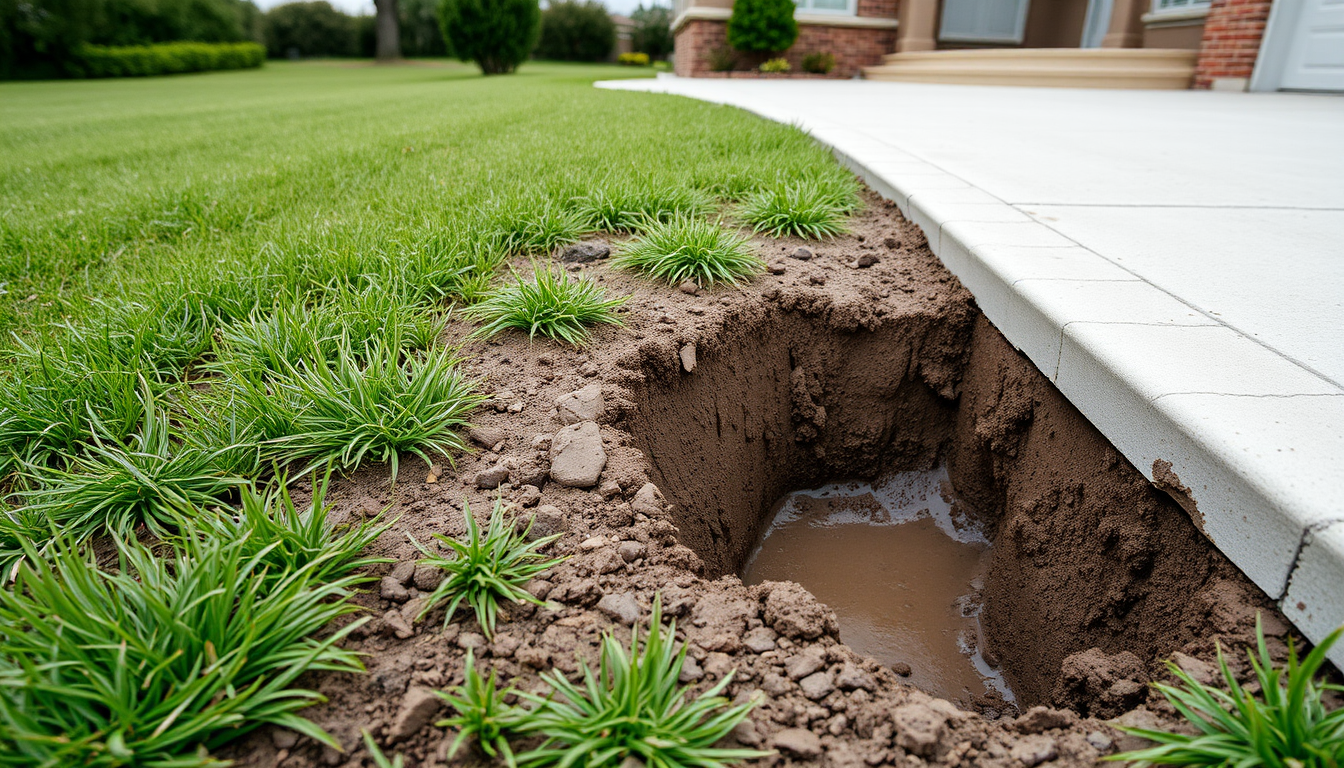
A soaked patch of lawn and an exposed service pipe point to a failing underground water line.
A soggy patch in the yard, a water bill that keeps climbing, and pressure that dropped off at every tap. That combination usually points to a main water line leak, the buried pipe that carries water from your meter to the house, not a slab leak under the concrete. The two get mixed up all the time, and they get fixed in very different ways. Here’s how we tell them apart on LA properties, and what an underground water line repair actually involves before you spend a dime.
The short answer: A main water line leak is a break in the water service line running underground across your yard, between the city meter and your home. A slab leak is a break in a supply line under the concrete foundation inside the footprint of the house. Yard clues (a wet or extra-green patch outside, water bubbling near the sidewalk, a spinning meter) point to the main line. Warm floors and damp carpet inside point to the slab. Confirm either one with the EPA’s two-hour meter test: shut off all water, read the meter, wait two hours, and read again. If it moved, water is escaping somewhere.
What Is a Main Water Line Leak?
Your main water line, also called the water service line, is the single pipe that carries all your household water from the city meter at the curb, underground across your yard, and into the house. When that buried pipe cracks or corrodes through, every gallon it leaks runs 24 hours a day, because the line is always under city pressure. That’s why a main line leak shows up on the bill fast and often soaks the yard before you notice anything indoors.
Here’s the part that catches LA homeowners off guard: that buried line is yours to maintain. LADWP installs and owns the pipe up to the meter, but the plumbing from the meter to the building is the customer’s responsibility (LADWP). So when the service line springs a leak in your yard, the repair falls on you, not the city. Knowing where that dividing line sits saves a lot of confused phone calls.
Main Water Line Leak vs Slab Leak: How Do You Tell Them Apart?
The quickest tell is location. A main water line leak is outside, in the yard, between the meter and the house. A slab leak is inside the footprint of the home, under the concrete floor. Both waste water around the clock, and household leaks add up to nearly 1 trillion gallons wasted nationwide every year, with the average home losing more than 9,300 gallons annually (EPA WaterSense). Where that water surfaces is what separates the two.
Clue
Main water line leak (yard)
Slab leak (under the house)
Where water shows up
Soggy or sunken spot in the yard, water near the sidewalk or driveway
Damp carpet, warped flooring, or a dark patch on the floor indoors
Temperature clue
None. The service line carries cold water only
A warm spot on the floor if the leak is on a hot line
Grass and plants
One strip of lawn greener or growing faster than the rest
No effect on the yard
Pressure
Drops across the whole house at once
Can drop, but often with a warm-floor clue too
Sound
Rarely audible indoors
Hiss or trickle under the floor with everything off
One warm spot on the floor with dry carpet outside is a slab leak until proven otherwise. A green stripe across the lawn with no indoor signs points to the main line. When you see clues in both places, get it tested rather than guessing, because the repairs are not interchangeable. If the leak turns out to be inside the slab, our repiping page walks through what that fix looks like.
What Are the Signs of a Main Water Line Leak in the Yard?
Most main line leaks announce themselves through the yard, the meter, or the water pressure long before you ever see a puddle at the door. A pressure-side leak on a buried service line never stops, so it leaves marks outside. Here’s what we tell LA homeowners to look for.
A soggy or spongy patch in the yard. Ground that stays wet with no sprinkler running, or feels squishy underfoot, often sits right over the leaking line. In heavy cases the soil sinks or a small sinkhole forms.
One strip of grass greener than the rest. A leaking line acts like free irrigation. If a band of lawn is lush and fast-growing while the rest is normal, follow that stripe. It usually traces the pipe.
Water bubbling up near the curb or driveway. When the leak has nowhere to soak in, it surfaces along the sidewalk, the driveway edge, or the street. Standing water there in dry weather is a red flag.
A water bill that climbs for no reason. Same household, same habits, bigger bill. A buried leak runs day and night, so it hits the bill before it shows anywhere else.
A drop in pressure at every tap. When water escapes underground, less of it reaches the house. If pressure falls off across the whole home at once, a service-line leak is a prime suspect.
Discolored or gritty water. A cracked line can pull dirt and rust in from the surrounding soil, so brown or cloudy water at every faucet can point to a break outside.
How Do You Confirm a Main Water Line Leak Yourself?
You can confirm a leak before you call anyone, and the best test is free. The EPA puts it plainly: “Check your water meter before and after a two-hour period when no water is being used. If the meter changes at all, you probably have a leak” (EPA WaterSense). Hidden leaks are common enough that WaterSense found nine percent of homes waste 50 gallons or more per day (EPA WaterSense). Here’s the step-by-step.
Turn off every faucet and water-using appliance, and don’t flush a toilet for the duration.
Find your meter, usually in a box near the curb, and write down the exact reading.
Wait two hours with zero water used anywhere on the property.
Read the meter again. If the numbers moved at all, water is escaping somewhere on your system.
To sort a yard leak from an indoor one, find the shutoff valve where the main line enters the house and close it. Then watch the meter again. If the meter keeps creeping with the house valve shut, the leak is out in the yard, between the meter and the house. If it stops, the leak is indoors, and a slab leak moves up the list.
Why Do LA Yards Spring Main Line Leaks?
A few local conditions stack up against buried service lines here. None of them is the whole story, but together they explain why we dig up so many leaking lines across the Valley and the Westside. Copper service lines are rated for roughly 70 years and plastic lines around 75 (InterNACHI), but LA conditions can push a line to fail well short of that.
Hard water working from the inside. Southern California tap runs hard. The USGS classifies anything above 180 mg/L as very hard, and a lot of LA water sits in that band (USGS). Scale builds inside the pipe and gives corrosion uneven spots to concentrate, which is how pinholes start.
High city pressure. Plumbing code calls for a pressure reducing valve (the PRV) once static pressure runs above 80 psi, to hold the house at or below that (plumbing code via UpCodes). When that valve is missing or has failed, every weak spot in the buried line takes extra strain and gives out sooner.
Age and tree roots. Plenty of LA service lines went in mid-century and are now decades into their life. Mature trees send roots toward the moisture and the pipe, and roots can wrap, crush, or work into a line that’s already weakened. Older pipe under harder conditions simply fails more often.
Underground Water Line Repair: What Does the Fix Take?
Underground water line repair is the work of locating a leak on the buried service line, then either patching the damaged section or replacing the full run from the meter to the house. It comes down to two broad approaches, and which one fits depends on where the leak is, the pipe’s condition, and what’s on top of it. The pipe is buried in your yard, so the first job is always pinpointing the exact spot, which takes acoustic listening gear and pressure testing rather than guesswork.
Open-trench repair or replacement. The classic method. A crew digs down to the line, then either repairs the damaged section or replaces the whole run from meter to house. It’s straightforward and lets the plumber see the pipe directly, but it means opening a trench across the yard, so any lawn, pavers, or hardscape over the line has to be restored afterward.
Trenchless replacement. When conditions allow, a new line can be pulled or bored through the ground along the old path with only small access pits at each end. That spares most of the yard and driveway. Not every leak or soil condition suits it, so a plumber confirms whether it’s an option after locating the break. Either way, if the line is old and failing in one place, replacing the full run is often smarter than chasing one leak at a time.
Should You DIY or Call a Plumber?
Some of this is genuinely a do-it-yourself job, and some of it isn’t. Knowing the line saves you money and saves your yard. Every diagnostic above is yours to run. Pinpointing and repairing a buried line is where a pro earns the call.
Do it yourself
Call a plumber
Run the two-hour meter test
Pinpoint the buried leak with acoustic gear
Walk the yard for soggy spots and greener grass
Pressure-test the line to confirm the break
Isolate yard vs indoors with the house shutoff valve
Dig and repair, or replace the service line
Compare this month’s water bill to last year’s
Decide between a spot repair and a full new line
Shut off the main valve if the line is flooding
Advise on open-trench vs trenchless
The reason pinpointing is a pro job is simple: the pipe is buried, so you can’t see it, and digging up the whole yard on a hunch is the expensive way to find a leak. Accurate location means opening only the ground that has to come up. For the full range of what a leak check involves, see our plumbing services.
If the signs at your place match what you’ve read here, that’s the moment to get eyes on it before the yard, the driveway, or the foundation take more damage. We’re a family-owned crew that’s been working under LA houses for 25 years (more about our LA plumbing team), and we’ll tell you straight whether it’s the service line, a slab leak, or something simpler. If your situation matches this, call Rooter Experts at 888-488-4808 for a leak check. No pressure, just a look.
Frequently Asked Questions
How do I know if it’s a main water line leak or a slab leak?
Location is the tell. A main water line leak surfaces outside, as a soggy yard, a greener strip of grass, or water near the curb. A slab leak shows up indoors, as warm flooring, damp carpet, or the sound of water with everything off. Confirm either with the EPA’s two-hour meter test (EPA WaterSense).
Who is responsible for the water line from the meter to my house in LA?
You are. LADWP owns and maintains the pipe up to the meter, but the plumbing from the meter to the building is the customer’s responsibility (LADWP). So a leak in the service line across your yard is your repair, not the city’s. The city handles breaks on its own mains in the street.
Can I fix a main water line leak myself?
The diagnostics are yours, but the repair isn’t a DIY job. You can run the two-hour meter test, walk the yard for soggy spots, and isolate the leak to outside with the house shutoff. Pinpointing a buried line takes acoustic gear and pressure testing, and repairing or replacing it means digging safely around other utilities.
Is a main water line leak an emergency?
It’s urgent even when nothing is flooding. A buried leak runs around the clock, and the average household’s leaks waste more than 9,300 gallons a year (EPA WaterSense). Left alone, escaping water erodes soil under walkways, driveways, and even the foundation, so the sooner it’s located and fixed, the less damage you’ll repair.
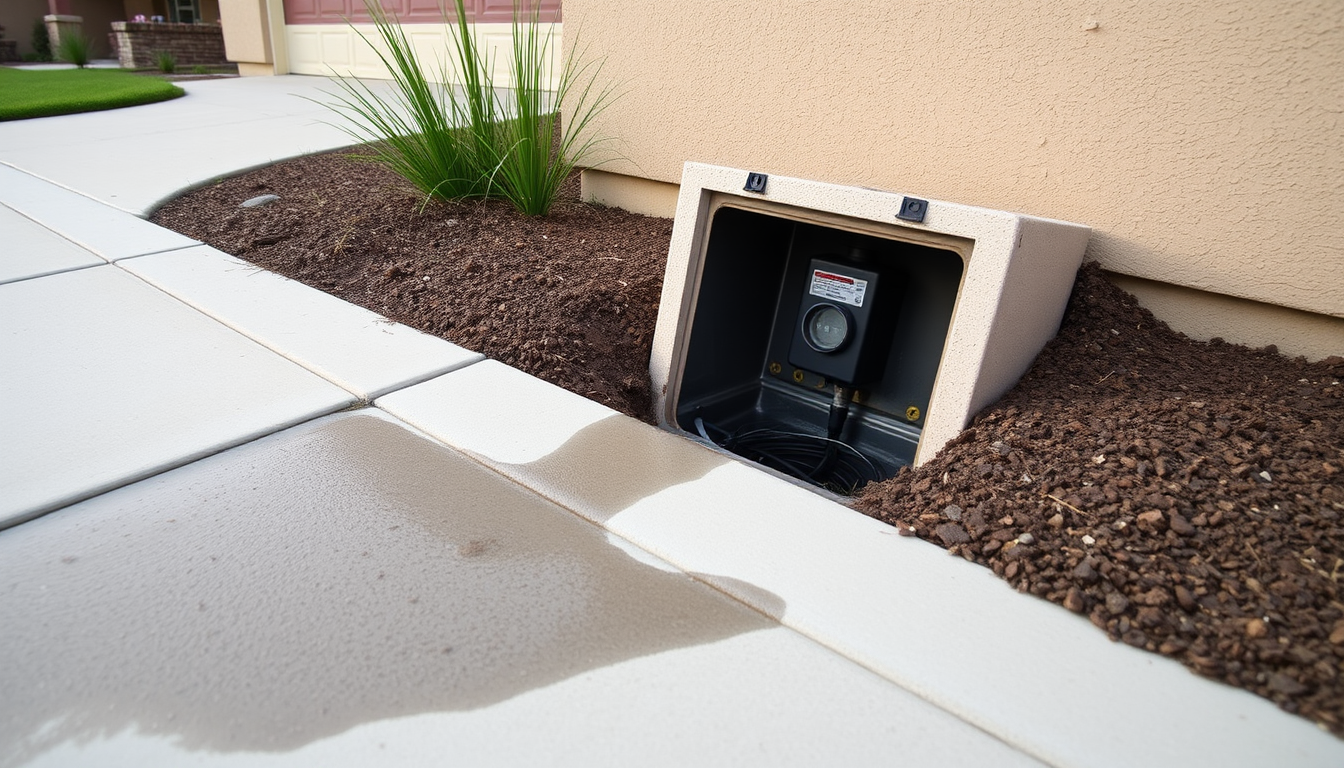
When the meter keeps creeping with every tap shut off, Rooter Experts starts the hunt right here at the box.
Your water bill jumped, maybe doubled, and nothing about your month changed. Before you panic or pay it, know this: a high water bill leak is the usual culprit, not a broken meter. Meters fail rarely. Hidden leaks run quietly around the clock. The good news is you can tell them apart yourself in about two hours, with no tools, before you ever call anyone. Here’s how we walk LA homeowners through it.
The short answer: A sudden spike almost always means water is escaping somewhere, usually a running toilet, an irrigation line, or a slab leak under the foundation. Rule out a meter misread first by checking for any real usage change. Then run the EPA’s two-hour meter test: shut off all water, read the meter, wait two hours, and read it again. If the number moved, you have a leak, not a billing error.
Is It a Leak or a Meter Error?
A real high water bill leak is far more likely than a faulty meter. Mechanical meters tend to slow down as they age and under-report, not over-report, so a meter that suddenly reads high is uncommon. Start by ruling out the simple stuff before you assume the worst.
Leaks are common, meter faults are not. As of 2026, the EPA reports that nine percent of homes have leaks wasting 50 gallons or more per day (EPA WaterSense). So when a bill spikes for no reason you can name, the odds strongly favor a hidden water leak over a broken meter.
Ask yourself what actually changed. House guests, a heat wave with extra lawn watering, a new water-hungry appliance, or filling a pool all push usage up for real reasons. The water company didn’t make a mistake there. Your habits did, and the bill is correct.
If none of that fits, you can request a meter re-read or accuracy test from your provider. LADWP, the city’s water utility, walks customers through indoor and outdoor checks on its how to detect a water leak page, and it runs a billing adjustment program for underground leak repairs that can take some sting out of a high bill once the leak is fixed. But don’t just wait on the utility. The test in the next section confirms a leak today, on your own, and it’s the same first step a good plumber would take.
The Two-Hour Meter Test: Confirm a Hidden Water Leak Yourself
This is the single most useful thing you can do, and it’s free. The EPA puts it plainly: “Check your water meter before and after a two-hour period when no water is being used. If the meter changes at all, you probably have a leak” (EPA WaterSense). A hidden water leak runs day and night, which is exactly why it shows up on the bill before you ever see a drop of water.
Here’s the step-by-step we use:
Turn off every faucet and water-using appliance. Don’t flush a toilet, run the dishwasher, or let the irrigation cycle for the duration.
Find your meter, usually in a box near the curb or sidewalk, and write down the exact reading.
Look at the low-flow indicator. On most meters this is a small triangle, star, or gear that spins when any water moves through (Smart Home Water Guide, AMWUA). If it’s turning with everything off, water is escaping right now.
Wait two hours with zero water used anywhere in the house.
Read the meter again. If the numbers moved, you have a leak somewhere on your system.
Want to narrow it down to inside versus outside? Shut off the valve where the main line enters the house, then watch the meter. If the meter keeps moving, the leak is between the meter and the house, often the irrigation or service line. If it stops, the leak is indoors.
Where Do High Water Bill Leaks Actually Hide?
Most hidden leaks come down to a handful of usual suspects. Household leaks waste nearly 1 trillion gallons of water annually nationwide, and the average home loses more than 9,300 gallons a year to them (EPA WaterSense). Here’s where that water usually goes.
The toilet (most common by far)
A running toilet is the number-one cause of a mystery bill, and it often makes no sound. The flapper, that rubber seal at the bottom of the tank, wears out and lets water seep from tank to bowl. The EPA notes a worn flapper “can cause your toilet to flush on its own or silently leak thousands of gallons a year” (EPA WaterSense).
Test it in ten minutes. Put a few drops of food coloring in the tank, wait 15 minutes without flushing, and check the bowl. If color shows up in the bowl, the flapper is leaking. A new flapper is a cheap, genuine DIY fix.
Irrigation and outdoor lines
In LA, the sprinklers are a prime suspect, and an irrigation leak can dwarf anything indoors. The EPA reports that outdoor use can be as much as 60 percent of total household water in arid regions, and “as much as 50 percent of the water we use outdoors is lost” to inefficient systems (EPA WaterSense). A valve that doesn’t seat shut, a cracked lateral line, or a broken sprinkler head can run water into the ground long after the system “turns off.” You won’t see it because it soaks straight into the dirt.
Slab leaks, the LA classic
Many LA homes are built slab-on-grade, meaning copper supply lines run through or under the concrete foundation. When one of those buried lines springs a pinhole, water has nowhere to go and the bill climbs with no visible cause. The telltale signs are a warm spot on the floor, the sound of running water with everything off, and that creeping meter you just tested. A slab leak is the one on this list you can’t fix yourself, and it’s worth catching early before it undermines the foundation. If the buried copper is failing in one place, repiping is sometimes the smarter long-term call than chasing one pinhole at a time.
Faucets, the water heater, and the softener
A steady drip from a worn faucet washer adds up over a billing cycle. So does a water heater leaking at the tank, drain valve, or temperature-and-pressure relief valve, and a sticking water softener that regenerates over and over. None of these are dramatic, but any one can quietly pad your bill. If your water heater is pooling water at the base, that’s both a leak and a sign the tank may be near the end of its life.
Why Do LA Homes Spring Hidden Leaks?
A few things stack the deck against pipes in Southern California. None is the whole story, but together they explain why we pull leaking lines out of so many homes across the Valley and the Westside.
Hard water. SoCal tap water runs hard. The USGS classifies anything above 180 mg/L as “very hard,” and a lot of LA water sits in that range (USGS). Hard water leaves scale inside pipes and gives corrosion uneven spots to concentrate, which is how pinhole leaks start.
High city pressure. Plumbing code calls for a pressure reducing valve (the PRV) to hold house pressure at or below 80 psi (plumbing code via UpCodes). When that valve is missing or failed, every weak spot in your pipes takes extra strain and gives out sooner.
Older homes and tree roots. Plenty of LA copper went in mid-century and is now decades old. Mature trees send roots toward buried supply and sewer lines, and a bimonthly billing cycle, the every-two-months schedule LADWP uses, means a slow leak can run for weeks before the bill even tips you off.
Should You DIY or Call a Plumber?
Some of this is genuinely a do-it-yourself job, and some of it isn’t. Knowing the line saves you money and saves your floors. Every diagnostic above is yours to run. Pinpointing and fixing a buried leak is where a pro earns the call.
When to handle a high water bill leak yourself versus calling a plumber
Do it yourself
Call a plumber
Run the two-hour meter test
Pinpoint a slab or service-line leak with acoustic gear
Do the toilet dye test and swap a flapper
Open the slab and make the repair
Check sprinkler heads and valves for soggy spots
Pressure-test the lines to confirm a hidden leak
Isolate indoor vs. outdoor with the main valve
Decide between a spot repair and a repipe
Request a meter re-read from your utility
Check a leaking water heater or PRV
The reason pinpointing is a pro job is simple: the pipe is buried in concrete or underground, so you can’t see it. Finding the exact spot takes electronic listening gear and pressure testing, not a hammer and a guess. For the full range of what a leak check involves, see our plumbing services.
If the signs at your place match what you’ve read here, that’s the moment to get eyes on it before the damage grows. We’re a family-owned crew that’s been working under LA houses for 25 years (more about our LA plumbing team), and we’ll tell you straight whether it’s a slab leak or a five-dollar flapper. If your situation matches this, call Rooter Experts at 888-488-4808 for a leak check. No pressure, just a look.
Frequently Asked Questions
Can a running toilet really double my water bill?
Yes, it’s the most common cause we see. A worn flapper can silently leak thousands of gallons a year without a sound (EPA WaterSense). Drop food coloring in the tank, wait 15 minutes, and if color reaches the bowl, the flapper is leaking. A replacement flapper is a cheap fix.
How do I know if it’s a meter error and not a leak?
Meter errors are uncommon, and aging meters usually under-report rather than over-report. Confirm a real leak first with the EPA’s two-hour test: shut off all water, read the meter, wait two hours, and read again. If it moved, you have a leak (EPA WaterSense). You can also ask your utility for a re-read.
Can an irrigation system leak when it’s turned off?
Yes. A valve that fails to seat shut, a cracked line, or a broken head can run water into the soil long after the timer stops. Outdoor use reaches as much as 60 percent of household water in arid regions like LA (EPA WaterSense). Isolate it by shutting the house main and watching whether the meter still moves.
Why are hidden leaks so common in LA homes?
Several things stack up. SoCal hard water above the USGS “very hard” mark of 180 mg/L corrodes pipes from the inside (USGS), high city pressure strains weak spots, and many homes have decades-old copper running through slab foundations. A bimonthly billing cycle lets a slow leak run for weeks before you notice.
Is a high water bill leak an emergency?
It’s urgent even when nothing is flooding. A hidden leak runs around the clock, and nine percent of homes have leaks wasting 50 gallons or more per day (EPA WaterSense). A slab leak left alone can wash out soil under the foundation, so the sooner you confirm and locate it, the less damage you’ll repair.
A dried-out floor drain trap is the first thing we check when a house smells like raw sewage.
A sewer smell in house air is almost always coming from one of a handful of spots, and most of them are cheap to fix once you find the right one. After 25 years under LA houses, we can tell you the odor is rarely the city sewer itself. Nine times out of ten it’s a drain trap that dried out or a toilet that’s lost its seal. Here’s how we track down where that sewer gas smell is really coming from, room by room, and which ones you can handle yourself.
The short answer: That rotten-egg sewer gas smell is hydrogen sulfide leaking in from your drain system. The usual culprit is a dried-out P-trap under a sink, tub, or floor drain you rarely use, or a failed wax ring under a toilet. Less often it’s a blocked plumbing vent, tree roots, or a cracked drain line. Find the room where it’s strongest, run water in every drain there, and you’ll clear most cases without ever calling a plumber.
What Is That Sewer Gas Smell, Exactly?
That rotten-egg odor has a name. The gas backing up out of your drains is mostly hydrogen sulfide, which the federal ATSDR describes as “a flammable, colorless gas that smells like rotten eggs” and which “can also result from bacterial breakdown of organic matter” (ATSDR). It’s the same stuff people call sewer gas or stink damp. Your drains are full of organic gunk, and that’s what feeds it.
The good news is your nose is a sensitive instrument. ATSDR notes that “people usually can smell hydrogen sulfide at low concentrations in air ranging from 0.0005 to 0.3 parts per million” (ATSDR). In plain terms, you smell it long before it reaches a level that hurts you in a normal house.
That said, don’t just live with it. A strong, steady sewer gas smell that brings on headaches or nausea means you should open windows, get air moving, and find the source. Persistent gas is telling you a seal somewhere has failed, and ignoring it lets it get worse.
The Most Common Cause Is a Dried-Out Drain Trap
Under every sink, tub, shower, and floor drain is a U-shaped bend called a P-trap. It holds a small pool of water, and that water is the only thing standing between you and the sewer. InterNACHI defines a trap as “a fitting or device that provides a liquid seal to prevent the emission of sewer gases” (InterNACHI). Plumbing code backs that up: IPC Section 1002.4 requires every fixture trap to hold “a liquid seal of not less than 2 inches and not more than 4 inches” (IPC via UpCodes).
Here’s the catch. If a drain doesn’t get used, that water slowly evaporates. Once the trap runs dry, the seal is gone and sewer gas walks right into the room.
This is the number one cause we find, and it loves LA. Our dry air and long warm season evaporate a trap faster than a humid climate would. The usual suspects are a guest bathroom nobody uses, a second tub, a laundry sink, or a garage or basement floor drain that hasn’t seen water in months. Vacation homes and rental units sitting empty are classic cases.
The two-minute test
Walk the house and find the room where the smell is strongest. Then put water back in every trap there:
Run every sink, tub, and shower for 30 seconds.
Flush every toilet.
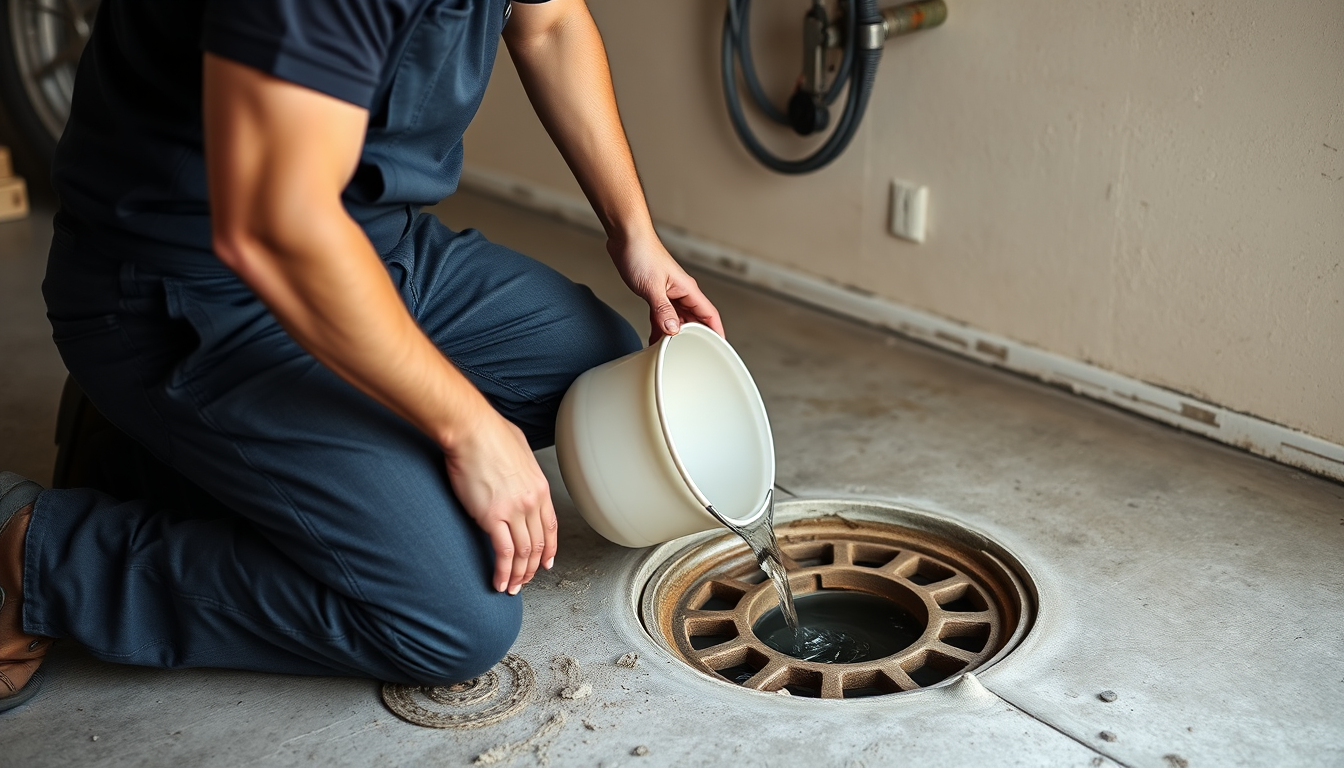
Pour a couple of quarts of water down any floor drain.
For a drain you almost never use, add a splash of cooking oil after the water. It floats on top and slows the next evaporation.
Give it a day. If the smell fades, a dry trap was your problem, and it costs nothing to fix.
A Failing Toilet Wax Ring Is the Next Suspect
A failing wax ring is the second most common source of indoor sewer odor we find in LA homes. Your toilet seals to the drain through a wax ring pressed against the closet flange, the fitting that ties into the pipe. When that wax dries, cracks, or the toilet rocks even slightly, it passes gas before it ever passes visible water.
So if the smell is strongest at a toilet and spikes after a flush, the ring is the prime suspect, even with no water on the floor. The sneaky part is the wax can leak gas while still holding back liquid, at least for a while.
Tells to watch for: a toilet that wobbles when you sit, a faint stain or softness in the floor at the base, or that odor that spikes every time the bowl empties.
A handy homeowner can pull a toilet and set a fresh wax ring in an afternoon. But if the toilet rocks after you reset it, or the floor feels spongy, the flange itself is likely cracked or sitting too low, and no new ring will seal it. That’s the point to bring in a pro before a slow leak rots the subfloor.
When It’s the Vent, the Line, or Tree Roots
If you’ve refilled every trap and reseated the toilet and the smell keeps coming back, the problem is deeper in the system. A few things we check next.
What happens when the plumbing vent is blocked?
Your drains connect to vent pipes that run up through the roof. They let air in so water flows smoothly and traps don’t get siphoned dry. InterNACHI notes that proper venting works to “prevent trap seal loss” (InterNACHI). When a vent gets capped by leaves, a bird nest, or a dead critter, flushing one fixture can suck the water out of another fixture’s trap. So your traps keep going dry no matter how often you refill them. That’s a roof job, not a DIY for most folks.
Can tree roots cause a sewer smell in an older LA home?
Yes, and it’s common here. A lot of pre-1960 LA homes still run on clay sewer laterals. Clay cracks at the joints, and thirsty roots find the moisture and grow right in. That gives you a partial blockage where waste hangs up, rots, and pushes gas back up the line. If the smell rides along with slow drains or a gurgle, roots are a strong bet. This is where a drain cleaning with a camera earns its keep, and a bad root mass usually calls for hydrojetting to scour the line clean.
What if the smell comes from under the slab?
Many LA houses are slab-on-grade, with drain pipe cast right into the concrete. A broken pipe down there can let gas seep up through the slab, and you’ll often smell it without ever seeing water. Finding that takes a camera and sometimes a smoke test. It’s a pro call, full stop.
How an LA Plumber Tracks Down the Source
When Rooter Experts gets a sewer smell call, we don’t guess. We work it in order, cheapest cause first. Here’s the same logic you can follow at home before you decide whether to call.
What you notice
Likely cause
DIY or pro
Smell near a rarely used drain
Dried-out P-trap
DIY: run water in the trap
Smell at a toilet, worse after flushing
Failed wax ring
DIY if confident, pro if it rocks
Traps keep drying out everywhere
Blocked roof vent
Pro
Smell with slow drains or gurgling
Tree roots or line clog
Pro: camera and clearing
Smell with no visible water, on a slab
Cracked drain line
Pro: camera or smoke test
On a stubborn case, a plumber runs a smoke test. We push a harmless smoke into the drain system and watch where it puffs out: around a toilet base, out of a wall, up from a slab crack. Smoke goes exactly where gas goes, so it points straight at the leak. From there a drain camera confirms whether the line itself is cracked or rooted.
What you can do yourself: refill every trap, reseat a simple toilet, and clear a hair clog. What’s worth a pro: a vent up on the roof, a line you can smell but can’t see, and anything under the slab. A bad reseal or a missed crack just brings the smell right back.
If you’ve run the water test and the sewer gas smell is still hanging around, or it came with slow drains and gurgles, that’s the moment to get eyes on the line. We’re a family-owned crew that’s been working under LA houses for 25 years (more about us here), and we’ll track the odor to its real source instead of throwing parts at it. If that sounds like your situation, call Rooter Experts at 888-488-4808. No pressure, just a straight answer.
Frequently Asked Questions
Is a sewer smell in the house dangerous?
In a normal home, the smell shows up well before the gas reaches a harmful level. ATSDR notes people can detect hydrogen sulfide at concentrations as low as 0.0005 parts per million (ATSDR). So a faint odor is a nuisance, not an emergency. But a strong, steady smell with headaches or nausea means you should ventilate and find the source fast.
Why does my bathroom smell like sewer gas only sometimes?
It usually points to a drain trap that’s slowly drying out. A guest bath or floor drain that goes unused lets its water seal evaporate, and code requires that seal to be at least 2 inches deep to block gas (IPC via UpCodes). Run water in every fixture and the smell often disappears within a day.
Can a dried-out P-trap really cause the whole house to smell?
Yes. The trap is “a fitting or device that provides a liquid seal to prevent the emission of sewer gases,” per InterNACHI (InterNACHI). Once that water evaporates, there’s nothing stopping the gas. A single dry trap in a back room can scent a surprising amount of the house, especially with the doors closed.
How do I find which drain the sewer smell is coming from?
Go room to room and find where it’s strongest. Run water in every sink, tub, and floor drain there, and flush the toilets, to refill the traps. If the smell stays at one toilet and worsens after a flush, suspect the wax ring. If it keeps returning everywhere, the vent or the main line is the likely cause and needs a pro.
When should I call a plumber for a sewer smell?
Call once you’ve refilled the traps and reseated any obvious toilet and the odor still won’t quit. Smells paired with slow drains, gurgling, or no visible water on a slab usually trace to a blocked vent, tree roots, or a cracked line. Those need a camera or a smoke test to pin down, which is a pro job.
{“@context”:”https://schema.org”,”@type”:”FAQPage”,”mainEntity”:[{“@type”:”Question”,”name”:”Is a sewer smell in the house dangerous?”,”acceptedAnswer”:{“@type”:”Answer”,”text”:”In a normal home, the smell shows up well before the gas reaches a harmful level. ATSDR notes people can detect hydrogen sulfide at concentrations as low as 0.0005 parts per million ( ATSDR ). So a faint odor is a nuisance, not an emergency. But a strong, steady smell with headaches or nausea means you should ventilate and find the source fast.”}},{“@type”:”Question”,”name”:”Why does my bathroom smell like sewer gas only sometimes?”,”acceptedAnswer”:{“@type”:”Answer”,”text”:”It usually points to a drain trap that’s slowly drying out. A guest bath or floor drain that goes unused lets its water seal evaporate, and code requires that seal to be at least 2 inches deep to block gas ( IPC via UpCodes ). Run water in every fixture and the smell often disappears within a day.”}},{“@type”:”Question”,”name”:”Can a dried-out P-trap really cause the whole house to smell?”,”acceptedAnswer”:{“@type”:”Answer”,”text”:”Yes. The trap is “a fitting or device that provides a liquid seal to prevent the emission of sewer gases,” per InterNACHI ( InterNACHI ). Once that water evaporates, there’s nothing stopping the gas. A single dry trap in a back room can scent a surprising amount of the house, especially with the doors closed.”}},{“@type”:”Question”,”name”:”How do I find which drain the sewer smell is coming from?”,”acceptedAnswer”:{“@type”:”Answer”,”text”:”Go room to room and find where it’s strongest. Run water in every sink, tub, and floor drain there, and flush the toilets, to refill the traps. If the smell stays at one toilet and worsens after a flush, suspect the wax ring. If it keeps returning everywhere, the vent or the main line is the likely cause and needs a pro.”}},{“@type”:”Question”,”name”:”When should I call a plumber for a sewer smell?”,”acceptedAnswer”:{“@type”:”Answer”,”text”:”Call once you’ve refilled the traps and reseated any obvious toilet and the odor still won’t quit. Smells paired with slow drains, gurgling, or no visible water on a slab usually trace to a blocked vent, tree roots, or a cracked line. Those need a camera or a smoke test to pin down, which is a pro job.”}}]}
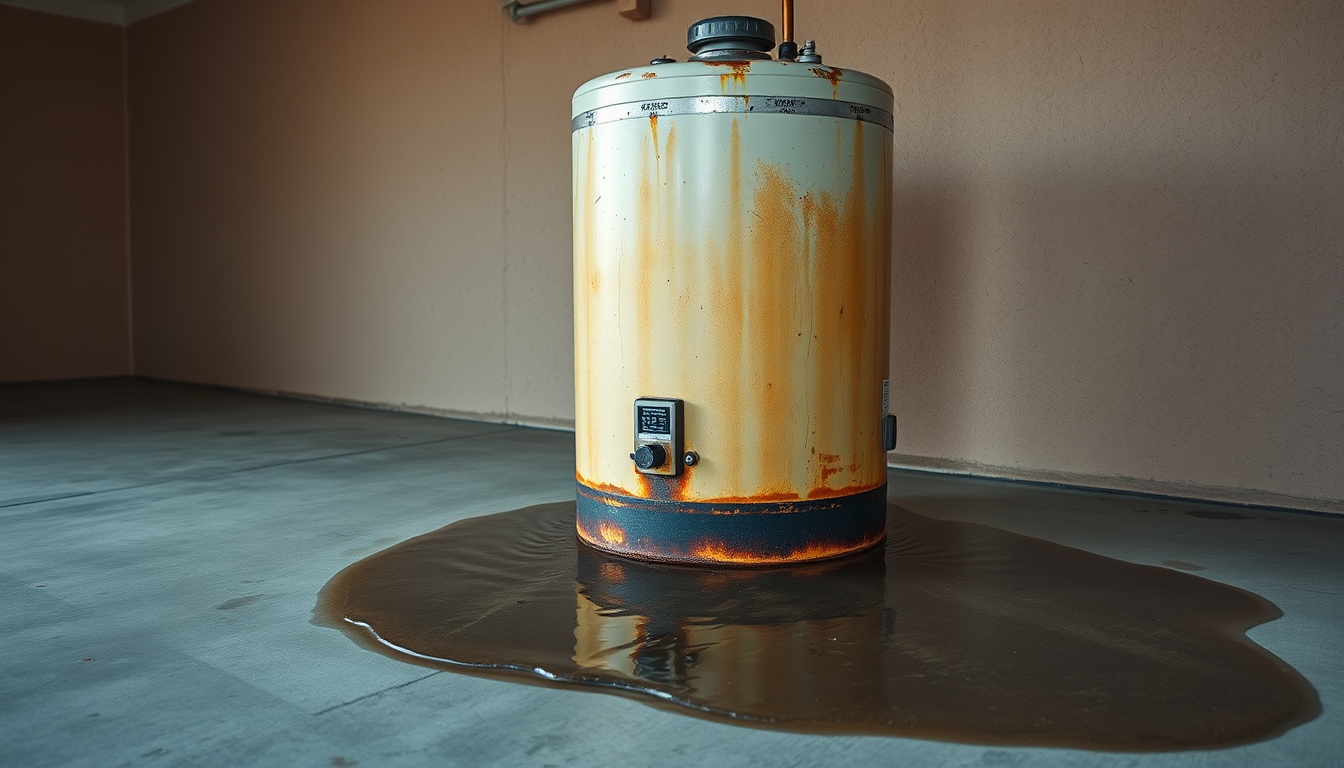
Water pooling under a tank like this usually means corrosion has won, not a loose fitting.
The short answer
A water heater leaking from the actual bottom of the tank usually means the steel has rusted through from the inside. That tank is done, and the fix is a full replacement.
Not every puddle is a dead tank. A dripping drain valve, a temperature and pressure (T&P) relief valve, or a loose connection can pool water at the base and look the same. Those are repairs, not replacements.
The first move is to find the exact spot the water comes from. ENERGY STAR says a unit more than 10 years old with rust or leaks is time to replace (ENERGY STAR).
You walk into the garage and there’s a puddle under the water heater. The first thing most LA homeowners want to know is simple: is this a quick fix, or do I need a new water heater? After 25 years on these calls, we can tell you it comes down to one question. Where exactly is the water coming from?
A water heater leaking from the bottom is the kind of leak that makes people nervous, and sometimes it should. But the bottom of the tank collects water from a lot of sources, and only one of them means the tank itself has failed. Here’s how to tell them apart.
Where is the water actually coming from?
Before you panic or call anyone, track the leak to its source. The bottom of a water heater is the low point, so water from a fitting six inches up still ends up in a puddle on the floor. That puddle fools a lot of people into thinking the tank is shot when it isn’t.
Dry the whole unit with a towel. Then watch for fifteen or twenty minutes and see where the first new drops show up. InterNACHI inspectors look for the same clues: dripping water, rust stains, or mineral buildup at the tank, the connections, the drain valve, and the relief valve, which often point to a slow leak (InterNACHI).
If the water is coming from a fitting, valve, or pipe up top, you likely have a repair on your hands. If it’s weeping from the seam at the very bottom of the steel tank with no fitting in sight, that’s the bad one.
What a leak from the actual tank means
When water seeps from the bottom seam of the tank itself, the steel has almost always corroded through, and a rusted-through tank cannot be patched. A storage water heater is a steel cylinder with a thin glass lining inside (U.S. Department of Energy). Once that lining cracks and the steel underneath rusts, the only real fix is a new unit.
Here’s why it starts at the bottom. Sediment, the calcium and mineral grit in LA’s hard water, settles to the floor of the tank and sits right where the burner heats. That trapped layer cooks the steel hotter than it was built for, and corrosion eats through from the inside out. By the time it weeps onto your garage floor, the damage has been building for years.
An anode rod is supposed to slow this down. It’s a sacrificial metal rod that corrodes in place of the tank, and the Department of Energy recommends inspecting it every three to four years (U.S. Department of Energy). Most homeowners never touch it, the rod wears out, and then the tank starts giving itself up. When that’s the cause, you’re looking at a water heater replacement, not a repair.
The leaks that are not the tank
Plenty of bottom puddles come from parts you can actually replace, and these are the good outcomes. None of them mean your tank is finished. InterNACHI flags the drain valve and the pressure relief valve, along with the plumbing connections, as the spots where a slow leak usually starts (InterNACHI). Those are the three we check on every call before we ever condemn a unit.
The drain valve
The drain valve sits near the base of the tank, the spigot you’d hook a hose to for flushing. These are often plastic, and they get crusty with mineral scale or simply fail to seal after years of disuse. A drip here looks exactly like a tank leak because it’s right at the bottom. It’s also one of the cheaper repairs in plumbing.
The temperature and pressure relief valve
The T&P valve is a safety device that opens if temperature or pressure inside the tank climbs too high. It has a discharge tube that runs down the side, usually to within a few inches of the floor, so its drips land right next to the base. A leaky T&P valve is a sign it needs to be replaced, and a properly working one fires a powerful jet of hot water when it opens, not a slow gentle drip (InterNACHI).
If yours is dribbling, don’t ignore it. It can mean the valve is failing, or that pressure in the tank is running too high, and that second one is worth a closer look.
The supply connections
The cold inlet and hot outlet fittings on top of the tank can loosen or corrode over time. Water from a bad connection runs down the outside of the tank and collects, you guessed it, at the bottom. Tighten or reseal the fitting and the leak stops. The tank is fine.
How do I tell a quick fix from a full replacement?
Match the leak’s source to the likely fix. A unit more than 10 years old that’s rusting or leaking is one ENERGY STAR says you should plan to replace (ENERGY STAR). A younger unit leaking from a valve or fitting is usually worth repairing. Use this to narrow it down.
Where the water comes from
What it usually means
Seam at the bottom of the steel tank
Tank rusted through. Replace the unit.
Drain valve at the base
Failed or loose valve. Repairable.
T&P relief valve discharge tube
Valve or pressure issue. Repairable.
Cold or hot fitting on top
Loose or corroded connection. Repairable.
Unit over 10 years old, rusty water
Near end of life. Plan replacement.
The age cutoff matters in LA more than most places. The typical water heater lasts about 10 years (InterNACHI), and our hard water tends to push them toward the short end of that range, not the long end.
Why do LA water heaters fail sooner?
It comes down to the water and the homes. LA runs hard water, heavy with calcium and minerals. The USGS puts the mechanism plainly: when hard water is heated, such as in a home water heater, solid calcium carbonate deposits form, and that scale can reduce the life of the equipment (USGS). InterNACHI sees the same pattern in the field, noting that in areas with higher mineral content, water heaters have shorter lifespans (InterNACHI). That scale is the same grit that piles up at the bottom of the tank and speeds up corrosion.
We see it most in the units nobody ever flushed. Pull the drain on a 12-year-old Valley water heater and what comes out first isn’t water, it’s a slug of gray-brown mineral sludge. That layer is what cooks the steel floor of the tank until it gives.
The buildup also reduces hot water and causes rumbling or popping sounds, two of the warning signs ENERGY STAR ties to a tank near the end of its life (ENERGY STAR). That popping is water trapped under the sediment layer, boiling against the hot steel.
Then there’s the housing. A lot of Valley and Tri-Cities homes have the heater tucked in a garage corner or a slab-side closet, where a slow leak can run for weeks before anyone notices. By the time the puddle is obvious, the tank has usually been failing for a long while.
What can I check myself, and when should I call?
You can do the detective work yourself in twenty minutes, and it’s worth doing before anyone comes out. Dry the unit, watch for the source, and check the simple stuff first.
Find the source. Towel everything dry, wait, and see where water reappears. Top fitting, drain valve, relief tube, or the tank seam itself.
Check the drain valve. Make sure it’s fully closed and not weeping. A snug cap on it can confirm whether that’s your leak.
Look at the T&P discharge tube. If water is running from the tube, the valve or your pressure is the issue, not a rusted tank.
Read the age. The serial number on the data plate usually encodes the build date. Past 10 years, lean toward replacement.
Kill the power and water if it’s pouring. For a fast leak, shut the cold supply valve on top and turn off the gas or breaker to the unit.
Call a pro when the water traces back to the tank seam, when the unit is over a decade old, when you see rusty hot water, or when a T&P valve keeps leaking after you’ve looked. Those don’t get better on their own, and a failing tank can eventually let go all at once. Routine flushing and an anode check can extend a heater’s life (U.S. Department of Energy), but once the steel is breached, maintenance can’t undo it.
If your leak matches the tank-failure picture above, that’s genuinely a call-now situation, and you can reach Rooter Experts at 888-488-4808. We’ll tell you straight whether it’s a repair or a replacement. No upsell, just the honest read after 25 years of doing this around LA. You can see what we handle across our plumbing services, or get a sense of who we are on our about page.
Frequently Asked Questions
Is a water heater leaking from the bottom dangerous?
It can be. A slow tank leak risks water damage and mold, and a corroded tank can eventually fail suddenly and dump its full load. A leaking T&P relief valve can also signal dangerously high pressure inside the tank. If the leak is at the tank seam or the unit is over 10 years old, treat it as urgent and shut off the water and power.
Can you repair a water heater that leaks from the bottom of the tank?
No. If water is weeping from the bottom seam of the steel tank, the tank has rusted through and cannot be patched or sealed. At that point a full water heater replacement is the only real fix. Leaks from the drain valve, relief valve, or top fittings are a different story and can usually be repaired.
How long should a water heater last in Los Angeles?
The typical storage water heater lasts about 10 years (InterNACHI). LA’s hard water tends to shorten that, since mineral buildup speeds up corrosion. If yours is past 10 and showing rust or sediment noise, ENERGY STAR recommends planning a replacement before it fails.
Why is water pooling under my new water heater?
On a newer unit, the tank itself is rarely the problem. Look at the drain valve, the temperature and pressure relief valve, and the cold and hot connections on top. A loose or weeping fitting drips down the side and collects at the base, looking just like a tank leak. Those are repairs, not replacements.
Does flushing my water heater prevent leaks?
It helps. The Department of Energy recommends periodic flushing and an anode rod check to extend a heater’s life (U.S. Department of Energy). Flushing clears the sediment that overheats and corrodes the bottom of the tank. It won’t save a tank that’s already rusted through, but on a healthy unit it buys you years.
Sources
U.S. Department of Energy, Energy Saver, Storage Water Heaters, retrieved 2026-06-01, https://www.energy.gov/energysaver/storage-water-heaters
ENERGY STAR, Ask the Experts: When Should You Replace Your Water Heater, retrieved 2026-06-01, https://www.energystar.gov/products/ask-the-experts/when-should-you-replace-your-water-heater
InterNACHI, Estimating the Lifespan of a Water Heater, retrieved 2026-06-01, https://www.nachi.org/lifespan-water-heater.htm
InterNACHI, TPR Valves and Discharge Piping, retrieved 2026-06-01, https://www.nachi.org/tpr-valves-discharge-piping.htm
U.S. Geological Survey, Water Science School, Hardness of Water, retrieved 2026-06-01, https://www.usgs.gov/special-topics/water-science-school/science/hardness-water
{“@context”:”https://schema.org”,”@type”:”FAQPage”,”mainEntity”:[{“@type”:”Question”,”name”:”Is a water heater leaking from the bottom dangerous?”,”acceptedAnswer”:{“@type”:”Answer”,”text”:”It can be. A slow tank leak risks water damage and mold, and a corroded tank can eventually fail suddenly and dump its full load. A leaking T&P relief valve can also signal dangerously high pressure inside the tank. If the leak is at the tank seam or the unit is over 10 years old, treat it as urgent and shut off the water and power.”}},{“@type”:”Question”,”name”:”Can you repair a water heater that leaks from the bottom of the tank?”,”acceptedAnswer”:{“@type”:”Answer”,”text”:”No. If water is weeping from the bottom seam of the steel tank, the tank has rusted through and cannot be patched or sealed. At that point a full water heater replacement is the only real fix. Leaks from the drain valve, relief valve, or top fittings are a different story and can usually be repaired.”}},{“@type”:”Question”,”name”:”How long should a water heater last in Los Angeles?”,”acceptedAnswer”:{“@type”:”Answer”,”text”:”The typical storage water heater lasts about 10 years ( InterNACHI ). LA’s hard water tends to shorten that, since mineral buildup speeds up corrosion. If yours is past 10 and showing rust or sediment noise, ENERGY STAR recommends planning a replacement before it fails.”}},{“@type”:”Question”,”name”:”Why is water pooling under my new water heater?”,”acceptedAnswer”:{“@type”:”Answer”,”text”:”On a newer unit, the tank itself is rarely the problem. Look at the drain valve, the temperature and pressure relief valve, and the cold and hot connections on top. A loose or weeping fitting drips down the side and collects at the base, looking just like a tank leak. Those are repairs, not replacements.”}},{“@type”:”Question”,”name”:”Does flushing my water heater prevent leaks?”,”acceptedAnswer”:{“@type”:”Answer”,”text”:”It helps. The Department of Energy recommends periodic flushing and an anode rod check to extend a heater’s life ( U.S. Department of Energy ). Flushing clears the sediment that overheats and corrodes the bottom of the tank. It won’t save a tank that’s already rusted through, but on a healthy unit it buys you years.”}}]}
Most LA homeowners can’t locate their water shut off valve until the floor is already flooding.
It’s 11 p.m. on a Tuesday in Encino. You walk into the kitchen for a glass of water and your sock hits a puddle. Under the sink, a supply line has let go and it’s spraying the cabinet like a garden hose. The clock is now your enemy, because every minute that passes is another few gallons soaking into your subfloor and drywall. This is the exact moment you need to know where your water shut off valve is, and you need to know it without thinking. If you have to Google it while standing in an inch of water, you’ve already lost. Most LA homeowners have never touched their main water shutoff, never opened the meter box at the curb, and have no idea whether their valve is a lever or a wheel. That’s a problem you fix today, dry and calm, not tonight in a panic. This guide walks you through finding it, testing it, and shutting it down fast.
Why Every LA Homeowner Needs to Know This Cold
A burst supply line, a failed washing machine hose, or a slab leak doesn’t wait for business hours. In the time it takes a plumber to drive across the Valley, an open half-inch line can dump hundreds of gallons into your house. The single fastest thing you can do to save your floors, cabinets, and baseboards is kill the water at the source. That means knowing your water shut off valve location before you ever need it.
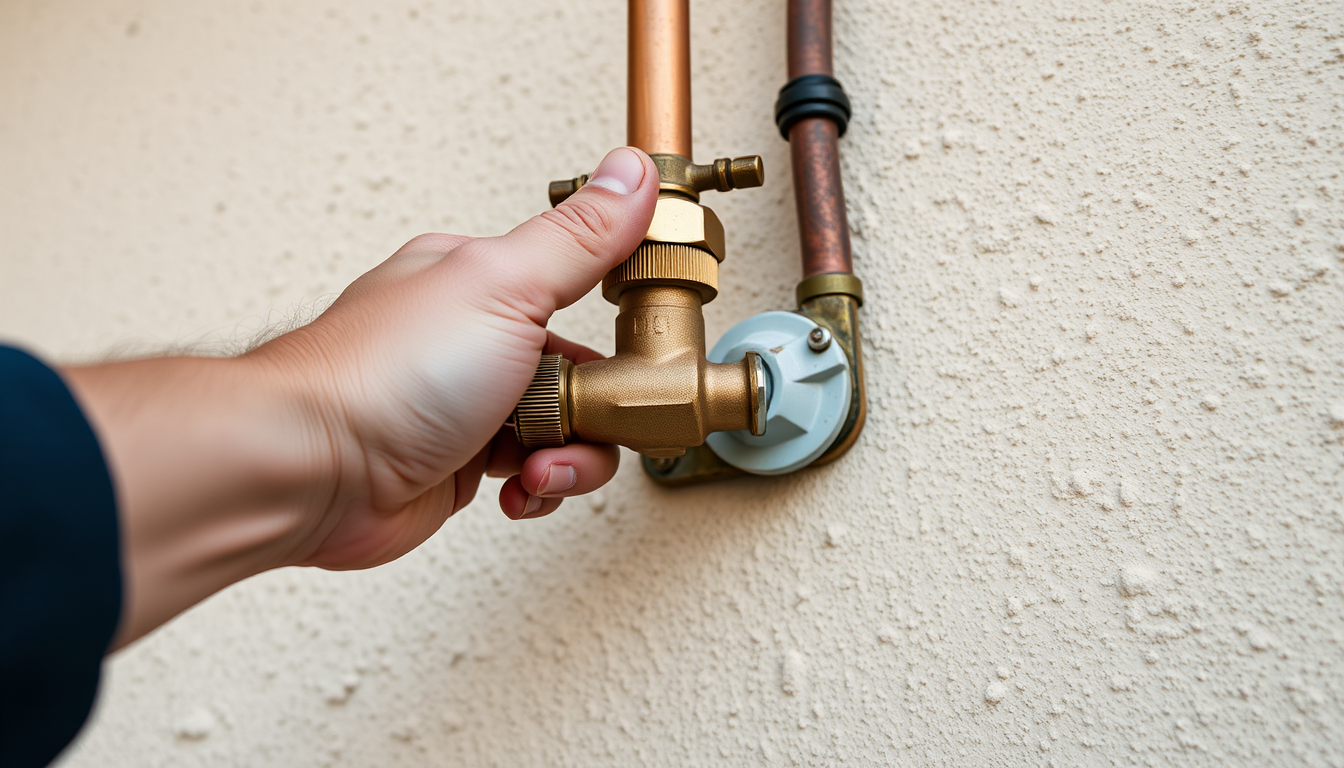
Here’s the part people miss. Los Angeles is a warm-climate region, so most homes here do not have the main shutoff tucked in a basement like back east. Per the American Red Cross, in colder climates the main house valve sits in the basement near the front wall, but in warmer climates it’s usually outside on an exterior wall or in an underground box with a removable lid. So if you’ve been hunting in your garage or a crawlspace and coming up empty, you’re probably looking in the wrong place. Walk the perimeter of your house, especially the side facing the street, and look low on the wall where the supply pipe comes up out of the ground.
One more reason to practice now: shutting the main does more than stop a flood. It also keeps gravity from siphoning the rest of your plumbing dry through the break, and it stops dirty outside water from getting pulled back into your lines if there’s a main break on the street side.
The Two Valves: House Valve vs. the Curb Stop
Almost every LA property has two ways to stop the water, and they are not the same thing.
Your house shutoff valve
This is the one you want in an emergency. It controls water to your home only and it’s on your side of the meter, which makes it your responsibility to maintain. To find it, start where the main water line enters the house and follow that pipe. You’ll often pass a bell-shaped pressure regulator first, and the house shutoff is usually right at that point. In LA that’s commonly on an exterior wall, near a hose bib, or in a small in-ground box near the foundation. This is the valve you should exercise twice a year so it doesn’t seize.
The curb stop at the meter
Out near the street, your water meter sits in a concrete or plastic box stamped “WATER.” Inside is a customer-side shutoff, sometimes called the curb stop. This is the backup if your house valve fails or you can’t find it. The catch: the street valve is often stiff and may need a water meter key, that odd T-shaped tool, to open the lid and turn it. The Red Cross specifically warns that the curb valve is hard to turn and needs a special tool, so don’t count on it as your only plan. Grab a meter key at any hardware store for a few bucks and keep it where you’ll remember it.
Gate Valve vs. Ball Valve: Know What You’re Grabbing
When you find your shutoff, look at the handle. It tells you what you’re dealing with and how it’ll behave under pressure.
A ball valve has a straight lever handle. It’s a quarter turn valve, meaning you swing it 90 degrees and the water is off. When the lever points along the pipe, it’s open. When it’s crossways to the pipe, it’s closed. These are common in newer construction and on repipes, and they’re the gold standard because they shut off fast and rarely fail.
A gate valve has a round wheel handle, like a little spigot. You turn it clockwise several full rotations to close. These are common in older homes all over the San Fernando Valley, and here’s the tell competing articles skip: a gate valve that has sat untouched for 20 years will often seize, and worse, the stem can snap or the internal gate can crumble the moment you crank on it. In a 1955 SFV ranch still running its original galvanized supply lines, that old gate valve is a coin flip. If yours is a corroded gate valve, the smart move is to have it swapped for a quarter turn ball valve before it strands you. If you’re already dealing with rusty galvanized pipe, that’s a good time to talk about a whole-home repipe while the walls are a consideration.
Either way, the direction to close is the same: righty tighty. Turn clockwise to shut the water off.
How to Actually Shut It Off, Step by Step
Practice this on a dry afternoon so it’s muscle memory when it counts.
First, go to your house shutoff valve. If it’s a ball valve, rotate the lever a quarter turn until it’s crossways to the pipe. If it’s a gate valve, turn the wheel clockwise until it stops. Don’t muscle a stuck gate valve into submission. If it won’t move with firm hand pressure, stop and move to the curb stop instead, because forcing a brittle old valve can break it open and make the flood worse.
Second, confirm the water is actually off. Walk inside and open a cold faucet, like the kitchen sink. The stream should sputter and die within a few seconds. If water keeps flowing, you turned the wrong valve or it didn’t seat fully.
Third, when the repair is done and you turn the water back on, open the valve slowly. Snapping it open fast sends a pressure spike, called water hammer, that can rattle or even crack your pipes. Ease it open, then run a faucet to let the air burp out of the lines.
If the leak is gushing and you genuinely cannot stop it, LADWP will help you shut it down at the street. Their residential leak line is (800) 342-5397.
Commercial Buildings and Older Homes: The Special Cases
If you manage a strip retail center in the Tri-Cities or an apartment building on the Westside, the layout is different and you can’t wing it. Larger buildings often have a backflow preventer assembly and a dedicated main isolation valve near the meter or in a mechanical room, plus separate shutoffs per unit or per tenant space. The worst time to learn which valve feeds which suite is during an active flood with a tenant calling. Map it once, label every valve, and keep the meter key on site. For multi-tenant or mixed-use properties, our commercial plumbing crew can walk the building and tag every shutoff so your staff isn’t guessing at 2 a.m.
Older single-family homes have their own gotcha. A lot of mid-century LA houses were built on a slab, and if the leak is under that slab, shutting the main is only step one. You’ve stopped the flood, but you still have a pressurized line failing inside the foundation. That’s a slab leak, and it needs to be located and isolated, not just shut off and ignored. Same goes for a water heater that’s weeping from the tank: kill the cold supply at the heater’s own valve, and if that valve is stuck, fall back to the main. When the tank itself is shot, that’s a water heater conversation, not a valve one.
Quick Takeaways
• In LA’s warm climate, your main house valve is usually outside on an exterior wall or in a ground box near the foundation, not in a basement.
• You have two shutoffs: the house valve (your first move) and the curb stop at the meter (backup, needs a water meter key).
• Ball valve = lever, quarter turn, fast and reliable. Gate valve = round wheel, many turns, prone to seizing in older homes.
• Always close clockwise, then verify by opening an inside faucet until it runs dry.
• Reopen slowly to avoid water hammer that can crack pipes.
• A corroded gate valve on galvanized pipe is a liability. Replace it with a ball valve before it fails.
• Buy a $5 meter key now and keep it where the whole household can find it.
Conclusion
A burst pipe is one of the few home emergencies where your own two hands can save thousands of dollars in damage, but only if you’ve done the homework. Spend ten minutes this weekend finding your water shut off valve, figuring out whether it’s a lever or a wheel, and giving it a test turn. Show everyone in the house where it is. Toss a meter key by the front door or in the garage. That small bit of prep is the difference between a quick mop-up and a month of drywall demo and dehumidifiers.
If you test your main water shutoff and the gate valve won’t budge, snaps, or starts dripping the second you touch it, that’s your sign it was already failing and you got lucky catching it dry. And if you’re standing in water right now with a valve you can’t move, don’t keep fighting it. Call Rooter Experts at 888-488-4808. We’ve been on LA trucks for 25 years, we answer after hours, and if a stuck valve or a burst line matches what you’re dealing with tonight, we’ll get the water stopped and the line fixed.
Frequently Asked Questions
Where is my water shut off valve if I live in a Valley home with no basement?
Start where the water line enters the house and follow the pipe. In most LA homes it’s outside, low on an exterior wall near a hose bib, or in a small in-ground box by the foundation. Look for a bell-shaped pressure regulator. The house shutoff is usually right there.
What if I can’t turn the valve, or it’s totally stuck?
Don’t force a stuck gate valve, because the brittle stem or gate can break and flood worse. Move to the curb stop at your meter box using a meter key, or call for the water to be shut at the street. Then have the seized valve replaced with a quarter turn ball valve.
Do I need a special tool to shut off the water at the street?
Usually yes. The meter box lid and the curb stop often need a T-shaped water meter key, available at any hardware store. The street valve is also stiff by design, so it’s a backup, not your first choice.
Which way do I turn the valve to shut the water off?
Clockwise, righty tighty. On a ball valve, swing the lever a quarter turn until it’s crossways to the pipe. On a gate valve, turn the wheel clockwise until it stops.
The water is off but I still hear running. What’s wrong?
Either you closed the wrong valve, the valve didn’t seat fully, or the leak is downstream of a different shutoff (like a slab leak still draining trapped water). Open a cold faucet to confirm. If it keeps running, you likely have a deeper issue worth a professional look.
{“@context”:”https://schema.org”,”@type”:”FAQPage”,”mainEntity”:[{“@type”:”Question”,”name”:”Where is my water shut off valve if I live in a Valley home with no basement?”,”acceptedAnswer”:{“@type”:”Answer”,”text”:”Start where the water line enters the house and follow the pipe. In most LA homes it’s outside, low on an exterior wall near a hose bib, or in a small in-ground box by the foundation. Look for a bell-shaped pressure regulator. The house shutoff is usually right there.”}},{“@type”:”Question”,”name”:”What if I can’t turn the valve, or it’s totally stuck?”,”acceptedAnswer”:{“@type”:”Answer”,”text”:”Don’t force a stuck gate valve, because the brittle stem or gate can break and flood worse. Move to the curb stop at your meter box using a meter key, or call for the water to be shut at the street. Then have the seized valve replaced with a quarter turn ball valve.”}},{“@type”:”Question”,”name”:”Do I need a special tool to shut off the water at the street?”,”acceptedAnswer”:{“@type”:”Answer”,”text”:”Usually yes. The meter box lid and the curb stop often need a T-shaped water meter key, available at any hardware store. The street valve is also stiff by design, so it’s a backup, not your first choice.”}},{“@type”:”Question”,”name”:”Which way do I turn the valve to shut the water off?”,”acceptedAnswer”:{“@type”:”Answer”,”text”:”Clockwise, righty tighty. On a ball valve, swing the lever a quarter turn until it’s crossways to the pipe. On a gate valve, turn the wheel clockwise until it stops.”}},{“@type”:”Question”,”name”:”The water is off but I still hear running. What’s wrong?”,”acceptedAnswer”:{“@type”:”Answer”,”text”:”Either you closed the wrong valve, the valve didn’t seat fully, or the leak is downstream of a different shutoff (like a slab leak still draining trapped water). Open a cold faucet to confirm. If it keeps running, you likely have a deeper issue worth a professional look.”}}]}
Low Water Pressure in the Whole House? What’s Really Going On in LA Homes
A $12 pressure gauge on an outdoor hose bib is the fastest way to confirm low water pressure.
The short answer
If pressure is weak at every fixture, the problem is upstream: usually a failing pressure regulator (PRV), a partly closed main shutoff, corroded old pipes, or low pressure coming from the street.
The first thing to check is a pressure gauge reading at an outside hose bib. WaterSense recommends incoming service pressure between 45 and 60 psi (EPA WaterSense, 2023). Read well below that and you’ve confirmed it’s pressure, not a clogged faucet.
In older LA homes, hard-water scale and corroded galvanized pipe are the most common hidden causes, and those usually mean a repair or repipe, not a quick fix.
Weak showers, a kitchen faucet that trickles, a washing machine that takes forever to fill. When low water pressure hits the whole house at once, it’s frustrating and it’s almost never the fixture’s fault. After 25 years on LA plumbing calls, we can tell you the cause is usually one of a handful of things, and a few of them you can check yourself in ten minutes.
Here’s how to figure out what’s happening, what you can test on your own, and when it’s worth a call.
Is it the whole house, or just one fixture?
Before anything else, figure out the scope. This one question points you at the right cause and saves you money.
Run cold water at several fixtures around the house: kitchen, both bathrooms, the laundry line. If only one spot is weak, the problem is local. Think clogged aerator, a gummed-up cartridge, or a half-closed angle stop under the sink. If everything is weak at the same time, the cause is upstream of the whole system.
What you notice
Likely location of the problem
One faucet or shower weak, rest are fine
That fixture (aerator, cartridge, supply valve)
Only hot water is weak everywhere
Water heater or its shutoff valve
Cold and hot weak at every fixture
Main line, PRV, meter valve, or street pressure
Pressure dropped suddenly overnight
Failed PRV, a main leak, or a city supply change
If you landed in the bottom two rows, keep reading. That’s the whole-house category, and it’s what the rest of this guide covers.
What causes low water pressure in the whole house?
Whole-house low pressure almost always traces back to one of five things. Most LA homes we visit fall into the first three. Supply pressure can vary a lot before it ever reaches your fixtures, since service mains can run 100 psi or more at the street and get stepped down at the house (EPA WaterSense, 2023).
1. A failing pressure regulator (PRV)
Most LA homes have a pressure regulator, a bell-shaped brass valve where the main line enters the house. Its job is to knock down high street pressure to a safe level. Plumbing code caps static pressure at 80 psi, and anything above that is supposed to run through a regulator (Uniform Plumbing Code 608.2, IAPMO). California’s plumbing code follows the same rule.
When a PRV wears out, it can drift the wrong way and choke your pressure down to a trickle. These valves don’t last forever, and a slow decline across the whole house is the classic symptom of one going bad. The good news: a PRV is a repairable part, not a whole-system job.
2. Corroded galvanized pipes
If your home was built before the 1960s and still has its original steel water lines, this is the usual suspect. Galvanized pipe rusts from the inside out. Over decades the rust narrows the opening until barely any water can get through, and no amount of valve-adjusting fixes a pipe that’s closed up.
You’ll often see it as pressure that got worse slowly over years, sometimes with rusty-colored water on the first draw. At that point the fix is usually a repipe, swapping the old galvanized for copper or PEX.
3. Hard-water scale buildup
LA has hard water. Hard water is most common across the Southwest United States (EPA WaterSense, 2026), and the calcium and magnesium in it leave mineral scale inside pipes and fixtures. The USGS puts it plainly: long-term movement of hard water through a pipe builds up scale that gradually closes the pipe, reducing water movement and lowering water pressure (USGS, Hardness of Water).
Scale loves heat, so it hits the water heater and hot-water lines first. If your hot side is weaker than your cold, mineral buildup is a strong candidate.
4. A partly closed main shutoff or meter valve
This is the one we love to find, because it’s free to fix. If a valve at the meter or the main shutoff got bumped or was never reopened all the way after a repair, you get low pressure everywhere. Always worth a look before you assume the worst.
5. Low pressure from the city
Sometimes it isn’t your house at all. A water main break nearby, hydrant testing, or a pressure change on the city’s side can drop your supply. If a neighbor reports the same thing, or pressure returns on its own, the cause was upstream of your property line.
How do I diagnose low water pressure myself?
You can narrow this down with a $12 gauge and fifteen minutes. WaterSense recommends incoming service pressure sit between 45 and 60 psi (EPA WaterSense, 2023), so that range is your benchmark.
Test the pressure. Screw a water-pressure gauge onto an outside hose bib, turn it on full, and read it. Well below 45 psi confirms the problem is pressure, not a clogged faucet.
Check the main shutoff and meter valve. Make sure both are open all the way. A half-turn closed is enough to weaken the whole house.
Compare hot vs cold. Cold fine but hot weak points at the water heater or scale. Both weak points upstream to the PRV or main line.
Look at the PRV. If you have a regulator and pressure is far below the WaterSense range, the valve is the prime suspect. Some have an adjustment screw, but a failing one needs replacing, not just turning.
Ask a neighbor. If they’re low too, the issue is the city’s, and there’s nothing to fix on your end.
Did the pressure problem show up the same week as a slab or main leak? Sudden whole-house drops can mean water is escaping before it reaches your fixtures, which is worth ruling out fast.
When should I call a plumber?
Call when the easy checks come up empty. If your shutoffs are open, your neighbors are fine, and the gauge still reads low, the cause is inside your system and needs hands-on diagnosis. A pro can test pressure at multiple points, confirm whether the PRV is the culprit, and scope the lines to see if scale or corrosion has closed them up.
It’s also a call-now situation when pressure drops suddenly and you can’t find a reason, when you see rusty water, or when only your home on the block is affected. Those point to a failing regulator, corroded pipe, or a hidden leak, none of which get better on their own.
When buildup is the problem, the right fix depends on where it is. Mineral and debris blockages in drain and supply lines sometimes call for hydrojetting, while corroded supply pipe usually means a repipe. A plumber sizes the fix to the actual cause instead of guessing.
Why do older LA homes get this more often?
Two reasons stack up here, and a lot of LA housing stock hits both. First, the age. Neighborhoods full of pre-1960 homes still have original galvanized lines that have spent decades rusting shut. Second, the water. Southwest hard water keeps depositing scale year after year, and the USGS notes that buildup gradually narrows pipes and lowers pressure over time (USGS, Hardness of Water).
Put an old metal pipe and hard water together and you get a slow, steady decline that’s easy to write off as normal, right up until the shower won’t rinse the shampoo out of your hair. That’s the point where most of our customers finally call. See all of our plumbing services if you want to know what a fix involves.
Frequently asked questions
What is a normal water pressure for a house?
EPA WaterSense recommends incoming service pressure between 45 and 60 psi for efficient, reliable performance (EPA WaterSense, 2023). Plumbing code caps static pressure at 80 psi and requires a regulator above that (Uniform Plumbing Code 608.2). If your gauge reads well under 45 psi, that’s genuinely low.
Why is my water pressure low all of a sudden?
A sudden whole-house drop usually means a failed pressure regulator, a valve that got closed, a nearby city main issue, or a hidden leak draining pressure before it reaches your fixtures. Check your main shutoff first, then test pressure at a hose bib to confirm.
Can hard water cause low water pressure?
Yes. The USGS explains that hard water deposits scale inside pipes over time, gradually narrowing them and lowering water pressure (USGS, Hardness of Water). In LA’s hard-water environment this is common, and it hits hot-water lines and the water heater first.
How do I test my home’s water pressure?
Screw a water-pressure gauge onto an outdoor hose bib, open the valve fully, and read the dial. Compare it to the 45 to 60 psi WaterSense range. It’s a quick, inexpensive test that tells you whether you have a true pressure problem or just a clogged fixture.
Is low water pressure expensive to fix?
It depends entirely on the cause. An open valve or a worn pressure regulator is a small repair. Corroded galvanized pipe usually means a repipe, which is a larger job. That’s why diagnosing the real cause first, rather than guessing, saves you money.
Sources
U.S. Environmental Protection Agency, WaterSense, Service Water Pressure Technical Sheet, retrieved 2026-05-28, https://www.epa.gov/system/files/documents/2023-08/ws-homes-TRM-12-ServiceWaterPressureTechSheet.pdf
U.S. Geological Survey, Water Science School, Hardness of Water, retrieved 2026-05-28, https://www.usgs.gov/water-science-school/science/hardness-water
U.S. Environmental Protection Agency, WaterSense, Guide to Selecting and Maintaining a Water-Efficient Water Softener, retrieved 2026-05-28, https://www.epa.gov/system/files/documents/2026-05/ws-products-water-softener-guide.pdf
2) Don’t use garbage disposal as a waste receptacle
Too many people try to save time by throwing food scraps into the garbage disposal, causing a clog. In reality, the disposal should only be used in extreme measures, but people will chop vegetables and toss the rinds down the hole without even flipping the shred switch.
Avoid throwing these items down the disposal:
Stringy vegetables, like celery, that can get tangled around blades
Hard foods, like corn rinds, that can damage disposal
Grease, fats, and oils, which congeal in the pipes and cause serious clogs
Non-compostable items, like plastic utensils, which need proper removal
3) Check your outdoor water pressure
If you plan to light off fireworks, which we DO NOT recommend or condone, you will want to make sure that you have an emergency extinguishing system. If you don’t own an extinguisher, your water hose is a viable substitute. We suggest placing a nozzle on the hose, so that you can increase the pressure and range. Again, do this at your own risk.
November 19th has been “World Toilet Day” for a few years, but it is about to become recognized by the United Nations as an official holiday.
While the toilet might not seem worthy of having its own holiday, think about how often you use it. The toilet is fundamental in maintaining sanitation standards in modern society and is one of the key contributors in reducing exposure to infectious and harmful diseases.
Check out this fun, interactive website for more details and don’t forget to celebrate next month, on November 19th: http://www.celebratethetoilet.org/